Loading...
This comparison has not been analyzed yet.
One-time AI generation (~1 minute). Scores and timeline are already available below.
Haile Melekot vs Sher Ali Khan
Haile Melekot leads by 0.5 pts · 2 figures compared
…
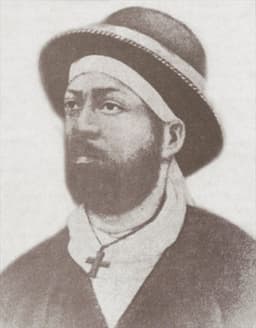
Haile Melekot
Emperor · Modern
48.0Total

Sher Ali Khan
Emperor · Modern
47.5Total
Basic Information
Born
1824
1825
Died
1855
1879
Era
Modern
Modern
Nationality
Ethiopia
Afghanistan
Occupation
Emperor
Emperor
Civilization
Other
Middle Eastern
Score Comparison
Military (10%)
46.7
35.0
Political (20%)
40.8
39.4
Influence (20%)
50.2
52.5
Legacy (20%)
42.5
42.5
Leadership (15%)
65.7
62.2
Strategy (15%)
41.7
50.0
TOTAL
48.0
47.5
Haile Melekot — Complete Timeline
1847 AD
Accession as King of ShewaPolitical Action◆ Major
Haile Melekot became King of Shewa upon the death of his father, Sahle Selassie. He inherited a powerful and expanding kingdom but faced challenges from rival nobles and the rising power of Emperor Tewodros II.
SuccessionShewa
Impact: regional
1855 AD
Conflict with Emperor Tewodros IIWar
Emperor Tewodros II invaded Shewa to assert imperial authority. Haile Melekot resisted but was defeated and captured. He died shortly after, and Tewodros annexed Shewa, taking Haile Melekot's son Menelik (future Emperor Menelik II) as a hostage.
Tewodros IIInvasionDefeat
Impact: nationaltragic
Sher Ali Khan — Complete Timeline
1873 AD
Attempted Neutrality PolicyPolitical Action
Sher Ali attempted to maintain Afghan neutrality in the face of British-Russian rivalry, seeking arms and support from both sides. His policy failed as British demands for a permanent mission in Kabul escalated tensions, leading to war.
NeutralityGreat GameDiplomacy
Impact: national
1878 AD
Second Anglo-Afghan War DefeatWar◆ Major
Sher Ali Khan's refusal to accept a British mission led to the outbreak of the Second Anglo-Afghan War. British forces invaded Afghanistan, defeated Afghan armies at Ali Masjid and Peiwar Kotal, and forced Sher Ali to flee.
Anglo-Afghan WarBritish InvasionDefeat
Impact: regionaldestructive
1879 AD
Death in ExileOther◆ Major
After his defeat, Sher Ali fled to Mazar-i-Sharif and then to Balkh, seeking refuge with the Russians. He died in February 1879 in Balkh, reportedly from a broken heart or illness, leaving his son Yakub Khan to negotiate a humiliating peace.
ExileDeathWar
Impact: nationaltragic
Treaty of Gandamak (1879)Political Action◆ Major
Following Sher Ali's death, his son Yakub Khan signed the Treaty of Gandamak, ceding control of Afghanistan's foreign affairs to Britain and allowing a British resident in Kabul. This treaty was a direct consequence of Sher Ali's failed policies.
TreatyBritish ControlLoss of Sovereignty
Impact: regionaldestructive
This comparison has not been analyzed yet.
One-time AI generation (~1 minute). Scores and timeline are already available below.
Rankings
🥇
Haile MelekotLeader
Mil: 46.7Pol: 40.8Inf: 50.2
48.0
🥈
Sher Ali Khan
Mil: 35.0Pol: 39.4Inf: 52.5
47.5
+0.5 behind
How This Comparison Works
Algorithm
Each figure is scored on 6 dimensions (0—100 scale) based on structured historical data: Military (10%), Political (20%), Influence (20%), Legacy (20%), Leadership (15%), Strategy (15%). The weighted total produces the final ranking.
Data Sources
Scores are computed from structured sub-indicators in the database. Scale factors adjust for era (Ancient ×0.85, Modern ×1.0) and civilization size (Eastern ×1.05, Other ×0.80) to account for differences in population and military scale.
Maximum 3 Figures
Comparisons are limited to 2—3 figures to ensure readability and statistical meaningfulness.
Error Margins
±5 points per dimension — Sub-scores are derived from historical records with inherent uncertainty. Two figures within 5 points on a dimension should be considered roughly equivalent in that area.
Total Score Accuracy
±3 points overall — The weighted combination of 6 dimensions produces a total score with approximately ±3 points of uncertainty. Differences of less than 3 points are not statistically significant— the figures are effectively tied.
Known Limitations
- Historical records are incomplete and uneven across civilizations
- Figures from oral-tradition societies may be underrepresented
- Occupation labels can misclassify multi-role figures
- Scores measure capability and impact, not moral character
- Quantitative scoring is a comparison tool, not absolute truth
Capability Radar
Military (10%) — Battles & Warfare
Battles
30
30
Win Rate
35
25
Expansion
40
25
Political (20%) — Governance & Reform
Reform
30
30
Diplomacy
35
35
Economy
30
25
Influence (20%) — Cultural & Global Reach
Cultural
20
30
Global
10
15
Legacy (20%) — Historical Impact
Historical
30
35
Longevity
25
20
Leadership (15%) — Power & Stability
Tenure
40
40
Stability
25
20
Strategy (15%) — Tactics & Innovation
Strategy
35
30
Tactics
30
35
Reform
25
20
Similar Comparisons
Comments & Discussion
No comments yet. Be the first to share your thoughts!