Loading...
Harthacnut vs King Chungjeong of Goryeo
King Chungjeong of Goryeo leads by 12.1 pts · 2 figures compared
…

Harthacnut
Emperor · Medieval
39.9Total
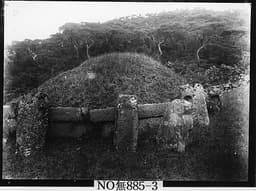
King Chungjeong of Goryeo
Emperor · Medieval
52.0Total
Basic Information
Born
1018
1338
Died
1042
1352
Era
Medieval
Medieval
Nationality
England
Korea
Occupation
Emperor
Emperor
Civilization
Western
Eastern
Score Comparison
Military (10%)
50.0
54.4
Political (20%)
27.9
39.4
Influence (20%)
49.4
60.0
Legacy (20%)
38.3
42.5
Leadership (15%)
38.1
55.3
Strategy (15%)
30.3
67.5
TOTAL
39.9
52.0
Harthacnut — Complete Timeline
1040 AD
Accession to English ThronePolitical Action◆ Major
Harthacnut became king of England after the death of his half-brother Harold Harefoot. He arrived from Denmark with a fleet and was accepted by the English nobility.
CoronationSuccessionDanish Rule
Impact: national
1041 AD
Harsh TaxationReform◆ Major
Harthacnut imposed a heavy tax (heregeld) to pay for his fleet. This led to a revolt in Worcester, where two of his tax collectors were killed. Harthacnut burned the city in retaliation.
TaxationRevoltRepression
Impact: nationaldestructive
Invitation to Edward the ConfessorPolitical Action◆ Major
Harthacnut invited his half-brother Edward (later Edward the Confessor) to return from Normandy and made him his heir. This ensured a peaceful succession after Harthacnut's death.
SuccessionNorman InfluenceHeir
Impact: nationalconstructive
1042 AD
Death of HarthacnutPolitical Action◆ Major
Harthacnut died at Lambeth on June 8, 1042, while drinking at a wedding feast. His death ended Danish rule in England and led to the restoration of the Anglo-Saxon line under Edward the Confessor.
DeathEnd of Danish RuleSuccession
Impact: nationaltragic
King Chungjeong of Goryeo — Complete Timeline
1348 AD
Ascended Throne as Child KingPolitical Action◆ Major
King Chungjeong became king at age 10 after the death of King Chungmok. Like his predecessor, he was a minor and real power was held by Yuan officials and Goryeo aristocrats, continuing the pattern of weak, puppet rulers.
Child KingSuccessionFigurehead
Impact: national
1351 AD
Deposed by Yuan CourtPolitical Action◆ Major
King Chungjeong was deposed by the Yuan court after a brief reign, due to political intrigues in the Yuan capital. He was exiled to China, and his uncle King Gongmin was installed as king, marking the end of the line of Yuan-dominated puppet rulers.
DepositionYuan InterventionEnd of Era
Impact: nationaldestructive
Expert Analysis
Origins
Harthacnut was born around 1018 to King Cnut the Great and Emma of Normandy. As the son of the Danish conqueror of England, he was raised in Denmark and groomed for kingship. His half-brother Harold Harefoot seized the English throne in 1035 while Harthacnut was detained in Denmark, leading to a power struggle. King Chungjeong of Goryeo was born in 1338 to King Chunghye and a concubine. He ascended the throne at age 10 in 1349 after the death of his half-brother King Chungmok. The Goryeo court was under heavy Yuan influence, and Chungjeong was little more than a figurehead.
Rise to Power
Harthacnut's path to power was contested. After Cnut's death in 1035, Harold Harefoot ruled as regent and later king. Harthacnut prepared an invasion fleet but was delayed in Denmark. When Harold died in 1040, Harthacnut was invited to become king without opposition. He arrived with a fleet of 60 ships and was crowned at Canterbury. King Chungjeong's rise was entirely controlled by the Yuan dynasty. After King Chungmok's death, the Yuan emperor installed Chungjeong as king, likely to maintain a weak puppet ruler. His reign began in 1349 and lasted only until 1351.
Leadership & Governance
Harthacnut's governance was marked by heavy taxation. He imposed a heregeld (army tax) of 21,000 pounds to pay his fleet, sparking rebellion in Worcester in 1041 where two tax collectors were killed. Harthacnut responded by burning the city and devastating the countryside. He also invited his half-brother Edward the Confessor back from Normandy and named him heir, ensuring a peaceful succession. King Chungjeong had no real power; the Yuan court and their officials in Goryeo made all decisions. He spent his brief reign as a puppet, unable to enact reforms. His political score of 39.4 reflects his lack of agency.
Triumph & Tragedy
Harthacnut's greatest success was securing the succession for Edward the Confessor, which eventually restored the House of Wessex. His greatest failure was his oppressive taxation, which made him deeply unpopular and led to civil unrest. He died suddenly at a wedding feast in Lambeth on June 8, 1042, possibly from a stroke or poisoning. King Chungjeong's brief reign was a tragedy: he was deposed by the Yuan court in 1351 due to political intrigues and exiled to China, where he died in 1352. His only triumph was surviving long enough to be replaced by his uncle, King Gongmin, who would eventually assert independence from Yuan.
Character & Destiny
Harthacnut was determined but harsh. His decision to burn Worcester showed a ruthless streak, but his willingness to name Edward as heir demonstrated pragmatism. His death at 24 cut short any potential for reform. King Chungjeong was a child king who never had a chance to rule. His character is unknown; he was a pawn in larger geopolitical struggles. Historians note that his deposition cleared the way for Gongmin's reforms. In terms of leadership scores, Harthacnut scored 38.1 and Chungjeong 55.3, but this may reflect Chungjeong's symbolic role rather than actual capability.
Legacy
Harthacnut's legacy is mixed. He is remembered as the last Danish king of England; his death ended Scandinavian rule and restored the Anglo-Saxon line. His harsh taxation is often cited as a cautionary tale. His influence score of 49.4 reflects his role in the transition. King Chungjeong's legacy is minimal; he is a footnote in Goryeo history. His influence score of 60.0 is higher, but this is due to his position as a transitional figure. The real impact came from his successor Gongmin, who reformed the kingdom. Both men are overshadowed by their successors.
Conclusion
Harthacnut had greater impact on English history because his actions directly led to the restoration of the House of Wessex and the end of Danish rule. Despite his short reign, he set the stage for Edward the Confessor and the Norman Conquest. King Chungjeong, with a total score of 52.0 compared to Harthacnut's 39.9, was a passive figure whose reign was entirely controlled by external forces. While Chungjeong's scores are higher in most categories, this reflects his position in a more complex political system rather than personal achievement. Harthacnut's decisions had lasting consequences; Chungjeong's did not.
Rankings
🥇
King Chungjeong of GoryeoLeader
Mil: 54.4Pol: 39.4Inf: 60.0
52.0
🥈
Harthacnut
Mil: 50.0Pol: 27.9Inf: 49.4
39.9
+12.1 behind
How This Comparison Works
Algorithm
Each figure is scored on 6 dimensions (0—100 scale) based on structured historical data: Military (10%), Political (20%), Influence (20%), Legacy (20%), Leadership (15%), Strategy (15%). The weighted total produces the final ranking.
Data Sources
Scores are computed from structured sub-indicators in the database. Scale factors adjust for era (Ancient ×0.85, Modern ×1.0) and civilization size (Eastern ×1.05, Other ×0.80) to account for differences in population and military scale.
Maximum 3 Figures
Comparisons are limited to 2—3 figures to ensure readability and statistical meaningfulness.
Error Margins
±5 points per dimension — Sub-scores are derived from historical records with inherent uncertainty. Two figures within 5 points on a dimension should be considered roughly equivalent in that area.
Total Score Accuracy
±3 points overall — The weighted combination of 6 dimensions produces a total score with approximately ±3 points of uncertainty. Differences of less than 3 points are not statistically significant— the figures are effectively tied.
Known Limitations
- Historical records are incomplete and uneven across civilizations
- Figures from oral-tradition societies may be underrepresented
- Occupation labels can misclassify multi-role figures
- Scores measure capability and impact, not moral character
- Quantitative scoring is a comparison tool, not absolute truth
Capability Radar
Military (10%) — Battles & Warfare
Battles
20
44
Win Rate
25
47
Expansion
10
53
Political (20%) — Governance & Reform
Reform
20
0
Diplomacy
25
5
Economy
20
0
Influence (20%) — Cultural & Global Reach
Cultural
15
0
Global
10
0
Legacy (20%) — Historical Impact
Historical
20
5
Longevity
10
0
Leadership (15%) — Power & Stability
Tenure
30
5
Stability
15
5
Strategy (15%) — Tactics & Innovation
Strategy
15
54
Tactics
15
58
Reform
10
62
Similar Comparisons
Comments & Discussion
No comments yet. Be the first to share your thoughts!