Loading...
This comparison has not been analyzed yet.
One-time AI generation (~1 minute). Scores and timeline are already available below.
Hataz vs Siamun
Siamun leads by 0.6 pts · 2 figures compared
…

Hataz
Emperor · Ancient
37.0Total
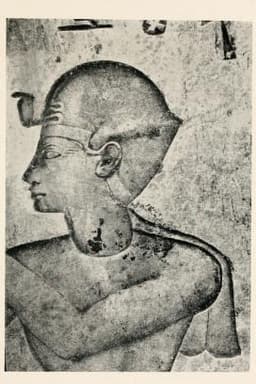
Siamun
Emperor · Ancient
37.6Total
Basic Information
Born
-560
-986
Died
—
-967
Era
Ancient
Ancient
Nationality
Ethiopia
Third Intermediate Egypt
Occupation
Emperor
Emperor
Civilization
Other
Middle Eastern
Score Comparison
Military (10%)
25.9
35.0
Political (20%)
26.4
27.9
Influence (20%)
45.5
44.8
Legacy (20%)
36.7
35.8
Leadership (15%)
41.5
45.0
Strategy (15%)
36.8
30.3
TOTAL
37.0
37.6
Hataz — Complete Timeline
540 BC
Issued coinage as Aksumite kingPolitical Action◆ Major
Hataz was the last known Aksumite king to issue coins, a key indicator of state authority and economic activity. His coinage marked the end of Aksum's monetary system, after which no further coins were minted by the kingdom.
Aksumite coinageEconomic declineNumismatics
Impact: regional
Siamun — Complete Timeline
980 BC
Construction at TanisCultural
Siamun undertook building projects at Tanis, including additions to the temple of Amun. He erected a large pylon and added reliefs depicting his military victories, reinforcing the city's role as the dynasty's capital.
Temple ConstructionTanisAmun
constructive
975 BC
Campaign in PalestineWar◆ Major
Siamun led a military campaign into Palestine, attacking the Philistine city of Gezer. The campaign resulted in Egyptian control over the city, which Siamun later gave as a dowry to his daughter upon her marriage to King Solomon of Israel.
PalestineGezerBiblical Connection
Impact: regionalconstructive
970 BC
Alliance with IsraelPolitical Action◆ Major
Siamun formed an alliance with King Solomon of Israel, sealed by the marriage of his daughter to Solomon. This diplomatic move strengthened Egypt's position in the region and is mentioned in the Hebrew Bible.
AllianceSolomonMarriage
Impact: regionalconstructive
This comparison has not been analyzed yet.
One-time AI generation (~1 minute). Scores and timeline are already available below.
Rankings
🥇
SiamunLeader
Mil: 35.0Pol: 27.9Inf: 44.8
37.6
🥈
Hataz
Mil: 25.9Pol: 26.4Inf: 45.5
37.0
+0.6 behind
How This Comparison Works
Algorithm
Each figure is scored on 6 dimensions (0—100 scale) based on structured historical data: Military (10%), Political (20%), Influence (20%), Legacy (20%), Leadership (15%), Strategy (15%). The weighted total produces the final ranking.
Data Sources
Scores are computed from structured sub-indicators in the database. Scale factors adjust for era (Ancient ×0.85, Modern ×1.0) and civilization size (Eastern ×1.05, Other ×0.80) to account for differences in population and military scale.
Maximum 3 Figures
Comparisons are limited to 2—3 figures to ensure readability and statistical meaningfulness.
Error Margins
±5 points per dimension — Sub-scores are derived from historical records with inherent uncertainty. Two figures within 5 points on a dimension should be considered roughly equivalent in that area.
Total Score Accuracy
±3 points overall — The weighted combination of 6 dimensions produces a total score with approximately ±3 points of uncertainty. Differences of less than 3 points are not statistically significant— the figures are effectively tied.
Known Limitations
- Historical records are incomplete and uneven across civilizations
- Figures from oral-tradition societies may be underrepresented
- Occupation labels can misclassify multi-role figures
- Scores measure capability and impact, not moral character
- Quantitative scoring is a comparison tool, not absolute truth
Capability Radar
Military (10%) — Battles & Warfare
Battles
10
20
Win Rate
10
25
Expansion
10
25
Political (20%) — Governance & Reform
Reform
20
10
Diplomacy
20
20
Economy
20
15
Influence (20%) — Cultural & Global Reach
Cultural
20
15
Global
10
10
Legacy (20%) — Historical Impact
Historical
20
20
Longevity
20
15
Leadership (15%) — Power & Stability
Tenure
30
30
Stability
20
25
Strategy (15%) — Tactics & Innovation
Strategy
10
20
Tactics
10
15
Reform
10
5
Similar Comparisons
Comments & Discussion
No comments yet. Be the first to share your thoughts!