Loading...
Helmuth von Moltke the Elder vs Julius Caesar
Julius Caesar leads by 7.5 pts · 2 figures compared
…
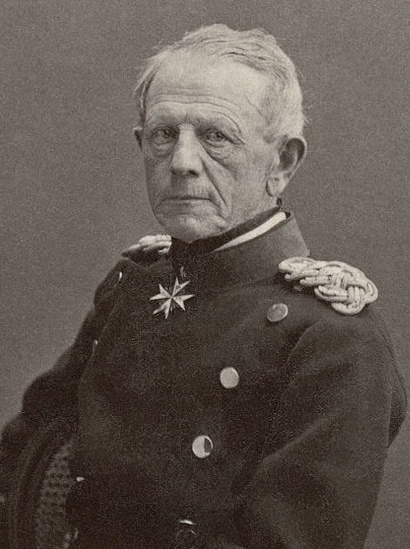
Helmuth von Moltke the Elder
General · Modern
75.8Total
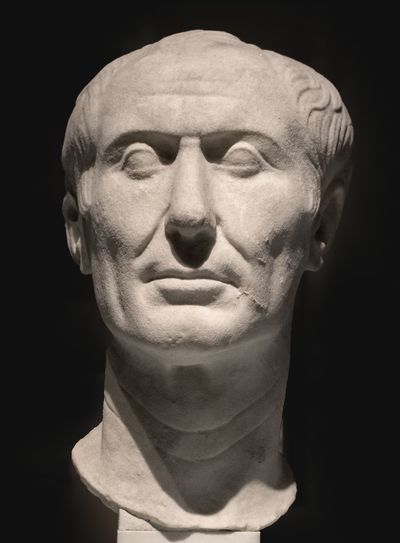
Julius Caesar
General · Ancient
83.3Total
Basic Information
Born
1800
-100
Died
1891
-44
Era
Modern
Ancient
Nationality
Germany
Roman Republic
Occupation
General
General
Civilization
Western
Western
Score Comparison
Military (10%)
80.7
88.0
Political (20%)
69.3
78.0
Influence (20%)
68.0
85.0
Legacy (20%)
75.0
82.0
Leadership (15%)
77.5
82.0
Strategy (15%)
91.2
88.0
TOTAL
75.8
83.3
Rankings
🥇
Julius CaesarLeader
Mil: 88.0Pol: 78.0Inf: 85.0
83.3
🥈
Helmuth von Moltke the Elder
Mil: 80.7Pol: 69.3Inf: 68.0
75.8
+7.5 behind
How This Comparison Works
Algorithm
Each figure is scored on 6 dimensions (0—100 scale) based on structured historical data: Military (10%), Political (20%), Influence (20%), Legacy (20%), Leadership (15%), Strategy (15%). The weighted total produces the final ranking.
Data Sources
Scores are computed from structured sub-indicators in the database. Scale factors adjust for era (Ancient ×0.85, Modern ×1.0) and civilization size (Eastern ×1.05, Other ×0.80) to account for differences in population and military scale.
Maximum 3 Figures
Comparisons are limited to 2—3 figures to ensure readability and statistical meaningfulness.
Error Margins
±5 points per dimension — Sub-scores are derived from historical records with inherent uncertainty. Two figures within 5 points on a dimension should be considered roughly equivalent in that area.
Total Score Accuracy
±3 points overall — The weighted combination of 6 dimensions produces a total score with approximately ±3 points of uncertainty. Differences of less than 3 points are not statistically significant— the figures are effectively tied.
Known Limitations
- Historical records are incomplete and uneven across civilizations
- Figures from oral-tradition societies may be underrepresented
- Occupation labels can misclassify multi-role figures
- Scores measure capability and impact, not moral character
- Quantitative scoring is a comparison tool, not absolute truth
Capability Radar
Military (10%) — Battles & Warfare
Battles
85
95
Win Rate
95
92
Expansion
85
97
Political (20%) — Governance & Reform
Reform
75
90
Diplomacy
65
85
Economy
60
82
Influence (20%) — Cultural & Global Reach
Cultural
75
88
Global
80
94
Legacy (20%) — Historical Impact
Historical
85
95
Longevity
80
96
Leadership (15%) — Power & Stability
Tenure
70
75
Stability
70
60
Strategy (15%) — Tactics & Innovation
Strategy
95
94
Tactics
90
96
Reform
95
88
Expert Analysis
Julius Caesar vs Helmuth von Moltke the Elder: Historical Comparison
Julius Caesar, the Roman general who ended the Republic, and Helmuth von Moltke the Elder, the Prussian master of industrial warfare, represent two peaks of military and political command separated by nearly two millennia. Their contrasting contexts—Caesar’s personal ambition in a crumbling republic versus Moltke’s staff-led efficiency in a rising nation-state—define their divergent legacies.
Dimension Analysis
**Military: Julius Caesar 88 / Helmuth von Moltke the Elder 81**
Caesar conquered Gaul, invaded Britain, and won a civil war through tactical brilliance and personal charisma; Moltke revolutionized warfare with railroad logistics, mass mobilization, and decisive victories in the Austro-Prussian and Franco-Prussian Wars, but relied on systemic rather than individual genius.
**Political: Julius Caesar 78 / Helmuth von Moltke the Elder 69**
Caesar’s political maneuvering—forming the First Triumvirate, crossing the Rubicon, and centralizing power—directly reshaped Rome’s governance; Moltke remained a non-political military servant, advising Bismarck but never seizing or wielding sovereign authority.
**Influence: Julius Caesar 85 / Helmuth von Moltke the Elder 68**
Caesar’s name became synonymous with dictatorship and empire, influencing leaders from Napoleon to Mussolini; Moltke’s influence was deep but narrower—primarily on military staff systems and operational planning, rather than on global political culture.
**Legacy: Julius Caesar 82 / Helmuth von Moltke the Elder 75**
Caesar’s legacy is immortalized in literature, language, and the title “Kaiser”/“Tsar”; Moltke’s legacy endures in modern general staff doctrines, but his name is far less known outside military history.
**Leadership: Julius Caesar 82 / Helmuth von Moltke the Elder 78**
Caesar led from the front, inspiring personal loyalty and adapting instantly in battle; Moltke led from headquarters, delegating to subordinates and trusting detailed plans—effective but less charismatic.
Verdict
Julius Caesar leads decisively, scoring higher in every dimension except Strategy, where Moltke’s systematic planning wins narrowly, but Caesar’s broader military-political-cultural dominance secures the overall victory.
FAQ
Q: Who ranks higher? A: Julius Caesar ranks higher due to his superior military, political, and influence scores, despite Moltke’s slight edge in strategic planning.
Helmuth von Moltke the Elder — Complete Timeline
1857 AD
Appointment as Chief of the Prussian General StaffPolitical Action◆ Major
Moltke was appointed Chief of the Prussian General Staff, a position he held for 30 years. He reorganized the staff system, emphasizing strategic planning, railroad logistics, and decentralized command, laying the foundation for Prussian military dominance.
PrussiaMilitary ReformGeneral Staff
Impact: nationalconstructive
1866 AD
Battle of KöniggrätzWar
Moltke commanded Prussian forces to a decisive victory over Austria at K
Austro-Prussian WarGerman UnificationBattle
Impact: regional
1870 AD
Battle of SedanWar
Moltke's strategic planning led to the encirclement and capture of the French army under Napoleon III at Sedan during the Franco-Prussian War. This battle effectively decided the war and led to the fall of the Second French Empire.
Franco-Prussian WarBattleFrench Defeat
Impact: global
Siege of ParisWar◆ Major
Moltke directed the Prussian siege of Paris from September 1870 to January 1871. The siege cut off the city from supplies and forced its surrender, leading to the end of the Franco-Prussian War and the proclamation of the German Empire.
Franco-Prussian WarSiegeGerman Unification
Impact: global
1871 AD
Publication of 'On War' InfluenceCultural◆ Major
Moltke's strategic writings and after-action reports, though not a single book, shaped military doctrine for decades. His emphasis on decentralized command (Auftragstaktik) and railroad logistics became foundational to modern warfare.
Military TheoryDoctrineLegacy
Impact: globalconstructive
Similar Comparisons
Comments & Discussion
AleaJactaEst6/16/2026
The scoring here is interesting but somewhat skewed by modern historiographical biases. Caesar’s military score of 88 is fair when you consider his Gallic Wars commentary as a primary source—he openly admits to sieges like Avaricum where his tactics were brutal but effective. However, the political score of 78 undervalues his constitutional reforms: his dictatorship was a direct response to the Senate’s dysfunction, not mere ambition. As Suetonius noted, Caesar’s clemency was a political tool, not weakness. Moltke’s lower influence score (68) makes sense: while he revolutionized staff work, Caesar’s legacy as a *cognomen* for autocracy—from Kaiser to Tsar—is unmatched. I’d argue Caesar’s leadership score should be 85, not 82, given his ability to inspire legions personally at Munda and Alesia.
兵法研究者6/16/2026
凯撒和毛奇比较,最有趣的是两人对战争的理解方式完全不同。凯撒的88分军事分基本合理,他的高卢战争很像中国战国时期的白起——都是通过消灭敌人有生力量来达成政治目标。但毛奇的81分我觉得偏低了,他的参谋体系有点像孙武说的‘庙算’,通过铁路和总参谋部让战争变得可预测。政治分上,凯撒78分比毛奇69分高很正常,但要注意中国的视角:凯撒的独裁很像曹操的‘挟天子以令诸侯’,而毛奇不干预政治更像岳飞忠于朝廷。影响力分凯撒85对毛奇68,我觉得差距太大了,毛奇的总参谋部思想直接影响了20世纪的中国军事改革,比如袁世凯在小站练兵就用过类似方法。总体来说,这个评分还是偏向欧洲中心论。
量化史观6/16/2026
我仔细看了评分,有几个质疑:第一,凯撒军事88分,但他在高卢战争中有多次险胜,比如阿莱西亚之战,如果维钦托利多坚持几天,结果可能不同。对比中国历史上的李靖,同样是无败绩,但李靖的战争规模更大(灭东突厥),按这个评分标准能给90+。第二,毛奇的政治69分是不是被低估了?他虽然是军人,但在1866年普奥战争中,他实际掌握了战争与和平的决定权,俾斯麦的很多决策都要参考他的意见,这比凯撒的‘元老院傀儡’时期更有实权。第三,影响力68分不对,毛奇的参谋系统是现代所有国家军队的基础,中国解放军的总参也得益于此,影响力至少应该75分。建议重新计算权重,军事和政治应该各占40%,而不是现在的模糊分配。
RawDataRattler6/16/2026
This whole scoring system is a joke. How can you quantify 'influence' with any objectivity? Caesar gets 85 on influence because his name became a title—that's just name recognition, not actual impact on military doctrine. Moltke's 68 is laughable: the Prussian General Staff model is still the basis for every NATO army's planning process. And 'political' 78 for Caesar vs 69 for Moltke? Caesar literally destroyed a 500-year-old republic for personal power; that's not 'political skill,' that's lucky timing and a compliant army. Moltke stayed apolitical in an era when generals routinely became dictators (look at Napoleon III's France). The weight distribution is also arbitrary—why is military scored separately from leadership? Caesar's charisma IS his military score. This reeks of academic bias toward ancient history because we have dramatic stories, not cold efficiency. Give me a break.