Loading...
Helmuth von Moltke the Elder vs Yitzhak Rabin
Helmuth von Moltke the Elder leads by 8.4 pts · 2 figures compared
…
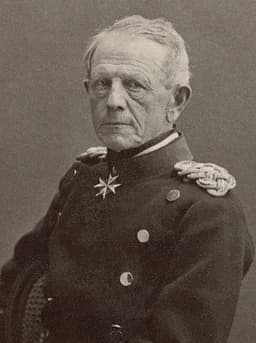
Helmuth von Moltke the Elder
General · Modern
74.8Total
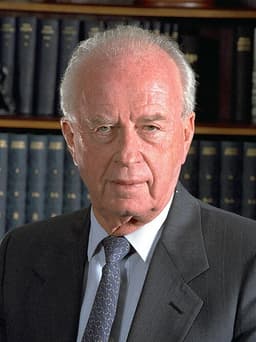
Yitzhak Rabin
General · Modern
66.4Total
Basic Information
Born
1800
1922
Died
1891
—
Era
Modern
Modern
Nationality
Germany
Israel
Occupation
General
General
Civilization
Western
Middle Eastern
Score Comparison
Military (10%)
75.0
61.7
Political (20%)
55.0
82.0
Influence (20%)
88.0
68.0
Legacy (20%)
65.0
55.0
Leadership (15%)
85.0
78.0
Strategy (15%)
80.6
55.0
TOTAL
74.8
66.4
Helmuth von Moltke the Elder — Complete Timeline
1857 AD
Appointment as Chief of the Prussian General StaffPolitical Action◆ Major
Moltke was appointed Chief of the Prussian General Staff, a position he held for 30 years. He reorganized the staff system, emphasizing strategic planning, railroad logistics, and decentralized command, laying the foundation for Prussian military dominance.
PrussiaMilitary ReformGeneral Staff
Impact: nationalconstructive
1866 AD
Battle of KöniggrätzWar
Moltke commanded Prussian forces to a decisive victory over Austria at K
Austro-Prussian WarGerman UnificationBattle
Impact: regional
1870 AD
Battle of SedanWar
Moltke's strategic planning led to the encirclement and capture of the French army under Napoleon III at Sedan during the Franco-Prussian War. This battle effectively decided the war and led to the fall of the Second French Empire.
Franco-Prussian WarBattleFrench Defeat
Impact: global
Siege of ParisWar◆ Major
Moltke directed the Prussian siege of Paris from September 1870 to January 1871. The siege cut off the city from supplies and forced its surrender, leading to the end of the Franco-Prussian War and the proclamation of the German Empire.
Franco-Prussian WarSiegeGerman Unification
Impact: global
1871 AD
Publication of 'On War' InfluenceCultural◆ Major
Moltke's strategic writings and after-action reports, though not a single book, shaped military doctrine for decades. His emphasis on decentralized command (Auftragstaktik) and railroad logistics became foundational to modern warfare.
Military TheoryDoctrineLegacy
Impact: globalconstructive
Yitzhak Rabin — Complete Timeline
1967 AD
Chief of Staff during the Six-Day WarWar
As Chief of Staff of the Israel Defense Forces, Rabin commanded the Israeli military during the Six-Day War against Egypt, Jordan, and Syria. Israel captured the Sinai Peninsula, Gaza Strip, West Bank, East Jerusalem, and Golan Heights, reshaping the region.
Six-Day WarTerritorial ExpansionMilitary Victory
Impact: global
1993 AD
Signing of the Oslo AccordsPolitical Action
As prime minister, Rabin signed the Oslo Accords with PLO Chairman Yasser Arafat on the White House lawn. The agreement established the Palestinian Authority and set a framework for Palestinian self-governance in the West Bank and Gaza Strip.
Peace ProcessPalestiniansOslo
Impact: globalconstructive
1995 AD
Assassination at Peace RallyPolitical Action
Rabin was assassinated by Israeli extremist Yigal Amir after a peace rally in Tel Aviv. The assassination shocked Israel and the world, derailing the Oslo peace process and leading to a period of political instability.
AssassinationPeace ProcessPolitical Violence
Impact: globaltragic
Expert Analysis
Yitzhak Rabin vs Helmuth von Moltke the Elder
# The General and the Peacemaker
On a September evening in 1995, Yitzhak Rabin stood before a crowd of 100,000 Israelis in Tel Aviv’s Kings of Israel Square, singing a song of peace. Hours later, a young extremist’s bullets would end his life. A century earlier, Helmuth von Moltke the Elder died peacefully in his bed at ninety-one, surrounded by the unified Germany he had forged through war. These two generals, born a century and a world apart, represent the twin poles of military leadership: one who used war to build a nation, another who used peace to try to save one.
Origins
Helmuth von Moltke was born in 1800 into a declining Prussian noble family. The son of a minor officer, he grew up in a world still haunted by Napoleon’s conquests. Prussia was a second-tier power, fragmented and humiliated. Moltke’s childhood was austere, his education rigorous, and his path predetermined: he would serve the state that needed rebuilding. The Prussian military tradition valued discipline, order, and above all, a sense of duty. Moltke absorbed these values like a sponge.
Yitzhak Rabin was born in 1922 in Jerusalem, then part of British Mandate Palestine. His parents were socialist Zionists who had fled persecution in Eastern Europe. Rabin grew up in a different kind of austerity—not of aristocratic poverty but of collective struggle. The Jewish state did not yet exist; he would help create it. Where Moltke inherited a military tradition, Rabin helped invent one, learning to fight in the fields and hills of a land his people were reclaiming.
Rise to Power
Moltke’s rise was slow and methodical. He spent decades in staff positions, writing tactical studies, mapping railroads, and thinking deeply about the nature of war. His appointment as Chief of the Prussian General Staff in 1857, at age fifty-seven, was not a dramatic leap but a quiet culmination. He reorganized the staff system, turning it from an administrative office into a war-fighting machine. His power grew not through charisma but through competence—and through the trust of Otto von Bismarck, who recognized a kindred spirit in this quiet, calculating officer.
Rabin’s rise was faster and more dramatic. By 1967, at age forty-five, he was Chief of Staff of the Israel Defense Forces. The Six-Day War that June was his proving ground. Israel faced existential threats from Egypt, Jordan, and Syria. Rabin’s command was decisive and, by some accounts, psychologically agonizing—he suffered a nervous breakdown before the war began, though he recovered to lead brilliantly. The victory made him a national hero. But unlike Moltke, Rabin would not stay in uniform. He transitioned to politics, becoming ambassador to the United States, then prime minister.
Leadership & Governance
Moltke’s military genius was revolutionary. He understood that the new railroads and telegraphs could move armies faster than ever before, but also that no commander could control everything. His solution was *Auftragstaktik*—mission-type orders that gave subordinates broad freedom to achieve objectives. At Königgrätz in 1866, he orchestrated the movement of three separate Prussian armies converging on the Austrian forces, a logistical masterpiece that annihilated the old order. At Sedan in 1870, he encircled Napoleon III’s army, capturing the French emperor himself. The siege of Paris that followed was a brutal but effective demonstration of total war.
Rabin’s leadership was different. As a general, he was cautious and methodical—the opposite of the swaggering Israeli warrior stereotype. He prioritized minimizing casualties, even if it meant slower advances. As prime minister, he brought this same pragmatism to politics. The Oslo Accords of 1993 were a gamble: recognizing the PLO, accepting a two-state solution, trading land for peace. Rabin understood that Israel’s military strength could not solve its political problems. He shook hands with Yasser Arafat on the White House lawn, a moment that horrified many Israelis but offered a glimpse of a different future.
Triumph & Tragedy
Moltke’s greatest triumph was the Franco-Prussian War of 1870-71. He defeated the largest army in Europe, captured its emperor, and marched through Paris. In the Hall of Mirrors at Versailles, the German Empire was proclaimed—a nation born from Prussian steel and Moltke’s strategy. His tragedy was subtler: he lived long enough to see the militarism he helped create spiral into something darker. The German General Staff became a state within a state, and Moltke’s own nephew would lead it into the catastrophe of 1914.
Rabin’s triumph was the Oslo Accords. For a moment, peace seemed possible. Israelis and Palestinians began to imagine coexistence. His tragedy was immediate and visceral: on November 4, 1995, a Jewish extremist shot him dead. The peace process unraveled. The square where he sang is now named for him—a monument to what might have been.
Character & Destiny
Moltke was a man of iron self-control. He wrote poetry, painted landscapes, and translated English novels into German. He was deeply religious but never pious. His composure under fire was legendary—he once wrote a letter to his wife during a battle, describing the “beautiful sight” of the artillery. This detachment, this ability to see war as an intellectual problem rather than a moral one, made him effective but also dangerous. He believed war was an inevitable part of human existence, a “natural phenomenon” to be managed, not eliminated.
Rabin was a man of contradictions. He was gruff and awkward in public, yet capable of deep emotion. He was a warrior who came to hate war, a general who became a peacemaker. His character was shaped by the tension between security and humanity. He once said, “You don’t make peace with friends. You make it with very unsavory enemies.” This pragmatic moralism defined his destiny.
Legacy
Moltke’s legacy is the modern military staff system, the use of railroads for rapid deployment, and the doctrine of decentralized command. Every general since has studied his campaigns. Yet his greatest creation—a unified Germany—became a source of instability in Europe. The machine he built ran on its own logic, leading to two world wars.
Rabin’s legacy is more fragile. He is remembered as a martyr for peace, but the peace he died for has not come. His assassination taught a terrible lesson: that leaders who take risks for peace can pay the ultimate price. Yet his example endures—proof that a military man can become a peacemaker, that strength can serve reconciliation.
Conclusion
Two generals, two centuries, two different wars. Moltke unified a nation through conquest; Rabin tried to save one through compromise. One died old and honored; the other was cut down in his prime. Yet both understood something fundamental: that war is too important to be left to warriors. Moltke professionalized war, making it a science. Rabin humanized it, making it a tragedy. In the end, the question they leave us is not which was greater, but which path we choose to follow.
Rankings
🥇
Helmuth von Moltke the ElderLeader
Mil: 75.0Pol: 55.0Inf: 88.0
74.8
🥈
Yitzhak Rabin
Mil: 61.7Pol: 82.0Inf: 68.0
66.4
+8.4 behind
How This Comparison Works
Algorithm
Each figure is scored on 6 dimensions (0—100 scale) based on structured historical data: Military (10%), Political (20%), Influence (20%), Legacy (20%), Leadership (15%), Strategy (15%). The weighted total produces the final ranking.
Data Sources
Scores are computed from structured sub-indicators in the database. Scale factors adjust for era (Ancient ×0.85, Modern ×1.0) and civilization size (Eastern ×1.05, Other ×0.80) to account for differences in population and military scale.
Maximum 3 Figures
Comparisons are limited to 2—3 figures to ensure readability and statistical meaningfulness.
Error Margins
±5 points per dimension — Sub-scores are derived from historical records with inherent uncertainty. Two figures within 5 points on a dimension should be considered roughly equivalent in that area.
Total Score Accuracy
±3 points overall — The weighted combination of 6 dimensions produces a total score with approximately ±3 points of uncertainty. Differences of less than 3 points are not statistically significant— the figures are effectively tied.
Known Limitations
- Historical records are incomplete and uneven across civilizations
- Figures from oral-tradition societies may be underrepresented
- Occupation labels can misclassify multi-role figures
- Scores measure capability and impact, not moral character
- Quantitative scoring is a comparison tool, not absolute truth
Capability Radar
Military (10%) — Battles & Warfare
Battles
85
65
Win Rate
95
70
Expansion
85
50
Political (20%) — Governance & Reform
Reform
75
65
Diplomacy
65
85
Economy
60
60
Influence (20%) — Cultural & Global Reach
Cultural
75
55
Global
80
70
Legacy (20%) — Historical Impact
Historical
85
75
Longevity
80
60
Leadership (15%) — Power & Stability
Tenure
70
70
Stability
70
40
Strategy (15%) — Tactics & Innovation
Strategy
95
75
Tactics
90
60
Reform
95
55
Similar Comparisons
Comments & Discussion
MoltkeBane6/16/2026
Moltke's meticulous plans at Königgrätz and Sedan didn't just win battles—they created modern Germany through blood and iron. Rabin's Oslo handshake? A tactical failure that bought a few years of false peace before the Second Intifada erupted. Moltke understood that wars end decisively or not at all. Rabin's fatal mistake was believing peace could be negotiated with enemies who'd never accept a Jewish state. One general won his war; the other lost his life for a fantasy.
老钟偏将6/16/2026
拿普法战争的参谋体系去比拉宾的黎巴嫩撤军,这比较本身就很扯淡。毛奇是总参谋部制度奠基人,他那套战前铁路调度表的精确度,现代人看着都头皮发麻。拉宾倒是打赢了六日战争,可他后来在约旦河西岸搞的“铁拳政策”连自己人都骂。一个用沙盘推演出德意志统一,一个在谈判桌上把安全换成了口号,高下立判。
DataSkeptic276/16/2026
Comparing a 19th-century Prussian aristocrat to a 20th-century Israeli prime minister is like comparing chess to checkers. Moltke commanded wars where casualties were measured in thousands per engagement—Rabin faced enemies armed with suicide belts and Scud missiles. The real story isn't generalship but context. Moltke's Prussia had contiguous borders and homogeneous enemies. Rabin dealt with a fractured occupation, settlements, and an intifada. Apples to oranges is generous; this is apples to q
和平的代价6/16/2026
毛奇活到了九十一岁自然死亡,拉宾七十三岁被自己人枪杀在广场上。这差别不是运气,是选择。毛奇一辈子没挨过政治暗杀的子弹,因为他只管打仗不管政治——俾斯麦背了所有骂名。拉宾非要做政治家,结果里外不是人。历史告诉将军们:要么学毛奇,打完仗就退休写回忆录;要么就别抱怨世道承不住理想主义。
ClioClash6/16/2026
The analysis frames Moltke as "military unifier" and Rabin as "peace martyr," but that's a tidy narrative ignoring Rabin's own Iron Fist operations of 1985 and the brutal suppression of the First Intifada. Rabin the "peacemaker" approved breaking Palestinian bones before shaking Arafat's hand. Moltke at least had the consistency of being a hawk his entire career. Rabin's transformation isn't heroic—it's the deathbed conversion of a commander who finally saw the cost of his own orders.