Loading...
This comparison has not been analyzed yet.
One-time AI generation (~1 minute). Scores and timeline are already available below.
Hendrik Verwoerd vs Miguel Juarez Celman
Hendrik Verwoerd leads by 12.8 pts · 2 figures compared
…

Hendrik Verwoerd
Politician · Modern
53.1Total
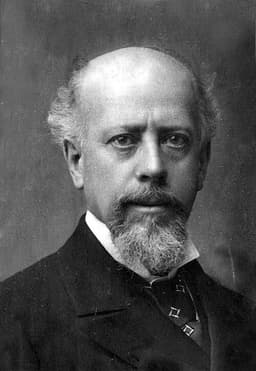
Miguel Juarez Celman
Politician · Modern
40.3Total
Basic Information
Born
1901
1844
Died
1966
1909
Era
Modern
Modern
Nationality
South Africa
Argentina
Occupation
Politician
Politician
Civilization
Other
Western
Score Comparison
Military (10%)
22.5
50.0
Political (20%)
62.7
26.4
Influence (20%)
56.7
45.5
Legacy (20%)
52.0
35.8
Leadership (15%)
68.0
45.0
Strategy (15%)
41.1
42.2
TOTAL
53.1
40.3
Hendrik Verwoerd — Complete Timeline
1950 AD
Appointed Minister of Native AffairsPolitical Action◆ Major
Verwoerd was appointed Minister of Native Affairs in the National Party government. He oversaw the implementation of the Group Areas Act and other laws that enforced racial segregation and laid the groundwork for the apartheid system.
ApartheidSegregationLegislation
Impact: nationaldestructive
1958 AD
Became Prime Minister of South AfricaPolitical Action◆ Major
Verwoerd succeeded J.G. Strijdom as Prime Minister. His premiership saw the intensification of apartheid policies, including the Sharpeville massacre and the banning of the ANC and PAC, and the declaration of South Africa as a republic.
Prime MinisterApartheidRepression
Impact: nationaldestructive
1959 AD
Architect of the Bantustan SystemReform
Verwoerd introduced the Promotion of Bantu Self-Government Act, which established the Bantustan system. This policy created ethnically based homelands for Black South Africans, stripping them of citizenship and political rights in the rest of South Africa.
ApartheidBantustansDisenfranchisement
Impact: nationaldestructive
1960 AD
Sharpeville Massacre ResponsePolitical Action◆ Major
Following the Sharpeville massacre where police killed 69 anti-pass protesters, Verwoerd's government declared a state of emergency, banned the African National Congress and Pan Africanist Congress, and arrested thousands of activists. He defended the police actions.
SharpevilleRepressionState of Emergency
Impact: nationaldestructive
1966 AD
Assassinated in ParliamentOther
Verwoerd was stabbed to death by Dimitri Tsafendas, a parliamentary messenger, during a session of the House of Assembly in Cape Town. His assassination removed the chief architect of apartheid, but the system continued under his successors.
AssassinationApartheidParliament
Impact: nationaltragic
Miguel Juarez Celman — Complete Timeline
1886 AD
Elected President of ArgentinaPolitical Action◆ Major
Juárez Celman was elected President of Argentina, serving from 1886 to 1890. His presidency continued the policies of Julio Argentino Roca and the National Autonomist Party.
PresidencyElectionArgentina
Impact: nationalconstructive
1890 AD
Faced the 1890 economic crisisPolitical Action◆ Major
Juárez Celman's government was overwhelmed by the Baring Crisis, a severe financial panic caused by excessive foreign borrowing and speculation. The crisis led to bank failures, inflation, and widespread unemployment.
Economic CrisisFinanceBaring Crisis
Impact: nationaldestructive
Resigned during the Revolution of the ParkPolitical Action◆ Major
Facing a civic-military uprising known as the Revolution of the Park, Ju
ResignationRevolutionPolitical Crisis
Impact: nationaltragic
This comparison has not been analyzed yet.
One-time AI generation (~1 minute). Scores and timeline are already available below.
Rankings
🥇
Hendrik VerwoerdLeader
Mil: 22.5Pol: 62.7Inf: 56.7
53.1
🥈
Miguel Juarez Celman
Mil: 50.0Pol: 26.4Inf: 45.5
40.3
+12.8 behind
How This Comparison Works
Algorithm
Each figure is scored on 6 dimensions (0—100 scale) based on structured historical data: Military (10%), Political (20%), Influence (20%), Legacy (20%), Leadership (15%), Strategy (15%). The weighted total produces the final ranking.
Data Sources
Scores are computed from structured sub-indicators in the database. Scale factors adjust for era (Ancient ×0.85, Modern ×1.0) and civilization size (Eastern ×1.05, Other ×0.80) to account for differences in population and military scale.
Maximum 3 Figures
Comparisons are limited to 2—3 figures to ensure readability and statistical meaningfulness.
Error Margins
±5 points per dimension — Sub-scores are derived from historical records with inherent uncertainty. Two figures within 5 points on a dimension should be considered roughly equivalent in that area.
Total Score Accuracy
±3 points overall — The weighted combination of 6 dimensions produces a total score with approximately ±3 points of uncertainty. Differences of less than 3 points are not statistically significant— the figures are effectively tied.
Known Limitations
- Historical records are incomplete and uneven across civilizations
- Figures from oral-tradition societies may be underrepresented
- Occupation labels can misclassify multi-role figures
- Scores measure capability and impact, not moral character
- Quantitative scoring is a comparison tool, not absolute truth
Capability Radar
Military (10%) — Battles & Warfare
Battles
21
28
Win Rate
23
29
Expansion
26
37
Political (20%) — Governance & Reform
Reform
85
20
Diplomacy
30
15
Economy
55
10
Influence (20%) — Cultural & Global Reach
Cultural
60
5
Global
65
5
Legacy (20%) — Historical Impact
Historical
70
10
Longevity
60
5
Leadership (15%) — Power & Stability
Tenure
65
30
Stability
40
5
Strategy (15%) — Tactics & Innovation
Strategy
33
38
Tactics
33
38
Reform
37
45
Similar Comparisons
Comments & Discussion
No comments yet. Be the first to share your thoughts!