Loading...
Henry I Duke of Guise vs Louis Mountbatten
Henry I Duke of Guise leads by 9.7 pts · 2 figures compared
…
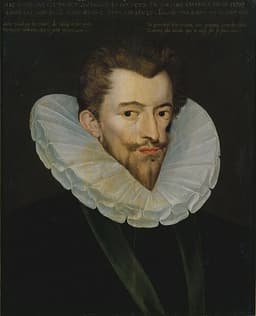
Henry I Duke of Guise
General · Modern
68.8Total

Louis Mountbatten
General · Modern
59.1Total
Basic Information
Born
1550
1900
Died
1588
1979
Era
Modern
Modern
Nationality
France
United Kingdom
Occupation
General
General
Civilization
Western
Western
Score Comparison
Military (10%)
70.0
45.0
Political (20%)
72.0
55.0
Influence (20%)
82.0
65.0
Legacy (20%)
52.0
52.0
Leadership (15%)
80.0
70.0
Strategy (15%)
55.0
66.3
TOTAL
68.8
59.1
Henry I Duke of Guise — Complete Timeline
1576 AD
Formation of the Catholic LeaguePolitical Action◆ Major
Henry I, Duke of Guise, helped found the Catholic League, a militant Catholic faction opposed to Huguenot concessions. The League aimed to protect Catholicism in France and became a powerful political and military force during the Wars of Religion.
Catholic LeagueReligious ConflictPolitical Faction
Impact: national
1588 AD
Day of the BarricadesPolitical Action
Henry I, Duke of Guise, led a popular uprising in Paris against King Henry III. The city's Catholic population erected barricades, forcing the king to flee. This event demonstrated the League's power and led to the king's submission to the League's demands.
UprisingCatholic LeaguePower Struggle
Impact: nationaldestructive
Assassination at BloisOther◆ Major
Henry I, Duke of Guise, was assassinated on the orders of King Henry III at the Ch
AssassinationCatholic LeagueWars of Religion
Impact: nationaltragic
Louis Mountbatten — Complete Timeline
1943 AD
Appointed Supreme Allied Commander South East AsiaOther◆ Major
Mountbatten was appointed Supreme Allied Commander of the South East Asia Command (SEAC). He oversaw Allied operations against Japanese forces in Burma, Sumatra, and the Dutch East Indies, coordinating British, Indian, American, and Chinese forces until the Japanese surrender in 1945.
World War IIMilitary CommandSEAC
Impact: regional
1947 AD
Appointed Last Viceroy of IndiaPolitical Action◆ Major
Mountbatten was appointed Viceroy of India by the British government with a mandate to oversee the transfer of power to Indian hands. He arrived in March 1947 and immediately began negotiations with Indian leaders including Nehru, Jinnah, and Gandhi for a unified or partitioned independence.
Indian IndependenceDecolonizationBritish Empire
Impact: global
Announced Partition of India PlanOther◆ Major
Mountbatten announced the plan for the partition of British India into two independent dominions, India and Pakistan, on June 3, 1947. The plan set an accelerated timeline of August 15, 1947, for independence, leading to massive population transfers and communal violence.
PartitionIndiaPakistanDecolonization
Impact: globaldestructive
1955 AD
Served as First Sea LordOther◆ Major
Mountbatten was appointed First Sea Lord, the professional head of the Royal Navy. He served from 1955 to 1959, overseeing naval modernization and the transition from conventional to nuclear-powered submarines and aircraft carriers during the Cold War.
Royal NavyCold WarMilitary Leadership
Impact: national
1979 AD
Assassinated by IRA BombingPolitical Action◆ Major
Mountbatten was killed by a bomb planted on his fishing boat, Shadow V, by the Provisional Irish Republican Army (IRA) near Mullaghmore, County Sligo, Ireland. The explosion also killed three others, including his grandson Nicholas Knatchbull. The assassination was a major propaganda victory for the IRA.
IRAAssassinationNorthern Ireland Conflict
Impact: nationaldestructive
Expert Analysis
Origins
Henry I, Duke of Guise, was born in 1550 into the powerful House of Guise, a leading Catholic family in France. His father, Francis, Duke of Guise, was a prominent military commander, and Henry inherited a legacy of staunch Catholicism and political ambition. He was raised in the midst of the French Wars of Religion, which shaped his worldview and his dedication to the Catholic cause.
Louis Mountbatten was born in 1900 into the British royal family as Prince Louis of Battenberg. His father was Prince Louis of Battenberg, a former First Sea Lord, and his mother was Princess Victoria of Hesse. He was educated at the Royal Naval College, Osborne, and later at Dartmouth, following a naval career path. His royal connections gave him access to high-ranking positions from an early age.
Rise to Power
Henry of Guise rose to prominence as a leader of the Catholic League, which he helped found in 1576 to oppose Huguenot concessions. His popularity soared after he led the Day of the Barricades in Paris on May 12, 1588, when Catholic citizens erected barricades against King Henry III, forcing the king to flee. This event made Guise the de facto ruler of Paris and a major power broker in France.
Mountbatten's rise was more gradual. He served in the Royal Navy during World War I and held various commands. In 1943, he was appointed Supreme Allied Commander of the South East Asia Command (SEAC), overseeing campaigns against Japan. His diplomatic skills and royal background led to his appointment as the last Viceroy of India in 1947, tasked with overseeing the transfer of power.
Leadership & Governance
Guise's leadership was charismatic and populist, relying on his personal popularity and the support of Parisian Catholics. He governed through the Catholic League's councils, but his authority was informal and often challenged by the king. He was a master of street politics but lacked institutional power, as seen when King Henry III had him assassinated in 1588.
Mountbatten's leadership was more administrative and diplomatic. As Viceroy, he pushed for a swift partition of India, announcing the plan on June 3, 1947. He set a tight deadline of August 15, 1947, for independence. His style was decisive but sometimes criticized for favoring speed over careful planning, contributing to the chaos of Partition.
Triumph & Tragedy
Guise's greatest success was the Day of the Barricades, which demonstrated his ability to mobilize the masses and challenge royal authority. However, his triumph was short-lived. His assassination at Blois in 1588 removed the League's leader but intensified the conflict, leading to further bloodshed. His failure to secure his position against the king proved fatal.
Mountbatten's success was overseeing the peaceful transfer of power in India, avoiding a large-scale war between the departing British and Indian nationalists. However, the Partition resulted in massive population transfers and violence, with estimates of up to 2 million deaths. His legacy is tarnished by the hurried and poorly planned partition, which created long-term tensions between India and Pakistan.
Character & Destiny
Henry of Guise was bold, ambitious, and popular, but his overconfidence and reliance on street power made him vulnerable. He failed to build lasting alliances with other nobles or secure his own safety, leading to his assassination. Historians note his score of 80.0 in leadership but only 55.0 in strategy, reflecting his tactical skill but strategic blindness.
Mountbatten was charming, politically astute, and decisive, but his tendency to act quickly sometimes led to oversights. His royal connections shielded him from some consequences, but his role in Partition remains controversial. He scored 70.0 in leadership and 66.3 in strategy, showing a more balanced but less impactful profile than Guise.
Legacy
Guise's legacy is tied to the Catholic League and the French Wars of Religion. He helped solidify Catholic resistance, but his death did not end the conflict. He is remembered as a charismatic but ultimately failed challenger to royal authority. His influence score of 82.0 reflects his short-term impact, but his legacy score of 52.0 shows limited long-term endurance.
Mountbatten's legacy is more complex. He is remembered as the last Viceroy and a key figure in Indian independence. The partition he oversaw continues to shape South Asian geopolitics. His military career in SEAC also left a mark, but his assassination by the IRA in 1979 added a tragic end. His legacy score of 52.0 matches Guise's, but his influence score of 65.0 is lower, reflecting a less direct impact on global events.
Conclusion
While Mountbatten's actions affected millions more people, Henry I of Guise scored higher overall (68.8 vs 59.1) due to his greater leadership and influence in a shorter period. Guise's ability to challenge a king and control Paris demonstrates a raw political power that Mountbatten, as an administrator, never matched. However, Mountbatten's role in the end of the British Raj had a more lasting global impact. In terms of sheer historical weight, Mountbatten's legacy is more significant, but Guise's score reflects a more concentrated and dramatic influence in his time. Thus, Henry I of Guise had a greater impact relative to his era, while Mountbatten's impact was broader but less intense.
Rankings
🥇
Henry I Duke of GuiseLeader
Mil: 70.0Pol: 72.0Inf: 82.0
68.8
🥈
Louis Mountbatten
Mil: 45.0Pol: 55.0Inf: 65.0
59.1
+9.7 behind
How This Comparison Works
Algorithm
Each figure is scored on 6 dimensions (0—100 scale) based on structured historical data: Military (10%), Political (20%), Influence (20%), Legacy (20%), Leadership (15%), Strategy (15%). The weighted total produces the final ranking.
Data Sources
Scores are computed from structured sub-indicators in the database. Scale factors adjust for era (Ancient ×0.85, Modern ×1.0) and civilization size (Eastern ×1.05, Other ×0.80) to account for differences in population and military scale.
Maximum 3 Figures
Comparisons are limited to 2—3 figures to ensure readability and statistical meaningfulness.
Error Margins
±5 points per dimension — Sub-scores are derived from historical records with inherent uncertainty. Two figures within 5 points on a dimension should be considered roughly equivalent in that area.
Total Score Accuracy
±3 points overall — The weighted combination of 6 dimensions produces a total score with approximately ±3 points of uncertainty. Differences of less than 3 points are not statistically significant— the figures are effectively tied.
Known Limitations
- Historical records are incomplete and uneven across civilizations
- Figures from oral-tradition societies may be underrepresented
- Occupation labels can misclassify multi-role figures
- Scores measure capability and impact, not moral character
- Quantitative scoring is a comparison tool, not absolute truth
Capability Radar
Military (10%) — Battles & Warfare
Battles
65
45
Win Rate
60
55
Expansion
50
40
Political (20%) — Governance & Reform
Reform
60
60
Diplomacy
70
75
Economy
45
50
Influence (20%) — Cultural & Global Reach
Cultural
55
55
Global
45
65
Legacy (20%) — Historical Impact
Historical
60
70
Longevity
50
50
Leadership (15%) — Power & Stability
Tenure
65
70
Stability
30
45
Strategy (15%) — Tactics & Innovation
Strategy
75
60
Tactics
70
50
Reform
55
65
Similar Comparisons
Comments & Discussion
No comments yet. Be the first to share your thoughts!