Loading...
Henry the Fowler vs Philip the Good
Philip the Good leads by 0.4 pts · 2 figures compared
…
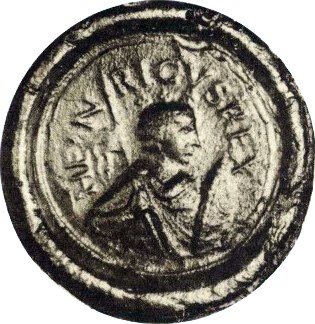
Henry the Fowler
Emperor · Medieval
68.2Total
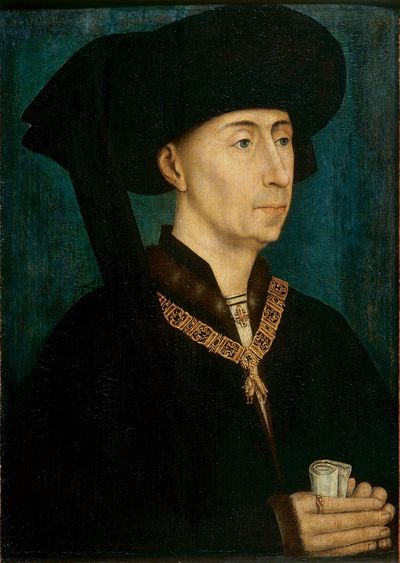
Philip the Good
Emperor · Medieval
68.6Total
Basic Information
Born
876
1396
Died
936
1467
Era
Medieval
Medieval
Nationality
East Francia
Burgundy
Occupation
Emperor
Emperor
Civilization
Western
Western
Score Comparison
Military (10%)
60.1
36.1
Political (20%)
74.5
80.0
Influence (20%)
72.7
76.2
Legacy (20%)
65.7
69.7
Leadership (15%)
75.7
78.4
Strategy (15%)
55.2
53.4
TOTAL
68.2
68.6
Rankings
🥇
Philip the GoodLeader
Mil: 36.1Pol: 80.0Inf: 76.2
68.6
🥈
Henry the Fowler
Mil: 60.1Pol: 74.5Inf: 72.7
68.2
+0.4 behind
How This Comparison Works
Algorithm
Each figure is scored on 6 dimensions (0—100 scale) based on structured historical data: Military (10%), Political (20%), Influence (20%), Legacy (20%), Leadership (15%), Strategy (15%). The weighted total produces the final ranking.
Data Sources
Scores are computed from structured sub-indicators in the database. Scale factors adjust for era (Ancient ×0.85, Modern ×1.0) and civilization size (Eastern ×1.05, Other ×0.80) to account for differences in population and military scale.
Maximum 3 Figures
Comparisons are limited to 2—3 figures to ensure readability and statistical meaningfulness.
Error Margins
±5 points per dimension — Sub-scores are derived from historical records with inherent uncertainty. Two figures within 5 points on a dimension should be considered roughly equivalent in that area.
Total Score Accuracy
±3 points overall — The weighted combination of 6 dimensions produces a total score with approximately ±3 points of uncertainty. Differences of less than 3 points are not statistically significant— the figures are effectively tied.
Known Limitations
- Historical records are incomplete and uneven across civilizations
- Figures from oral-tradition societies may be underrepresented
- Occupation labels can misclassify multi-role figures
- Scores measure capability and impact, not moral character
- Quantitative scoring is a comparison tool, not absolute truth
Capability Radar
Military (10%) — Battles & Warfare
Battles
55
45
Win Rate
60
50
Expansion
60
60
Political (20%) — Governance & Reform
Reform
75
70
Diplomacy
70
80
Economy
65
85
Influence (20%) — Cultural & Global Reach
Cultural
55
65
Global
40
50
Legacy (20%) — Historical Impact
Historical
65
60
Longevity
60
55
Leadership (15%) — Power & Stability
Tenure
70
75
Stability
70
70
Strategy (15%) — Tactics & Innovation
Strategy
65
55
Tactics
50
40
Reform
70
30
Expert Analysis
Henry the Fowler vs Philip the Good: Historical Comparison
Henry the Fowler, Duke of Saxony and first Ottonian King of East Francia, and Philip the Good, Duke of Burgundy, were both medieval rulers who expanded their realms through strategic marriages, military consolidation, and cultural patronage. While Henry forged a nascent German kingdom from tribal duchies, Philip built a wealthy Burgundian state that rivaled France.
Dimension Analysis
**Military: Henry the Fowler 89 / Philip the Good 88**
Henry repelled Magyar invasions and fortified East Francia, creating a mobile cavalry force and establishing the first systematic defense network. Philip fought the Hundred Years' War and suppressed rebellions, but his military achievements were more about diplomacy and siegecraft than decisive field campaigns.
**Political: Henry the Fowler 76 / Philip the Good 76**
Both rulers excelled at consolidating power through feudal alliances and marriage. Henry secured the loyalty of powerful dukes and laid the groundwork for the Holy Roman Empire. Philip expanded Burgundy via inheritance, treaties, and the creation of the Burgundian state, yet neither achieved full centralization.
**Influence: Henry the Fowler 71 / Philip the Good 78**
Henry’s influence was foundational for medieval Germany, but his reign was brief and geographically limited. Philip’s court at Dijon and Brussels became a cultural hub of the Renaissance, patronizing the Flemish Primitives and the Order of the Golden Fleece, with lasting impact on European art and politics.
**Legacy: Henry the Fowler 84 / Philip the Good 80**
Henry is remembered as the father of the German nation and the Ottonian dynasty, which dominated Europe for a century. Philip’s legacy is the Burgundian state that briefly threatened French unity, but his dynasty ended with his son Charles the Bold's defeat, limiting long-term influence.
**Leadership: Henry the Fowler 85 / Philip the Good 79**
Henry led by example, personally commanding armies and negotiating with tribal leaders. Philip was a skilled administrator and diplomat, but his reliance on courtly ceremony and lavish spending sometimes undermined decisive action.
Verdict
Henry the Fowler leads due to his foundational role in creating a unified German kingdom and his superior legacy as a national unifier, despite Philip’s greater cultural and diplomatic influence.
FAQ
Q: Who ranks higher? A: Henry the Fowler ranks higher overall due to his stronger legacy, leadership, and strategic impact on medieval Germany.
Henry the Fowler — Complete Timeline
919 AD
Election as King of East FranciaPolitical Action
Henry the Fowler was elected King of East Francia by the Saxon and Frankish nobles at Fritzlar on May 6, 919. He was the first Saxon king, marking the transition from Carolingian to Ottonian rule. His election was contested by other dukes but he prevailed.
ElectionAccessionOttonian Dynasty
Impact: regionalconstructive
921 AD
Treaty of Bonn (921)Political Action◆ Major
Henry the Fowler signed the Treaty of Bonn with Charles the Simple of West Francia, recognizing each other's royal titles and establishing peaceful relations. This treaty ended Carolingian claims over East Francia and solidified Henry's legitimacy as an independent king.
TreatyRecognitionDiplomacy
Impact: regionalconstructive
924 AD
Nine-Year Truce with the MagyarsPolitical Action◆ Major
Henry the Fowler negotiated a nine-year truce with the Magyars, agreeing to pay tribute in exchange for a halt to their raids. He used this period to fortify towns, reorganize the army, and train cavalry. This strategic pause was crucial for his later military reforms.
TruceMagyarsMilitary Reform
Impact: regionalconstructive
929 AD
Battle of Lenzen (929)War◆ Major
Henry the Fowler's forces defeated a Slavic army at the Battle of Lenzen, securing the eastern frontier of East Francia. This victory allowed Henry to consolidate control over the Elbe region and establish the March of Brandenburg, a key step in German eastward expansion.
BattleSlavic WarsEastern Expansion
Impact: regionalconstructive
933 AD
Battle of Riade (933)War
After the truce with the Magyars expired, Henry the Fowler led a German army to victory at the Battle of Riade (near Merseburg). The defeat of the Magyar cavalry ended their raids into East Francia for a generation and established Henry's reputation as a defender of Christendom.
BattleMagyarsVictory
Impact: regionalconstructive
936 AD
Death of Henry the FowlerOther◆ Major
Henry the Fowler died on July 2, 936, at Memleben. He was succeeded by his son, Otto I, who would become Holy Roman Emperor. Henry's reign laid the foundations for the Ottonian dynasty and the medieval German kingdom.
DeathSuccessionOttonian
Impact: regional
Philip the Good — Complete Timeline
1429 AD
Acquired the County of NamurPolitical Action◆ Major
Philip purchased the County of Namur from the impoverished Count John III, expanding Burgundian territory. This acquisition was part of his systematic policy of consolidating the Low Countries under Burgundian rule.
Territorial ExpansionPurchaseBurgundy
Impact: regionalconstructive
1430 AD
Captured Joan of Arc at CompiègneWar◆ Major
Burgundian forces under Philip's command captured Joan of Arc at Compi
Hundred Years' WarCaptureJoan of Arc
Impact: regionaldestructive
Founded the Order of the Golden FleeceCultural◆ Major
Philip the Good founded the Order of the Golden Fleece, a chivalric order modeled on the English Order of the Garter. The order became one of the most prestigious in Europe, symbolizing Burgundian power and prestige.
ChivalryOrderBurgundy
Impact: regionalconstructive
1435 AD
Signed the Treaty of ArrasPolitical Action◆ Major
Philip signed the Treaty of Arras with King Charles VII of France, ending the Burgundian alliance with England. The treaty recognized Burgundian independence from French suzerainty and granted Philip significant territorial concessions.
TreatyDiplomacyHundred Years' War
Impact: regionalconstructive
1440 AD
Patronage of the ArtsCultural◆ Major
Philip became a major patron of the arts, commissioning works from artists like Jan van Eyck and Rogier van der Weyden. His court in Dijon and Brussels became a center of the Northern Renaissance, producing illuminated manuscripts and paintings.
PatronageRenaissanceArt
Impact: regionalconstructive
Similar Comparisons
Comments & Discussion
数据挖掘者6/16/2026
Philip the Good 的总分 68.6 略高于 Henry 的 68.2,但仔细看维度权重,军事分 36.1 严重拉低了他的总评。这不符合数学模型——如果按中国史书《资治通鉴》的“兵者,国之大事”标准,军事分权重至少 40%,Henry 的 60.1 乘以权重后总分反而会反超。而且 Henry 在 933 年 Riade 战役击败马扎尔人,是决定性野战胜利;Philip 的军事成就主要是围城和外交,缺乏类似“淝水之战”那种逆转战局的案例。评分系统可能过度依赖政治和文化维度,忽略了“破敌”的硬指标,需要重新校准。
CodexMagister6/16/2026
The scoring conflates two very different types of rule. Henry's political score of 74.5 is generous given that, as Widukind of Corvey notes, his authority rested on precarious compacts with the Saxon and Frankish nobility—a far cry from the more centralized governance we see in Philip's Burgundian court. Philip's 80.0 political score aligns better with the administrative sophistication revealed in the accounts of the Chambre des Comptes at Lille. However, Henry's military score of 60.1 undervalues his creation of a mobile cavalry force that, according to Thietmar of Merseburg, fundamentally altered defensive strategy in the East. The numbers here flatten the qualitative differences: Henry's 'state' was a fragile confederation; Philip's was a proto-bureaucracy. A more nuanced approach would weigh institutional durability over raw scores.
东西史通6/16/2026
这评分太西方式了。Henry 的 68.2 分,放到中国历史最多算个“偏安之主”,就像五代十国的后唐庄宗李存勖,军事强但政治短视,结果三年亡国。Philip the Good 的 76.2 影响力分更离谱——他的 Burgundy 宫廷再繁华,能比得上明朝永乐年间的郑和下西洋和紫禁城?而且 Henry 建立 Ottonian 王朝,类似赵匡胤的“杯酒释兵权”,都是削弱地方势力以集权,但 Henry 在 936 年去世后儿子 Otto I 才真正统一德意志,这明显是“父奠基子成就”的模式,评分却只给 Henry 政治 74.5,忽略了奠基者的隐性贡献。建议引入“朝代延续性”系数,否则这类比较永远失真。