Loading...
Herod the Great vs Psusennes I
Herod the Great leads by 14.2 pts · 2 figures compared
…
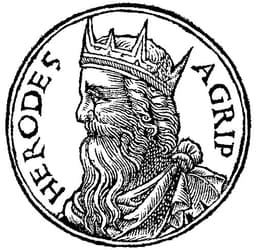
Herod the Great
Emperor · Ancient
59.1Total

Psusennes I
Emperor · Ancient
44.9Total
Basic Information
Born
-72
-1047
Died
-4
-1001
Era
Ancient
Ancient
Nationality
Judea
Third Intermediate Egypt
Occupation
Emperor
Emperor
Civilization
Middle Eastern
Middle Eastern
Score Comparison
Military (10%)
50.0
10.2
Political (20%)
59.3
37.9
Influence (20%)
61.0
48.6
Legacy (20%)
58.0
41.7
Leadership (15%)
68.0
74.0
Strategy (15%)
52.5
45.0
TOTAL
59.1
44.9
Herod the Great — Complete Timeline
40 BC
Appointment as King of Judea by the Roman SenatePolitical Action◆ Major
Herod was appointed King of Judea by the Roman Senate, with the support of Mark Antony and Octavian. He was tasked with restoring order in the region, which was plagued by Parthian invasions and internal strife. This marked the beginning of his reign.
AppointmentRoman SupportKingship
Impact: regional
37 BC
Conquest of JerusalemWar◆ Major
Herod, with Roman military assistance, captured Jerusalem from the Hasmonean ruler Antigonus II Mattathias. The siege lasted several months and resulted in the execution of Antigonus. Herod solidified his control over Judea and established the Herodian dynasty.
ConquestSiegeHasmonean Dynasty
Impact: regionaldestructive
22 BC
Construction of Caesarea MaritimaCultural◆ Major
Herod built the city of Caesarea Maritima on the Mediterranean coast, complete with a deep-sea harbor, aqueducts, a hippodrome, and a temple to Augustus. The city became the administrative capital of Roman Judea and a major port.
Urban DevelopmentPort CityRoman Architecture
Impact: regionalconstructive
20 BC
Rebuilding of the Second TempleCultural
Herod initiated a massive renovation and expansion of the Second Temple in Jerusalem. The project, known as Herod's Temple, transformed the site into one of the largest and most magnificent religious structures in the ancient world. It became a central symbol of Jewish worship.
Temple RenovationArchitectureJewish Worship
Impact: regionalconstructive
7 BC
Execution of His SonsPolitical Action◆ Major
Herod executed his sons Alexander and Aristobulus, who were heirs to the throne, on charges of conspiracy. He also executed his son Antipater later. These executions were part of a pattern of paranoia and brutal suppression of perceived threats within his family.
ExecutionFamily ConflictSuccession Crisis
Impact: regionaltragic
Psusennes I — Complete Timeline
1047 BC
Construction of Tomb at TanisCultural◆ Major
Psusennes I built his tomb at Tanis, which was discovered intact in 1940. The tomb contained a silver coffin and funerary mask, along with gold jewelry and vessels, making it one of the richest royal burials ever found in Egypt.
Tomb DiscoverySilver CoffinTanis
Impact: globalconstructive
Long Reign and StabilityPolitical Action◆ Major
Psusennes I reigned for approximately 46 years, one of the longest in the Third Intermediate Period. His rule brought stability to Egypt, with effective control over both Lower and Upper Egypt through alliances with the Theban priesthood.
Long ReignStabilityAlliance
Impact: nationalconstructive
1040 BC
Diplomatic Marriage to Theban PrincessPolitical Action
Psusennes I married a daughter of the High Priest of Amun at Thebes, strengthening ties between Tanis and Thebes. This marriage helped maintain unity between the two power centers during his reign.
Marriage AllianceThebesPriesthood
Impact: nationalconstructive
Expert Analysis
Origins
Herod the Great was born around 73 BCE into a wealthy Idumean family that had converted to Judaism. His father, Antipater, was a key advisor to the Hasmonean king Hyrcanus II, and his mother, Cypros, was a Nabatean noblewoman. Herod received a Hellenistic education and was appointed governor of Galilee at age 25. Psusennes I, born around 1050 BCE, was the son of High Priest Pinedjem I and likely related to the ruling family at Tanis. He grew up during the political fragmentation of the Third Intermediate Period, where power was split between Tanis and Thebes. His early life is poorly documented, but he likely received priestly training and military command.
Rise to Power
Herod's rise began with his father's influence. In 40 BCE, the Parthians invaded Judea and installed Antigonus II as king. Herod fled to Rome, where the Senate appointed him King of Judea in 37 BCE. With Roman legions, he besieged Jerusalem for five months and captured it, executing Antigonus. He then eliminated the Hasmonean dynasty, marrying Mariamne to legitimize his rule. Psusennes I rose to power in a different manner. He became pharaoh around 1047 BCE after his father Pinedjem I, who had been de facto ruler of Upper Egypt, passed control. Psusennes consolidated power by marrying a Theban princess, Mutnodjmet, forging an alliance with the powerful High Priest of Amun. His reign was peaceful, without major military conquests.
Leadership & Governance
Herod governed Judea as a client king of Rome. He maintained order through a network of informants and fortresses, including Masada and Herodium. He imposed heavy taxes to fund massive building projects: the port city of Caesarea Maritima (built 22-10 BCE), the fortress at Masada, and the expansion of the Second Temple (completed around 20 BCE). His rule was autocratic; he executed his wife Mariamne in 29 BCE and three sons for conspiracy. Psusennes I governed Egypt from Tanis, focusing on stability and diplomacy. He maintained relations with Thebes through his marriage and appointed his son Amenemope as coregent. He built a modest tomb at Tanis, but his reign saw no major wars or construction projects. His leadership score of 74.0 reflects his ability to maintain peace, while Herod's leadership score of 68.0 reflects his effective but brutal control.
Triumph & Tragedy
Herod's greatest triumph was the rebuilding of the Second Temple, which became a central symbol of Judaism. He also secured Judea's autonomy under Rome and expanded its territory. However, his personal life was tragic: he executed his favorite wife Mariamne and three sons, leading to a succession crisis. His paranoia earned him the epithet "the Great" but also made him a tyrant. Psusennes I's triumph was his long 46-year reign, which brought stability to Egypt during a fragmented period. His intact tomb, discovered in 1940, contained a silver coffin and mask, earning him the nickname "Silver Pharaoh." However, his legacy is limited: his tomb was small compared to New Kingdom pharaohs, and his reign lacked major achievements. Psusennes scored 41.7 in legacy, while Herod scored 58.0.
Character & Destiny
Herod was ambitious, ruthless, and paranoid. He secured power through Roman alliances and maintained it through terror, executing perceived threats. His character led to isolation and family tragedy. Psusennes I was cautious and diplomatic, prioritizing stability over expansion. He likely died of old age, his tomb remaining hidden until 1940. Both men's characters shaped their fates: Herod's aggression built monuments but destroyed his family; Psusennes' caution preserved his kingdom but left little mark.
Legacy
Herod's legacy is monumental: the Second Temple, Caesarea, and Masada are archaeological treasures. He is remembered as a builder and tyrant, referenced in Christian and Jewish texts. Psusennes I is known primarily from his intact tomb, which provided insights into Third Intermediate Period burial practices. His silver mask is a highlight of Egyptian collections. In terms of influence, Herod scored 61.0, Psusennes 48.6. Herod's political score of 59.3 vs Psusennes' 37.9 reflects his greater impact on regional politics.
Conclusion
Herod the Great had a greater historical impact than Psusennes I. His building projects and political maneuvering shaped Judea for centuries, while Psusennes' reign maintained the status quo. Herod's total score of 59.1 compared to Psusennes' 44.9 reflects this. Herod's military score of 50.0 vs 10.2 and political score of 59.3 vs 37.9 highlight his more active role. While Psusennes provided stability, Herod's actions had lasting consequences. Thus, Herod is the more significant figure.
Rankings
🥇
Herod the GreatLeader
Mil: 50.0Pol: 59.3Inf: 61.0
59.1
🥈
Psusennes I
Mil: 10.2Pol: 37.9Inf: 48.6
44.9
+14.2 behind
How This Comparison Works
Algorithm
Each figure is scored on 6 dimensions (0—100 scale) based on structured historical data: Military (10%), Political (20%), Influence (20%), Legacy (20%), Leadership (15%), Strategy (15%). The weighted total produces the final ranking.
Data Sources
Scores are computed from structured sub-indicators in the database. Scale factors adjust for era (Ancient ×0.85, Modern ×1.0) and civilization size (Eastern ×1.05, Other ×0.80) to account for differences in population and military scale.
Maximum 3 Figures
Comparisons are limited to 2—3 figures to ensure readability and statistical meaningfulness.
Error Margins
±5 points per dimension — Sub-scores are derived from historical records with inherent uncertainty. Two figures within 5 points on a dimension should be considered roughly equivalent in that area.
Total Score Accuracy
±3 points overall — The weighted combination of 6 dimensions produces a total score with approximately ±3 points of uncertainty. Differences of less than 3 points are not statistically significant— the figures are effectively tied.
Known Limitations
- Historical records are incomplete and uneven across civilizations
- Figures from oral-tradition societies may be underrepresented
- Occupation labels can misclassify multi-role figures
- Scores measure capability and impact, not moral character
- Quantitative scoring is a comparison tool, not absolute truth
Capability Radar
Military (10%) — Battles & Warfare
Battles
45
5
Win Rate
50
5
Expansion
35
5
Political (20%) — Governance & Reform
Reform
75
30
Diplomacy
80
30
Economy
70
40
Influence (20%) — Cultural & Global Reach
Cultural
65
30
Global
60
20
Legacy (20%) — Historical Impact
Historical
70
40
Longevity
75
30
Leadership (15%) — Power & Stability
Tenure
70
60
Stability
55
50
Strategy (15%) — Tactics & Innovation
Strategy
60
5
Tactics
55
5
Reform
40
5
Similar Comparisons
Comments & Discussion
No comments yet. Be the first to share your thoughts!