Loading...
This comparison has not been analyzed yet.
One-time AI generation (~1 minute). Scores and timeline are already available below.
Heydar Aliyev vs Zlatko Lagumdzija
Heydar Aliyev leads by 10.7 pts · 2 figures compared
…
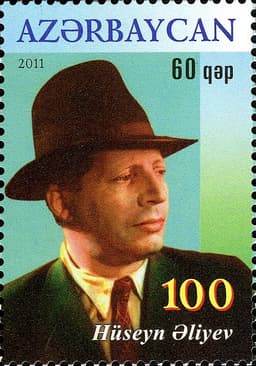
Heydar Aliyev
Politician · Modern
59.0Total

Zlatko Lagumdzija
Politician · Modern
48.3Total
Basic Information
Born
1923
1955
Died
—
—
Era
Modern
Modern
Nationality
Azerbaijan
Bosnia
Occupation
Politician
Politician
Civilization
Eastern
Western
Score Comparison
Military (10%)
38.3
48.2
Political (20%)
70.0
45.1
Influence (20%)
62.0
50.2
Legacy (20%)
52.0
40.8
Leadership (15%)
78.0
65.7
Strategy (15%)
45.0
41.4
TOTAL
59.0
48.3
Heydar Aliyev — Complete Timeline
1993 AD
Became President of AzerbaijanPolitical Action◆ Major
Heydar Aliyev was elected President of Azerbaijan after a military coup ousted the previous government. He had previously served as a KGB general and First Secretary of the Communist Party of Azerbaijan. His presidency stabilized the country after the chaos of the post-Soviet period and the Nagorno-Karabakh war.
Rise to PowerPost-Soviet TransitionStabilization
Impact: national
1994 AD
Negotiated Ceasefire in Nagorno-KarabakhWar◆ Major
Aliyev brokered a ceasefire agreement with Armenia, ending the active phase of the Nagorno-Karabakh war. The ceasefire left Armenia in control of the disputed region and surrounding territories. Aliyev used the ceasefire to consolidate power and begin rebuilding the Azerbaijani military.
CeasefireNagorno-KarabakhConflict Resolution
Impact: regional
Signed 'Contract of the Century'Political Action◆ Major
Aliyev signed a major oil production sharing agreement with a consortium of international oil companies, known as the 'Contract of the Century.' The deal opened Azerbaijan's oil sector to foreign investment and laid the foundation for the country's economic growth. It was a key element of his economic strategy.
Oil AgreementForeign InvestmentEconomic Development
Impact: globalconstructive
1995 AD
Established Authoritarian RegimePolitical Action◆ Major
Aliyev consolidated authoritarian rule by suppressing political opposition, controlling the media, and rigging elections. He amended the constitution to extend presidential powers and ensure his continued rule. His regime was characterized by nepotism and corruption, but also provided stability.
AuthoritarianismPolitical RepressionCorruption
Impact: nationaldestructive
2003 AD
Appointed Son as Prime MinisterPolitical Action◆ Major
Heydar Aliyev appointed his son Ilham Aliyev as Prime Minister of Azerbaijan, setting the stage for a dynastic succession. Heydar's health was failing, and he stepped down as president later that year, with Ilham winning the subsequent election. This established the Aliyev family's political dynasty.
Dynastic SuccessionPolitical DynastyPower Transfer
Impact: national
Zlatko Lagumdzija — Complete Timeline
1997 AD
Leadership of the Social Democratic PartyPolitical Action◆ Major
Lagumdzija became the leader of the Social Democratic Party (SDP) in 1997, transforming it into a major multi-ethnic party in Bosnia. He advocated for social democracy, EU integration, and anti-nationalist policies.
Party leadershipSDPSocial democracy
Impact: nationalconstructive
2001 AD
Appointment as Foreign MinisterPolitical Action◆ Major
Lagumdzija served as Foreign Minister of Bosnia and Herzegovina from 2001 to 2003, focusing on EU integration and regional cooperation. He worked to improve Bosnia's international image and relations with neighboring countries.
Foreign MinisterEU integrationDiplomacy
Impact: nationalconstructive
2012 AD
Second term as Foreign MinisterPolitical Action◆ Major
Lagumdzija served again as Foreign Minister from 2012 to 2015, continuing his work on EU accession. He faced challenges from ethnic divisions and slow reform progress, but maintained Bosnia's EU candidacy status.
Foreign MinisterEU accessionReform
Impact: national
This comparison has not been analyzed yet.
One-time AI generation (~1 minute). Scores and timeline are already available below.
Rankings
🥇
Heydar AliyevLeader
Mil: 38.3Pol: 70.0Inf: 62.0
59.0
🥈
Zlatko Lagumdzija
Mil: 48.2Pol: 45.1Inf: 50.2
48.3
+10.7 behind
How This Comparison Works
Algorithm
Each figure is scored on 6 dimensions (0—100 scale) based on structured historical data: Military (10%), Political (20%), Influence (20%), Legacy (20%), Leadership (15%), Strategy (15%). The weighted total produces the final ranking.
Data Sources
Scores are computed from structured sub-indicators in the database. Scale factors adjust for era (Ancient ×0.85, Modern ×1.0) and civilization size (Eastern ×1.05, Other ×0.80) to account for differences in population and military scale.
Maximum 3 Figures
Comparisons are limited to 2—3 figures to ensure readability and statistical meaningfulness.
Error Margins
±5 points per dimension — Sub-scores are derived from historical records with inherent uncertainty. Two figures within 5 points on a dimension should be considered roughly equivalent in that area.
Total Score Accuracy
±3 points overall — The weighted combination of 6 dimensions produces a total score with approximately ±3 points of uncertainty. Differences of less than 3 points are not statistically significant— the figures are effectively tied.
Known Limitations
- Historical records are incomplete and uneven across civilizations
- Figures from oral-tradition societies may be underrepresented
- Occupation labels can misclassify multi-role figures
- Scores measure capability and impact, not moral character
- Quantitative scoring is a comparison tool, not absolute truth
Capability Radar
Military (10%) — Battles & Warfare
Battles
5
31
Win Rate
5
32
Expansion
10
35
Political (20%) — Governance & Reform
Reform
70
35
Diplomacy
75
45
Economy
70
30
Influence (20%) — Cultural & Global Reach
Cultural
55
20
Global
55
20
Legacy (20%) — Historical Impact
Historical
60
25
Longevity
50
20
Leadership (15%) — Power & Stability
Tenure
75
40
Stability
65
25
Strategy (15%) — Tactics & Innovation
Strategy
15
39
Tactics
10
40
Reform
20
41
Similar Comparisons
Comments & Discussion
No comments yet. Be the first to share your thoughts!