Loading...
Hideki Tojo vs Tadeusz Kosciuszko
Tadeusz Kosciuszko leads by 10.2 pts · 2 figures compared
…
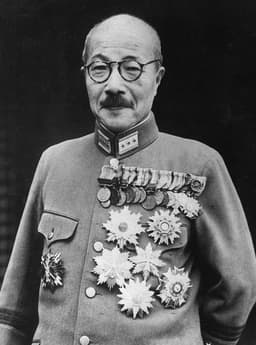
Hideki Tojo
General · Modern
53.9Total
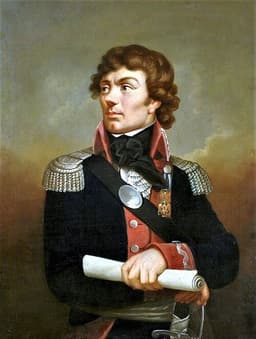
Tadeusz Kosciuszko
General · Modern
64.1Total
Basic Information
Born
1884
1746
Died
1948
1817
Era
Modern
Modern
Nationality
Japan
Poland
Occupation
General
General
Civilization
Eastern
Western
Score Comparison
Military (10%)
70.0
47.5
Political (20%)
48.0
68.0
Influence (20%)
55.0
68.0
Legacy (20%)
50.0
68.0
Leadership (15%)
53.2
64.5
Strategy (15%)
55.0
55.0
TOTAL
53.9
64.1
Hideki Tojo — Complete Timeline
1941 AD
Attack on Pearl HarborWar
As Prime Minister, Hideki Tojo authorized the attack on the US naval base at Pearl Harbor, Hawaii. The surprise attack brought the United States into World War II. Tojo's decision was based on the belief that war with the US was inevitable due to resource embargoes and diplomatic failures.
World War IIPearl HarborUS-Japan War
Impact: globaldestructive
Appointment as Prime MinisterPolitical Action◆ Major
Hideki Tojo was appointed Prime Minister of Japan, replacing Fumimaro Konoe. He retained his position as Army Minister and later took on other portfolios, consolidating power. His appointment marked the ascendancy of the military faction in the Japanese government and the shift towards total war.
Prime MinisterMilitary GovernmentWorld War II
Impact: national
1942 AD
Fall of SingaporeWar◆ Major
Under Tojo's leadership, Japanese forces captured Singapore from the British in a swift campaign. The fall of Singapore was one of the worst British military defeats in history. It demonstrated Japanese military prowess and led to the occupation of a key strategic location in Southeast Asia.
World War IISingaporeJapanese Victory
Impact: global
1948 AD
Execution by the International Military Tribunal for the Far EastPolitical Action◆ Major
Hideki Tojo was found guilty of war crimes by the International Military Tribunal for the Far East and sentenced to death. He was executed by hanging on December 23, 1948. His trial and execution symbolized the Allied effort to hold Japanese leaders accountable for wartime atrocities.
War CrimesExecutionTokyo Trials
Impact: globaltragic
Tadeusz Kosciuszko — Complete Timeline
1777 AD
Battle of Saratoga (engineering contributions)War◆ Major
Kosciuszko designed fortifications and selected defensive positions for the American army at Saratoga. His work contributed to the American victory, a turning point in the Revolutionary War.
American RevolutionSaratogaEngineering
Impact: regional
1778 AD
Fortification of West PointWar◆ Major
Kosciuszko was assigned to fortify West Point on the Hudson River. He designed and supervised the construction of fortifications that made the site a key American stronghold for the remainder of the war.
American RevolutionWest PointFortifications
Impact: regionalconstructive
1794 AD
Kosciuszko UprisingWar
Kosciuszko led a national uprising in Poland against Russian and Prussian occupation. He proclaimed the Act of Insurrection and won the Battle of Rac
Polish UprisingIndependenceDefeat
Impact: nationaltragic
Battle of RacławiceWar◆ Major
Kosciuszko led Polish forces, including peasant scythemen, to victory over a larger Russian army at Rac
Kosciuszko UprisingBattlePeasants
Impact: national
Capture and imprisonment at the Battle of MaciejowiceWar◆ Major
Kosciuszko was wounded and captured by Russian forces at the Battle of Maciejowice. His capture effectively ended the uprising, and he was imprisoned in St. Petersburg until 1796.
Kosciuszko UprisingCaptureImprisonment
Impact: nationaltragic
Expert Analysis
Hideki Tojo vs Tadeusz Kosciuszko
The General and the Engineer
In December 1941, Hideki Tojo stood before the Japanese Diet and declared that the fate of Asia would be decided by the sword. Half a world away and a century and a half earlier, Tadeusz Kosciuszko had knelt in a Polish field, handing a rifle to a peasant and telling him that liberty was worth dying for. Both men were generals. Both believed they were fighting for their nations' survival. Yet one ended his life hanged as a war criminal, the other enshrined as a national saint. What made the difference? The answer lies not merely in victory or defeat, but in the moral architecture of their ambitions.
Origins
Hideki Tojo was born in 1884 into a samurai family that had lost its feudal privileges. Japan was racing to modernize, and the military offered a path to honor and power. Tojo absorbed the ethos of absolute loyalty to the emperor and the conviction that Japan's destiny lay in expansion. He was not a man of ideas but of orders—efficient, cold, and utterly convinced that might made right.
Tadeusz Kosciuszko, born in 1746, grew up in a Poland that was being erased from the map by Russia, Prussia, and Austria. His family were minor gentry, but his education in Warsaw and Paris exposed him to Enlightenment thinkers like Rousseau and Montesquieu. He believed that liberty was universal, not a privilege of birth. When he sailed to America in 1776 to fight for a revolution he had never seen, he carried not a sword but a book on fortifications—and a conviction that freedom had no borders.
Rise to Power
Tojo's rise was a study in bureaucratic ruthlessness. He climbed the ranks of the Imperial Army through discipline and ideological purity, serving as chief of the military police in Manchuria, where he crushed dissent without hesitation. By 1941, when he replaced the hesitant Prime Minister Fumimaro Konoe, Tojo had become the embodiment of militarist Japan. He held three portfolios simultaneously—Prime Minister, Army Minister, and Home Minister—concentrating power that no one could challenge.
Kosciuszko's ascent was more humble and more international. He arrived in America as a volunteer, his only credential being a knowledge of military engineering. His work at the Battle of Saratoga in 1777—selecting defensive positions that turned the tide—earned him the trust of George Washington. He was then sent to fortify West Point, a fortress he designed so well that the British never dared attack it. When he returned to Poland in 1784, he was already a legend, but he had to earn his command through proven skill, not political maneuvering.
Leadership & Governance
Tojo governed through terror and centralization. He believed that Japan's survival depended on a "Greater East Asia Co-Prosperity Sphere"—a euphemism for military conquest. His decision to authorize the attack on Pearl Harbor in 1941 was a gamble that he believed would crush American will. When it failed, he doubled down, demanding total sacrifice from his people while isolating Japan from any possibility of negotiated peace. His leadership was a fortress without a door.
Kosciuszko led through inspiration and inclusion. During the Kosciuszko Uprising of 1794, he proclaimed the Act of Insurrection, which not only called for independence but also promised land reforms and the abolition of serfdom. At the Battle of Racławice, he armed peasants with scythes and led them into battle alongside regular soldiers—a revolutionary act in a society where peasants were barely considered human. He understood that a nation could not be free if its people were enslaved.
Triumph & Tragedy
Tojo's greatest triumph was the fall of Singapore in 1942, a stunning victory that humiliated the British Empire and brought Japan to the height of its power. For a few months, his strategy seemed unstoppable. But the tragedy was already unfolding: the same militarist logic that won Singapore condemned Japan to a war it could not win. Tojo's refusal to retreat or negotiate led to firebombed cities, atomic destruction, and the deaths of millions.
Kosciuszko's triumph was the victory at Racławice, where his peasant army defeated a larger Russian force. It was a symbol of what a free people could achieve. But his tragedy came at the Battle of Maciejowice in 1794, where he was wounded and captured. His uprising collapsed, and Poland was partitioned out of existence. He spent years in prison, then exile, dying in Switzerland in 1817—a man who had given everything for a country that no longer existed on any map.
Character & Destiny
Tojo's character was shaped by fear—fear of losing face, fear of the emperor's displeasure, fear of appearing weak. He could not admit error. When Japan's situation became desperate, he clung to power until forced out in 1944. Even at his trial before the International Military Tribunal for the Far East, he showed no remorse. He was executed in 1948, a man who had chosen honor over humanity.
Kosciuszko's character was shaped by hope. He believed that justice was stronger than armies. After his capture, he was offered a pardon by the Russian Tsar if he would swear allegiance—he refused. In his will, he left his American pension to buy the freedom of slaves, including his friend Thomas Jefferson's. He died poor, but free of the compromises that corrupt the powerful. His destiny was not to win, but to be worthy of the cause.
Legacy
Tojo's legacy is a warning. In Japan, he is remembered as a symbol of militarist disaster. His name appears in textbooks as a cautionary tale. The system he served collapsed into ruin, and his ideology is universally condemned. He left behind nothing but ashes and a lesson about the cost of unchecked power.
Kosciuszko's legacy is a beacon. Poland, though erased from maps for over a century, never forgot him. His name adorns streets, monuments, and the highest peak in Australia—a testament to a man who fought for freedom everywhere. He is not just a national hero but a universal one: a general who believed that the only just war is one fought for the liberation of all, not the domination of others.
Conclusion
Standing at the gallows in 1948, Tojo saw only the defeat of his nation. Kosciuszko, dying in exile in 1817, could not know that Poland would rise again. But history has rendered its verdict. One man used his genius to build a prison for his people; the other used his to build a door. The difference between them is not in their scores or their strategies, but in the answer to a single question: Did they fight to rule, or to free?
Rankings
🥇
Tadeusz KosciuszkoLeader
Mil: 47.5Pol: 68.0Inf: 68.0
64.1
🥈
Hideki Tojo
Mil: 70.0Pol: 48.0Inf: 55.0
53.9
+10.2 behind
How This Comparison Works
Algorithm
Each figure is scored on 6 dimensions (0—100 scale) based on structured historical data: Military (10%), Political (20%), Influence (20%), Legacy (20%), Leadership (15%), Strategy (15%). The weighted total produces the final ranking.
Data Sources
Scores are computed from structured sub-indicators in the database. Scale factors adjust for era (Ancient ×0.85, Modern ×1.0) and civilization size (Eastern ×1.05, Other ×0.80) to account for differences in population and military scale.
Maximum 3 Figures
Comparisons are limited to 2—3 figures to ensure readability and statistical meaningfulness.
Error Margins
±5 points per dimension — Sub-scores are derived from historical records with inherent uncertainty. Two figures within 5 points on a dimension should be considered roughly equivalent in that area.
Total Score Accuracy
±3 points overall — The weighted combination of 6 dimensions produces a total score with approximately ±3 points of uncertainty. Differences of less than 3 points are not statistically significant— the figures are effectively tied.
Known Limitations
- Historical records are incomplete and uneven across civilizations
- Figures from oral-tradition societies may be underrepresented
- Occupation labels can misclassify multi-role figures
- Scores measure capability and impact, not moral character
- Quantitative scoring is a comparison tool, not absolute truth
Capability Radar
Military (10%) — Battles & Warfare
Battles
65
55
Win Rate
40
60
Expansion
70
30
Political (20%) — Governance & Reform
Reform
30
45
Diplomacy
35
55
Economy
25
35
Influence (20%) — Cultural & Global Reach
Cultural
30
65
Global
55
55
Legacy (20%) — Historical Impact
Historical
55
70
Longevity
40
60
Leadership (15%) — Power & Stability
Tenure
60
40
Stability
20
30
Strategy (15%) — Tactics & Innovation
Strategy
50
65
Tactics
55
70
Reform
45
50
Similar Comparisons
Comments & Discussion
工程学叛徒6/16/2026
说Tojo是将军?别侮辱这个职业了。他根本不懂后勤,只会喊“精神胜利法”。Kosciuszko在萨拉托加设计工事时,Tojo的祖先还在拔刀砍农民呢。一个工程师用堡垒拯救军队,一个“将军”用狂热葬送国家。Tojo的勋章是用百万人的尸骨换来的,而Kosciuszko的荣耀来自他设计的自由城防。
HANGING JUDGE6/16/2026
Tojo was a classic authoritarian bully who got what he deserved. He thought martial law and Yamato spirit could win a war against industrial giants like the US. Meanwhile, Kosciuszko actually fought *with* his men, not just sent them to die. Tojo micromanaged operations from Tokyo while troops starved in New Guinea. That's not leadership - that's incompetence dressed up in samurai armor. The gallows was too kind.
DATA SKEPTIC6/16/2026
Everyone romanticizes Kosciuszko as some saint, but let's look at actual outcomes. He led an uprising in 1794 that got Poland absolutely crushed. His engineering? Fortifications that couldn't hold against Russian artillery. Meanwhile Tojo orchestrated Japan's entire Pacific strategy, conquered half of Asia in six months. Power demands results. Kosciuszko's noble failures make for nice statues, but Tojo's efficiency won real wars until the nukes came.
自由骑士6/16/2026
你管Tojo叫将军?他不过是个穿着军装的暴君罢了。Kosciuszko把土地分给农奴,Tojo却把整个亚洲当做殖民地。一个为每个人争取自由,一个剥夺所有人的自由。历史的天平不会因为谁赢了就偏向谁——Kosciuszko失败了,但全世界都记得他为了什么而战。Tojo赢了,却赢得耻辱。
CLASSICS SCHOLAR6/16/2026
This comparison is absurd. Kosciuszko was a 18th-century Enlightenment thinker who corresponded with Jefferson and designed fortifications at West Point. Tojo was a 20th-century fascist who believed in imperial destiny. One studied Rousseau and believed in human dignity; the other studied military tactics and believed in racial hierarchy. They share a job title, not a legacy. Comparing them is like comparing Socrates to a street fighter.