Loading...
This comparison has not been analyzed yet.
One-time AI generation (~1 minute). Scores and timeline are already available below.
Hijikata Toshizo vs Roberto Viola
Hijikata Toshizo leads by 6.4 pts · 2 figures compared
…
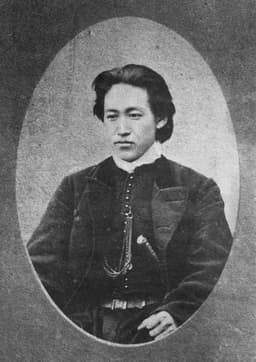
Hijikata Toshizo
General · Modern
43.2Total

Roberto Viola
General · Modern
36.8Total
Basic Information
Born
1835
1924
Died
1869
—
Era
Modern
Modern
Nationality
Japan
Argentina
Occupation
General
General
Civilization
Eastern
Western
Score Comparison
Military (10%)
45.0
22.6
Political (20%)
26.4
26.4
Influence (20%)
55.7
47.1
Legacy (20%)
45.8
36.7
Leadership (15%)
33.5
38.1
Strategy (15%)
43.3
39.6
TOTAL
43.2
36.8
Hijikata Toshizo — Complete Timeline
1863 AD
Joined the ShinsengumiPolitical Action◆ Major
Hijikata Toshizo joined the newly formed Shinsengumi in Kyoto. He quickly became the vice-commander, known for his strict discipline and ruthless enforcement of the group's code. He helped establish the Shinsengumi as a feared police force.
ShinsengumiKyotoPolice
Impact: national
1864 AD
Ikedaya IncidentWar◆ Major
Hijikata led Shinsengumi forces in a raid on the Ikedaya Inn in Kyoto, where anti-shogunate plotters were meeting. The raid resulted in the deaths or capture of many plotters, thwarting a plan to burn Kyoto. This event cemented the Shinsengumi's reputation.
IkedayaRaidShinsengumi
Impact: nationaldestructive
1868 AD
Battle of Toba-FushimiWar◆ Major
Hijikata fought in the Battle of Toba-Fushimi as part of the shogunate forces. The Shinsengumi suffered heavy losses and were forced to retreat. This defeat marked the beginning of the end for the Tokugawa shogunate.
Boshin WarBattleDefeat
Impact: nationaldestructive
1869 AD
Battle of HakodateWar◆ Major
Hijikata fought in the Battle of Hakodate, the final battle of the Boshin War, as part of the Republic of Ezo forces. He was killed in action by a bullet while leading a charge. His death marked the end of the Shinsengumi and the last resistance to the Meiji Restoration.
Boshin WarBattleDeath
Impact: nationaltragic
Roberto Viola — Complete Timeline
1981 AD
Appointed President of Argentina by the military juntaPolitical Action◆ Major
On March 29, 1981, Roberto Viola was appointed President of Argentina by the military junta, succeeding Jorge Videla. His presidency was part of the National Reorganization Process, the military dictatorship that ruled Argentina from 1976 to 1983.
PresidencyMilitary DictatorshipNational Reorganization Process
Impact: national
Oversaw the continuation of the Dirty WarPolitical Action◆ Major
During Viola's presidency, the military junta continued its campaign of state terrorism against leftist guerrillas, political opponents, and suspected subversives. Thousands were kidnapped, tortured, and killed or disappeared. Human rights organizations documented systematic abuses.
Dirty WarHuman Rights AbusesState Terrorism
Impact: nationaldestructive
Removed from office by the military juntaPolitical Action
On December 11, 1981, Roberto Viola was removed from the presidency by the military junta due to health issues and internal disagreements. He was replaced by Leopoldo Galtieri. Viola's removal reflected instability within the dictatorship.
RemovalMilitary JuntaPolitical Instability
Impact: national
1985 AD
Convicted for human rights crimes during the Dirty WarPolitical Action◆ Major
In 1985, Roberto Viola was convicted by the Argentine courts for human rights abuses committed during the Dirty War, including illegal detentions, torture, and forced disappearances. He was sentenced to 17 years in prison, later reduced.
Human Rights TrialDirty WarConviction
Impact: nationaldestructive
This comparison has not been analyzed yet.
One-time AI generation (~1 minute). Scores and timeline are already available below.
Rankings
🥇
Hijikata ToshizoLeader
Mil: 45.0Pol: 26.4Inf: 55.7
43.2
🥈
Roberto Viola
Mil: 22.6Pol: 26.4Inf: 47.1
36.8
+6.4 behind
How This Comparison Works
Algorithm
Each figure is scored on 6 dimensions (0—100 scale) based on structured historical data: Military (10%), Political (20%), Influence (20%), Legacy (20%), Leadership (15%), Strategy (15%). The weighted total produces the final ranking.
Data Sources
Scores are computed from structured sub-indicators in the database. Scale factors adjust for era (Ancient ×0.85, Modern ×1.0) and civilization size (Eastern ×1.05, Other ×0.80) to account for differences in population and military scale.
Maximum 3 Figures
Comparisons are limited to 2—3 figures to ensure readability and statistical meaningfulness.
Error Margins
±5 points per dimension — Sub-scores are derived from historical records with inherent uncertainty. Two figures within 5 points on a dimension should be considered roughly equivalent in that area.
Total Score Accuracy
±3 points overall — The weighted combination of 6 dimensions produces a total score with approximately ±3 points of uncertainty. Differences of less than 3 points are not statistically significant— the figures are effectively tied.
Known Limitations
- Historical records are incomplete and uneven across civilizations
- Figures from oral-tradition societies may be underrepresented
- Occupation labels can misclassify multi-role figures
- Scores measure capability and impact, not moral character
- Quantitative scoring is a comparison tool, not absolute truth
Capability Radar
Military (10%) — Battles & Warfare
Battles
25
10
Win Rate
30
10
Expansion
10
5
Political (20%) — Governance & Reform
Reform
5
5
Diplomacy
10
10
Economy
5
5
Influence (20%) — Cultural & Global Reach
Cultural
45
5
Global
20
5
Legacy (20%) — Historical Impact
Historical
40
15
Longevity
35
5
Leadership (15%) — Power & Stability
Tenure
15
20
Stability
10
5
Strategy (15%) — Tactics & Innovation
Strategy
25
10
Tactics
40
10
Reform
15
5
Similar Comparisons
Comments & Discussion
No comments yet. Be the first to share your thoughts!