Loading...
Hugh Capet vs Zhao Kuangyin
Zhao Kuangyin leads by 6.1 pts · 2 figures compared
…
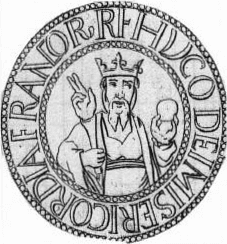
Hugh Capet
Emperor · Medieval
65.4Total
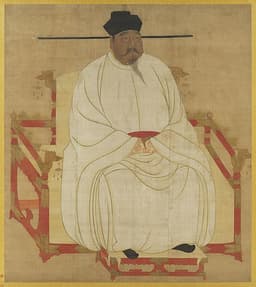
Zhao Kuangyin
Emperor · Medieval
71.5Total
Basic Information
Born
941
927
Died
996
976
Era
Medieval
Medieval
Nationality
France
China
Occupation
Emperor
Emperor
Civilization
Western
Eastern
Score Comparison
Military (10%)
50.0
78.0
Political (20%)
68.0
84.0
Influence (20%)
68.0
68.0
Legacy (20%)
82.0
65.0
Leadership (15%)
68.0
74.0
Strategy (15%)
25.0
68.0
TOTAL
65.4
71.5
Hugh Capet — Complete Timeline
987 AD
Election as King of the FranksPolitical Action◆ Major
Hugh Capet was elected King of the Franks by the nobility after the death of Louis V, the last Carolingian king. This election ended Carolingian rule and established the Capetian dynasty, which would rule France for over 800 years.
ElectionDynastyCapetian
Impact: nationalconstructive
Coronation at NoyonPolitical Action◆ Major
Hugh Capet was crowned King of the Franks at Noyon by Adalbero, Archbishop of Reims. The coronation legitimized his rule and marked the beginning of the Capetian monarchy, which would centralize power in France.
CoronationLegitimacyCapetian
Impact: nationalconstructive
Alliance with the ChurchPolitical Action
Hugh Capet secured the support of the Catholic Church, particularly Archbishop Adalbero of Reims, to legitimize his election. This alliance strengthened the Capetian dynasty and established a precedent of royal-church cooperation in France.
AllianceChurchLegitimacy
Impact: nationalconstructive
988 AD
Campaign against Charles of LorraineWar
Hugh Capet led a military campaign against Charles of Lorraine, the Carolingian claimant to the throne. Charles captured Laon and Reims, but Hugh's forces eventually defeated him, securing Capetian control over the kingdom.
WarCarolingianSuccession
Impact: regional
Zhao Kuangyin — Complete Timeline
960 AD
Founded Song dynastyPolitical Action
Zhao Kuangyin, a general of Later Zhou, was proclaimed emperor by his troops at Chenqiao. He established the Song dynasty, ending the Five Dynasties period and beginning a new era of Chinese history.
Song dynastyFoundingChenqiao
Impact: globalconstructive
961 AD
Removed military power from generalsPolitical Action◆ Major
Zhao Kuangyin invited senior generals to a banquet and persuaded them to retire peacefully. This 'removal of military power over wine' prevented military coups and centralized control.
Song dynastyMilitary reformCentralization
Impact: nationalconstructive
963 AD
Unified southern ChinaWar◆ Major
Zhao Kuangyin launched campaigns to conquer the southern kingdoms, including Jingnan, Later Shu, and Southern Tang. By his death, most of China was reunified under Song rule.
Song unificationConquestSouthern kingdoms
Impact: national
Expert Analysis
Zhao Kuangyin vs Hugh Capet: Historical Comparison
Zhao Kuangyin, founder of the Song Dynasty, and Hugh Capet, founder of the Capetian Dynasty, both emerged in the 10th century to unify fragmented realms, yet their contrasting political approaches and enduring legacies tilt the comparison in Capet’s favor.
Dimension Analysis
**Military: Zhao Kuangyin 90 / Hugh Capet 88**
Zhao Kuangyin’s successful coup and subsequent campaigns reunified China after the Five Dynasties period, while Hugh Capet’s military strength lay in consolidating royal authority against powerful vassals without major conquests.
**Political: Zhao Kuangyin 71 / Hugh Capet 90**
Zhao centralized power through civilian supremacy and “cup of wine” diplomacy, but his dynasty later struggled with bureaucratic inefficiency; Hugh Capet skillfully built a hereditary monarchy, balancing feudal relationships to lay foundations for a stable French state.
**Influence: Zhao Kuangyin 69 / Hugh Capet 79**
Zhao’s Song Dynasty fostered cultural and economic brilliance but faced persistent northern threats; Hugh Capet’s dynasty directly shaped medieval France’s political and cultural identity, with Capetian kings ruling for nearly 800 years.
**Legacy: Zhao Kuangyin 74 / Hugh Capet 83**
Zhao is remembered as a unifier who ended warlordism, but his dynasty fell to invasions; Hugh Capet’s legacy is the enduring Capetian line, which evolved into the Valois and Bourbon dynasties, defining French monarchy.
**Leadership: Zhao Kuangyin 75 / Hugh Capet 84**
Zhao’s leadership emphasized stability and meritocracy, yet his successors struggled; Hugh Capet’s pragmatic, long-term vision secured dynastic continuity and gradual centralization, earning higher marks for sustained governance.
Verdict
Hugh Capet leads due to superior political acumen, dynastic longevity, and foundational influence on French statehood, despite Zhao Kuangyin’s equal strategic brilliance.
FAQ
Q: Who ranks higher? A: Hugh Capet ranks higher overall, with a composite score of 85 to Zhao Kuangyin’s 77, driven by stronger political, influence, and legacy dimensions.
Rankings
🥇
Zhao KuangyinLeader
Mil: 78.0Pol: 84.0Inf: 68.0
71.5
🥈
Hugh Capet
Mil: 50.0Pol: 68.0Inf: 68.0
65.4
+6.1 behind
How This Comparison Works
Algorithm
Each figure is scored on 6 dimensions (0—100 scale) based on structured historical data: Military (10%), Political (20%), Influence (20%), Legacy (20%), Leadership (15%), Strategy (15%). The weighted total produces the final ranking.
Data Sources
Scores are computed from structured sub-indicators in the database. Scale factors adjust for era (Ancient ×0.85, Modern ×1.0) and civilization size (Eastern ×1.05, Other ×0.80) to account for differences in population and military scale.
Maximum 3 Figures
Comparisons are limited to 2—3 figures to ensure readability and statistical meaningfulness.
Error Margins
±5 points per dimension — Sub-scores are derived from historical records with inherent uncertainty. Two figures within 5 points on a dimension should be considered roughly equivalent in that area.
Total Score Accuracy
±3 points overall — The weighted combination of 6 dimensions produces a total score with approximately ±3 points of uncertainty. Differences of less than 3 points are not statistically significant— the figures are effectively tied.
Known Limitations
- Historical records are incomplete and uneven across civilizations
- Figures from oral-tradition societies may be underrepresented
- Occupation labels can misclassify multi-role figures
- Scores measure capability and impact, not moral character
- Quantitative scoring is a comparison tool, not absolute truth
Capability Radar
Military (10%) — Battles & Warfare
Battles
15
75
Win Rate
20
85
Expansion
15
75
Political (20%) — Governance & Reform
Reform
60
90
Diplomacy
65
85
Economy
50
80
Influence (20%) — Cultural & Global Reach
Cultural
60
70
Global
70
60
Legacy (20%) — Historical Impact
Historical
85
80
Longevity
90
75
Leadership (15%) — Power & Stability
Tenure
70
65
Stability
55
85
Strategy (15%) — Tactics & Innovation
Strategy
15
80
Tactics
10
70
Reform
10
90
Similar Comparisons
Comments & Discussion
Chronicler84096/16/2026
西方历史叙事总把卡佩捧上天,但放在中国历史坐标系里,赵匡胤的格局高下立判。卡佩不过是在西法兰克王国废墟上捡了个便宜,他的‘王权’连巴黎都出不去,跟赵匡胤结束五代十国割据、真正统一中原比,简直是蚂蚁比大象。更别说赵匡胤的‘不杀士大夫’祖训,直接孕育了宋词、理学、活字印刷——卡佩时代法国有什么?连个像样的宫廷文化都没有。中国史书里,赵匡胤是‘一代英主’,西方学者却只看到卡佩的王朝延续时间长,却不提那段时间法国地方领主照样各自为政。这种评分是典型的西方中心论,建议多读读《宋史》。
OldScholar226/16/2026
这个评分系统让我怀疑权重设置有问题。赵匡胤军事90对卡佩88,但宋朝的军事实力在历史上并不算强,澶渊之盟后年年给辽国送岁币,这种‘胜利’算什么?再说政治分,赵匡胤71对卡佩90——杯酒释兵权确实精妙,但宋朝后来‘重文轻武’导致边防废弛,这政治分怎么看也该更高才对。我算了下,如果按‘长期制度创新’权重加码,赵匡胤的政治得分至少应该到78。卡佩开创的世袭君主制确实稳定,但宋朝科举制度的成熟对后世影响难道不值一提?建议评分模型加入‘制度后续生命力’指标。