Loading...
This comparison has not been analyzed yet.
One-time AI generation (~1 minute). Scores and timeline are already available below.
Hugh Rose vs Merzifonlu Kara Mustafa
Hugh Rose leads by 5.6 pts · 2 figures compared
…

Hugh Rose
General · Modern
60.9Total
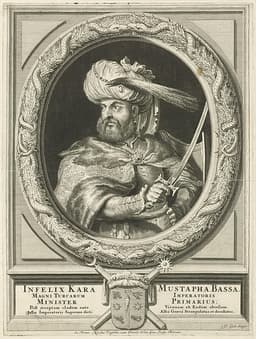
Merzifonlu Kara Mustafa
General · Modern
55.3Total
Basic Information
Born
1801
1634
Died
1885
1683
Era
Modern
Modern
Nationality
United Kingdom
Ottoman Empire
Occupation
General
General
Civilization
Western
Middle Eastern
Score Comparison
Military (10%)
72.5
82.0
Political (20%)
68.0
45.0
Influence (20%)
59.0
55.0
Legacy (20%)
46.7
55.0
Leadership (15%)
80.0
48.8
Strategy (15%)
50.0
55.0
TOTAL
60.9
55.3
Hugh Rose — Complete Timeline
1858 AD
Suppression of the Indian Rebellion in Central IndiaWar◆ Major
Rose commanded a field force that pacified Central India during the Indian Rebellion of 1857. His campaign involved the capture of key rebel strongholds including Jhansi, Kalpi, and Gwalior, restoring British control over the region.
Indian RebellionBritish EmpireMilitary Campaign
Impact: regional
Capture of JhansiWar◆ Major
Rose's forces besieged and captured the city of Jhansi from Rani Lakshmibai's rebel forces. The assault involved breaching the fortifications and intense street fighting, leading to British control of a major rebel center.
Indian RebellionSiegeJhansi
Impact: regional
Battle of GwaliorWar◆ Major
Rose's forces defeated the remaining rebel army under Tantia Tope and Rani Lakshmibai at Gwalior. The battle resulted in the death of Rani Lakshmibai and the final suppression of the rebellion in Central India.
Indian RebellionBattleGwalior
Impact: regional
1860 AD
Appointment as Commander-in-Chief of the Bombay ArmyPolitical Action
Rose was appointed Commander-in-Chief of the Bombay Army, a senior command in British India. This position recognized his successful campaign in Central India and placed him in charge of military forces in western India.
British IndiaMilitary Command
Impact: regional
Merzifonlu Kara Mustafa — Complete Timeline
1678 AD
Campaign against Russia (1678)War
As grand vizier, Kara Mustafa led a campaign against Russia, capturing the fortress of Chyhyryn in Ukraine. This was part of the Russo-Turkish War (1676
Russo-Turkish WarCampaignUkraine
Impact: regional
1683 AD
Siege of Vienna (1683)War
Merzifonlu Kara Mustafa led the Ottoman army in the siege of Vienna. The siege failed after a relief force led by John III Sobieski of Poland defeated the Ottomans at the Battle of Kahlenberg, ending the Ottoman threat to Central Europe.
SiegeOttoman-Habsburg WarsDefeat
Impact: globaldestructive
Execution by Silk CordOther◆ Major
After the failure at Vienna, Merzifonlu Kara Mustafa was executed in Belgrade on the orders of Sultan Mehmed IV. He was strangled with a silk cord, a traditional method for high-ranking officials, as punishment for the military disaster.
ExecutionOttoman PoliticsFailure
Impact: nationaltragic
This comparison has not been analyzed yet.
One-time AI generation (~1 minute). Scores and timeline are already available below.
Rankings
🥇
Hugh RoseLeader
Mil: 72.5Pol: 68.0Inf: 59.0
60.9
🥈
Merzifonlu Kara Mustafa
Mil: 82.0Pol: 45.0Inf: 55.0
55.3
+5.6 behind
How This Comparison Works
Algorithm
Each figure is scored on 6 dimensions (0—100 scale) based on structured historical data: Military (10%), Political (20%), Influence (20%), Legacy (20%), Leadership (15%), Strategy (15%). The weighted total produces the final ranking.
Data Sources
Scores are computed from structured sub-indicators in the database. Scale factors adjust for era (Ancient ×0.85, Modern ×1.0) and civilization size (Eastern ×1.05, Other ×0.80) to account for differences in population and military scale.
Maximum 3 Figures
Comparisons are limited to 2—3 figures to ensure readability and statistical meaningfulness.
Error Margins
±5 points per dimension — Sub-scores are derived from historical records with inherent uncertainty. Two figures within 5 points on a dimension should be considered roughly equivalent in that area.
Total Score Accuracy
±3 points overall — The weighted combination of 6 dimensions produces a total score with approximately ±3 points of uncertainty. Differences of less than 3 points are not statistically significant— the figures are effectively tied.
Known Limitations
- Historical records are incomplete and uneven across civilizations
- Figures from oral-tradition societies may be underrepresented
- Occupation labels can misclassify multi-role figures
- Scores measure capability and impact, not moral character
- Quantitative scoring is a comparison tool, not absolute truth
Capability Radar
Military (10%) — Battles & Warfare
Battles
55
75
Win Rate
60
60
Expansion
55
80
Political (20%) — Governance & Reform
Reform
40
55
Diplomacy
50
50
Economy
35
60
Influence (20%) — Cultural & Global Reach
Cultural
30
55
Global
35
65
Legacy (20%) — Historical Impact
Historical
40
70
Longevity
30
60
Leadership (15%) — Power & Stability
Tenure
45
65
Stability
50
40
Strategy (15%) — Tactics & Innovation
Strategy
65
65
Tactics
60
70
Reform
40
50
Similar Comparisons
Comments & Discussion
No comments yet. Be the first to share your thoughts!