Loading...
Hun Sen vs Mark Rutte
Hun Sen leads by 0.0 pts · 2 figures compared
…

Hun Sen
Politician · Modern
57.6Total
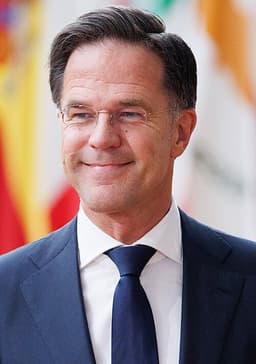
Mark Rutte
Politician · Modern
57.6Total
Basic Information
Born
1952
1967
Died
—
—
Era
Modern
Modern
Nationality
Cambodia
Netherlands
Occupation
Politician
Politician
Civilization
Eastern
Western
Score Comparison
Military (10%)
45.0
41.8
Political (20%)
68.0
65.0
Influence (20%)
54.9
57.2
Legacy (20%)
52.0
48.3
Leadership (15%)
72.0
75.0
Strategy (15%)
53.8
60.0
TOTAL
57.6
57.6
Hun Sen — Complete Timeline
1970 AD
Joined Khmer RougePolitical Action
Hun Sen joined the Khmer Rouge as a soldier, fighting against the Lon Nol government. He was wounded and lost an eye during the conflict, an injury that became a lifelong mark.
Khmer RougeCivil warInjury
Impact: national
1977 AD
Defection from Khmer RougePolitical Action◆ Major
Hun Sen defected from the Khmer Rouge to Vietnam, fleeing purges within the regime. He joined Vietnamese-backed forces that later overthrew the Khmer Rouge government in 1979.
DefectionVietnamKhmer Rouge
Impact: national
1985 AD
Appointed Prime MinisterPolitical Action◆ Major
Hun Sen was appointed Prime Minister of the People's Republic of Kampuchea, becoming the youngest head of government in the world at age 33. He began consolidating power within the Vietnamese-backed regime.
Prime MinisterYoungestKampuchea
Impact: nationalconstructive
1991 AD
Paris Peace AccordsPolitical Action◆ Major
Hun Sen signed the Paris Peace Accords, ending the Cambodian-Vietnamese War and establishing a UN transitional authority. The accords led to a ceasefire and paved the way for elections in 1993.
Paris AccordsPeaceUN
Impact: regionalconstructive
1997 AD
1997 coup against RanariddhPolitical Action◆ Major
Hun Sen staged a coup against co-Prime Minister Prince Norodom Ranariddh, seizing sole power. The coup led to international condemnation and a temporary suspension of foreign aid to Cambodia.
CoupRanariddhPower seizure
Impact: nationaldestructive
2017 AD
Crackdown on oppositionPolitical Action◆ Major
Hun Sen's government dissolved the main opposition party, the Cambodia National Rescue Party, and banned its leaders from politics. This move effectively ended multi-party democracy in Cambodia and consolidated his one-party rule.
OppressionCNRPOne-party rule
Impact: nationaldestructive
Mark Rutte — Complete Timeline
2006 AD
Elected Leader of the People's Party for Freedom and DemocracyPolitical Action◆ Major
Mark Rutte became the political leader of the VVD, the Dutch liberal-conservative party. He led the party through several election campaigns, eventually becoming prime minister in 2010.
Dutch PoliticsVVDParty Leadership
Impact: nationalconstructive
2010 AD
Became Prime Minister of the NetherlandsPolitical Action
Rutte became Prime Minister of the Netherlands, leading a minority coalition government with support from the Party for Freedom (PVV). His first term focused on austerity measures and immigration reforms.
Dutch PoliticsPrime MinisterCoalition
Impact: nationalconstructive
2020 AD
Led Netherlands Through COVID-19 PandemicPolitical Action◆ Major
Rutte oversaw the Dutch response to COVID-19, including lockdowns, vaccination campaigns, and economic support measures. His government faced criticism over the slow start of vaccinations and handling of the second wave.
COVID-19Dutch PoliticsPublic Health
Impact: national
2021 AD
Survived No-Confidence Vote Over Childcare Benefits ScandalPolitical Action◆ Major
Rutte's government faced a no-confidence vote after a parliamentary inquiry revealed that tax authorities falsely accused thousands of parents of fraud in childcare benefits. The scandal led to the resignation of his cabinet, though Rutte remained as caretaker prime minister.
Dutch PoliticsScandalChildcare Benefits
Impact: nationaldestructive
2023 AD
Announced Retirement from PoliticsPolitical Action◆ Major
Rutte announced he would leave politics after the 2023 general election, ending his 13-year tenure as prime minister. He cited the need for new leadership and the end of his political career.
Dutch PoliticsRetirementEnd of Era
Impact: national
Expert Analysis
Origins
Hun Sen was born on August 5, 1952, in Kampong Cham province, Cambodia, to a peasant family. He joined the Khmer Rouge as a young soldier but defected to Vietnam in 1977 after witnessing internal purges. Mark Rutte was born on February 14, 1967, in The Hague, Netherlands, to a middle-class family. He studied history at Utrecht University and worked for Unilever before entering politics. Rutte joined the People's Party for Freedom and Democracy (VVD) in his youth.
Rise to Power
Hun Sen's rise came through military alliance with Vietnam. After defecting, he became a key figure in the Vietnamese-backed Kampuchean United Front for National Salvation, which overthrew the Khmer Rouge in 1979. At age 33, he was appointed Prime Minister of the People's Republic of Kampuchea in 1985, the youngest head of government globally. He consolidated power through the Paris Peace Accords (1991) and a 1997 coup against co-Prime Minister Norodom Ranariddh, seizing sole control. Rutte rose through party ranks, becoming VVD leader in 2006. He became Prime Minister in 2010 after leading his party to a plurality, forming a minority coalition with Christian Democratic Appeal and support from Geert Wilders' Party for Freedom. He survived multiple coalition crises and elections, serving four consecutive terms.
Leadership & Governance
Hun Sen's leadership is authoritarian: he dissolved the main opposition Cambodia National Rescue Party in 2017 and jailed critics. His governance prioritized stability and economic growth, with Cambodia's GDP per capita rising from $300 in 1998 to $1,700 in 2020, but at the cost of political repression. Rutte's leadership is consensual: he navigated complex coalitions, emphasizing compromise. He oversaw economic austerity, pension reforms, and the Dutch response to COVID-19. Rutte's political score of 65.0 is close to Hun Sen's 68.0, but his leadership score of 75.0 exceeds Hun Sen's 72.0, reflecting his ability to hold together fractious coalitions.
Triumph & Tragedy
Hun Sen's greatest triumph is ending decades of civil war and overseeing sustained economic growth. His tragedy is the erosion of democracy: after the 2018 election, he effectively became a one-party ruler. The 1997 coup and crackdown on opposition earned international sanctions. Rutte's triumph is his longevity: 13 years as PM, managing a stable economy and leading through COVID-19. His tragedy is the childcare benefits scandal, where tax authorities falsely accused thousands of parents of fraud, leading to his government's resignation in 2021. He survived a no-confidence vote but the scandal tarnished his legacy.
Character & Destiny
Hun Sen is pragmatic and ruthless: he defected from the Khmer Rouge to survive, then used violence to stay in power. His strategy score of 53.8 reflects a focus on control over innovation. Rutte is cautious and conciliatory: he avoided bold reforms, preferring incrementalism. His strategy score of 60.0 indicates better long-term planning. Hun Sen's destiny was shaped by war; Rutte's by peace. Hun Sen's military score of 45.0 is slightly higher than Rutte's 41.8, reflecting his guerrilla past.
Legacy
Hun Sen's legacy is mixed: he brought stability and development but destroyed democratic institutions. He will be remembered as a strongman who outlasted all rivals. Rutte's legacy is as a steady hand in a fragmented political landscape. He will be remembered for his bicycle-riding, unpretentious style and for leading the Netherlands through crises. Both scored 57.6 total, but their impacts differ: Hun Sen transformed a country from war to peace, while Rutte maintained a stable democracy.
Conclusion
Hun Sen had greater impact on Cambodia's trajectory, moving it from genocide to relative prosperity, albeit under authoritarian rule. Rutte's impact was more incremental, preserving Dutch stability. While Rutte scored higher in leadership (75.0 vs 72.0) and strategy (60.0 vs 53.8), Hun Sen's total score of 57.6 matches Rutte's, but his legacy in reshaping Cambodia is more profound. Hun Sen's influence score of 54.9 is close to Rutte's 57.2, but his political score of 68.0 edges Rutte's 65.0. Thus, Hun Sen's impact, for better or worse, is greater.
Rankings
🥇
Hun SenLeader
Mil: 45.0Pol: 68.0Inf: 54.9
57.6
🥈
Mark Rutte
Mil: 41.8Pol: 65.0Inf: 57.2
57.6
How This Comparison Works
Algorithm
Each figure is scored on 6 dimensions (0—100 scale) based on structured historical data: Military (10%), Political (20%), Influence (20%), Legacy (20%), Leadership (15%), Strategy (15%). The weighted total produces the final ranking.
Data Sources
Scores are computed from structured sub-indicators in the database. Scale factors adjust for era (Ancient ×0.85, Modern ×1.0) and civilization size (Eastern ×1.05, Other ×0.80) to account for differences in population and military scale.
Maximum 3 Figures
Comparisons are limited to 2—3 figures to ensure readability and statistical meaningfulness.
Error Margins
±5 points per dimension — Sub-scores are derived from historical records with inherent uncertainty. Two figures within 5 points on a dimension should be considered roughly equivalent in that area.
Total Score Accuracy
±3 points overall — The weighted combination of 6 dimensions produces a total score with approximately ±3 points of uncertainty. Differences of less than 3 points are not statistically significant— the figures are effectively tied.
Known Limitations
- Historical records are incomplete and uneven across civilizations
- Figures from oral-tradition societies may be underrepresented
- Occupation labels can misclassify multi-role figures
- Scores measure capability and impact, not moral character
- Quantitative scoring is a comparison tool, not absolute truth
Capability Radar
Military (10%) — Battles & Warfare
Battles
15
46
Win Rate
20
50
Expansion
5
53
Political (20%) — Governance & Reform
Reform
40
60
Diplomacy
60
75
Economy
45
70
Influence (20%) — Cultural & Global Reach
Cultural
30
30
Global
40
55
Legacy (20%) — Historical Impact
Historical
50
50
Longevity
60
40
Leadership (15%) — Power & Stability
Tenure
95
85
Stability
30
80
Strategy (15%) — Tactics & Innovation
Strategy
15
59
Tactics
10
59
Reform
10
61
Similar Comparisons
Comments & Discussion
No comments yet. Be the first to share your thoughts!