Loading...
This comparison has not been analyzed yet.
One-time AI generation (~1 minute). Scores and timeline are already available below.
Hydarnes the Elder vs Maharbal
Hydarnes the Elder leads by 2.2 pts · 2 figures compared
…

Hydarnes the Elder
General · Ancient
45.8Total
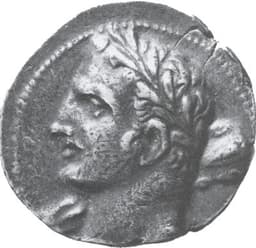
Maharbal
General · Ancient
43.6Total
Basic Information
Born
-530
-245
Died
-470
-202
Era
Ancient
Ancient
Nationality
Achaemenid Empire
Carthage
Occupation
General
General
Civilization
Middle Eastern
Western
Score Comparison
Military (10%)
67.3
20.0
Political (20%)
32.1
35.0
Influence (20%)
49.4
45.5
Legacy (20%)
43.3
38.3
Leadership (15%)
36.9
62.6
Strategy (15%)
55.0
60.0
TOTAL
45.8
43.6
Hydarnes the Elder — Complete Timeline
522 BC
Overthrew the Magi with Darius IPolitical Action◆ Major
Hydarnes was one of the seven Persian nobles who conspired to overthrow Gaumata, the Magian usurper who had seized the throne after Cambyses II's death. He participated in the assassination of Gaumata, paving the way for Darius I to become king.
Achaemenid EmpireCoupDarius I
Impact: global
510 BC
Governor of the Central SatrapiesPolitical Action
Darius I appointed Hydarnes as governor of the central satrapies of the Achaemenid Empire, a region encompassing Media and surrounding territories. He administered this key area, ensuring loyalty and collecting tribute for the crown.
Achaemenid EmpireGovernorMedia
Impact: regional
480 BC
Commander of the ImmortalsWar◆ Major
Hydarnes commanded the elite Persian infantry unit known as the Immortals during the Second Persian invasion of Greece. He led them at the Battle of Thermopylae, where they outflanked the Greek position via the Anopaia path, leading to the Greek defeat.
Persian WarsThermopylaeImmortals
Impact: global
Maharbal — Complete Timeline
216 BC
Command of Numidian cavalry at CannaeWar◆ Major
Maharbal commanded the Numidian cavalry on the right wing at the Battle of Cannae. His cavalry routed the Roman allied cavalry and then pursued them, preventing them from reforming. This contributed to Hannibal's encirclement and destruction of the Roman army.
Second Punic WarCannaeCavalry
Impact: regional
Capture of Roman camp at CannaeWar
After the Roman defeat at Cannae, Maharbal led a force to capture the Roman camp. He secured the camp and its supplies, completing the Carthaginian victory and preventing Roman survivors from regrouping.
Second Punic WarCannaeCamp
Advice to march on RomePolitical Action◆ Major
After Cannae, Maharbal urged Hannibal to march on Rome immediately, reportedly saying he would feast in the Capitol within five days. Hannibal refused, a decision Maharbal criticized. This moment became famous as a missed opportunity to end the war.
Second Punic WarHannibalStrategy
Impact: regional
214 BC
Capture of CasilinumWar
Maharbal led Carthaginian forces to capture the city of Casilinum in Campania. The city fell after a siege, and Maharbal's forces secured the area for Hannibal's campaign in southern Italy.
Second Punic WarItalySiege
This comparison has not been analyzed yet.
One-time AI generation (~1 minute). Scores and timeline are already available below.
Rankings
🥇
Hydarnes the ElderLeader
Mil: 67.3Pol: 32.1Inf: 49.4
45.8
🥈
Maharbal
Mil: 20.0Pol: 35.0Inf: 45.5
43.6
+2.2 behind
How This Comparison Works
Algorithm
Each figure is scored on 6 dimensions (0—100 scale) based on structured historical data: Military (10%), Political (20%), Influence (20%), Legacy (20%), Leadership (15%), Strategy (15%). The weighted total produces the final ranking.
Data Sources
Scores are computed from structured sub-indicators in the database. Scale factors adjust for era (Ancient ×0.85, Modern ×1.0) and civilization size (Eastern ×1.05, Other ×0.80) to account for differences in population and military scale.
Maximum 3 Figures
Comparisons are limited to 2—3 figures to ensure readability and statistical meaningfulness.
Error Margins
±5 points per dimension — Sub-scores are derived from historical records with inherent uncertainty. Two figures within 5 points on a dimension should be considered roughly equivalent in that area.
Total Score Accuracy
±3 points overall — The weighted combination of 6 dimensions produces a total score with approximately ±3 points of uncertainty. Differences of less than 3 points are not statistically significant— the figures are effectively tied.
Known Limitations
- Historical records are incomplete and uneven across civilizations
- Figures from oral-tradition societies may be underrepresented
- Occupation labels can misclassify multi-role figures
- Scores measure capability and impact, not moral character
- Quantitative scoring is a comparison tool, not absolute truth
Capability Radar
Military (10%) — Battles & Warfare
Battles
55
30
Win Rate
60
35
Expansion
50
20
Political (20%) — Governance & Reform
Reform
20
5
Diplomacy
35
15
Economy
20
5
Influence (20%) — Cultural & Global Reach
Cultural
25
20
Global
20
10
Legacy (20%) — Historical Impact
Historical
40
25
Longevity
30
15
Leadership (15%) — Power & Stability
Tenure
40
10
Stability
30
10
Strategy (15%) — Tactics & Innovation
Strategy
60
40
Tactics
65
55
Reform
30
10
Similar Comparisons
Comments & Discussion
No comments yet. Be the first to share your thoughts!