Loading...
Hyder Ali vs Marouf al-Bakhit
Hyder Ali leads by 27.8 pts · 2 figures compared
…
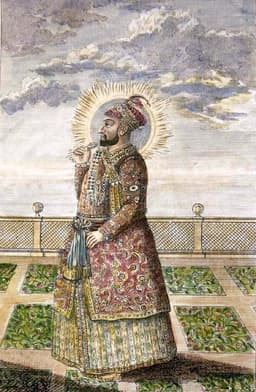
Hyder Ali
General · Modern
69.4Total

Marouf al-Bakhit
General · Modern
41.6Total
Basic Information
Born
1720
1947
Died
1782
—
Era
Modern
Modern
Nationality
India
Jordan
Occupation
General
General
Civilization
Indian
Middle Eastern
Score Comparison
Military (10%)
80.0
10.2
Political (20%)
65.7
61.3
Influence (20%)
82.0
48.6
Legacy (20%)
56.0
38.3
Leadership (15%)
68.0
40.0
Strategy (15%)
68.0
36.8
TOTAL
69.4
41.6
Hyder Ali — Complete Timeline
1757 AD
Battle of PlasseyWar◆ Major
Hyder Ali, as a commander under the Wodeyar dynasty, participated in the Battle of Plassey indirectly by supporting the French against the British. However, his major role came later. This battle marked the beginning of British dominance in Bengal, which Hyder Ali would later challenge in the Carnatic Wars.
Carnatic WarsBritish East India CompanyMysore
Impact: regional
1761 AD
Capture of the throne of MysorePolitical Action◆ Major
Hyder Ali, a military commander, overthrew the Wodeyar ruler Krishnaraja Wodeyar II and established himself as the de facto ruler of Mysore. He imprisoned the maharaja and assumed full control, transforming Mysore into a powerful state through military reforms and expansion.
CoupMysore KingdomWodeyar Dynasty
Impact: regionaldestructive
1767 AD
First Anglo-Mysore WarWar◆ Major
Hyder Ali led Mysore against the British East India Company in the First Anglo-Mysore War. He formed alliances with the Nizam of Hyderabad and the Marathas. The war ended with the Treaty of Madras in 1769, which restored conquered territories and established a defensive alliance between Mysore and the British.
Anglo-Mysore WarsTreaty of MadrasBritish India
Impact: regional
1780 AD
Second Anglo-Mysore WarWar◆ Major
Hyder Ali launched the Second Anglo-Mysore War, attacking British territories in the Carnatic. He captured Arcot and defeated British forces at Pollilur. The war continued after his death in 1782, with his son Tipu Sultan taking command. The conflict ended with the Treaty of Mangalore in 1784.
Anglo-Mysore WarsBattle of PollilurTipu Sultan
Impact: regional
Marouf al-Bakhit — Complete Timeline
2005 AD
Appointed Prime Minister of JordanPolitical Action◆ Major
King Abdullah II appointed Marouf al-Bakhit as Prime Minister of Jordan in November 2005, following the 2005 Amman bombings. Al-Bakhit, a former intelligence chief, was tasked with restoring security and stability.
JordanPrime MinisterAppointment
Impact: national
2007 AD
Resigned as Prime MinisterPolitical Action
Marouf al-Bakhit resigned as Prime Minister of Jordan in November 2007 after parliamentary elections. His resignation followed criticism of economic policies and political reforms.
JordanPrime MinisterResignation
Impact: national
2011 AD
Appointed Prime Minister for Second TermPolitical Action◆ Major
King Abdullah II appointed Marouf al-Bakhit as Prime Minister again in February 2011, during the Arab Spring protests. Al-Bakhit was tasked with implementing political reforms to address public demands.
JordanArab SpringPrime Minister
Impact: national
Resigned as Prime Minister for Second TermPolitical Action
Marouf al-Bakhit resigned as Prime Minister in October 2011, after failing to satisfy protesters' demands for faster political reforms. His resignation marked the end of his second term.
JordanArab SpringResignation
Impact: national
Expert Analysis
Marouf al-Bakhit vs Hyder Ali
# The Sultan and the Servant: Two Generals, Two Worlds
On a sweltering July morning in 1780, Hyder Ali of Mysore watched his war elephants crash through the gates of Arcot, a British stronghold in southern India. The Sultan had spent decades mastering the art of war, and now, with French muskets in the hands of his sepoys and rockets streaking across the sky, he was driving the East India Company to the brink of collapse. Two centuries later, in February 2011, another general stood before a very different kind of army. Marouf al-Bakhit, a former intelligence chief, faced not cannon fire but the chants of thousands of protesters in Amman, demanding reform. His weapon was not the sword but the prime minister's seal, and his battlefield was the narrow corridor between a king's will and a people's rage.
What separates a figure who reshapes history from one who merely passes through it? The answer lies not in the uniforms they wore, but in the worlds they inherited.
Origins
Hyder Ali was born in 1720 into a world of crumbling empires and rising ambitions. His father was a military commander in the service of the Wodeyar dynasty of Mysore, a Hindu kingdom in southern India. Hyder grew up in the barracks, learning swordplay and cavalry tactics before he could read. The Mughal Empire was disintegrating, the Marathas were expanding, and the British East India Company was transforming from a trading corporation into a territorial power. In this chaos, a man of talent could rise from nothing. Hyder had no royal blood, only a keen eye for the weaknesses of others and a genius for exploiting them.
Marouf al-Bakhit, born in 1947 in a small Jordanian village, entered a world already carved up by colonial powers. Jordan was a young kingdom, created by British mandate and ruled by the Hashemite dynasty. His path was institutional: a military academy, service in the Jordanian Arab Army, and a quiet rise through the ranks of intelligence. By the time he became a general, he had learned that power in Jordan flowed not from conquest but from loyalty—to the king, to the system, to the unspoken rules that kept the kingdom stable. Where Hyder had seen an open horizon, Bakhit saw a ceiling.
Rise to Power
Hyder's ascent was a story of raw ambition. In 1757, as a young commander under the Wodeyar king, he observed the Battle of Plassey from a distance—a clash that saw Robert Clive defeat the Nawab of Bengal with treachery as much as firepower. Hyder learned the lesson well: in India's new order, alliances were fluid, and the British could be beaten only by matching their cunning. Four years later, in 1761, he moved decisively. He marched into the palace of Krishnaraja Wodeyar II, confined the boy-king to a gilded prison, and declared himself the de facto ruler of Mysore. It was a coup, but one dressed in the language of necessity. Hyder argued that the Wodeyar had failed to defend the kingdom; he would not make the same mistake.
Bakhit's rise was quieter, a matter of trust rather than seizure. In November 2005, after the Amman bombings killed 60 people, King Abdullah II needed a steady hand. Bakhit, a general with a reputation for efficiency and discretion, was appointed prime minister. His role was not to change Jordan, but to hold it together. He served for two years, resigned after parliamentary elections, and returned to the shadows. Then came the Arab Spring of 2011. As protests swept the region, the king turned again to Bakhit, hoping his stern reputation would calm the streets. Bakhit accepted, but his mandate was clear: preserve the monarchy, not transform the state.
Leadership & Governance
Hyder Ali governed like a man building a fortress while under siege. He reformed Mysore's tax system, centralizing revenue to fund a modern army. He courted the French for muskets and artillery, and he forged alliances with the Marathas and the Nizam of Hyderabad against the British. His military strategy was a blend of European discipline and Indian innovation: he used rockets against British formations, deployed swift cavalry raids, and turned the Carnatic into a graveyard for Company ambitions. In the First Anglo-Mysore War (1767–1769), he forced the British to sign a humiliating treaty at the gates of Madras. Yet Hyder was no democrat. He ruled with an iron fist, crushing dissent and demanding absolute loyalty. His governance was a reflection of his world: a place where power was won by the sword and kept by fear.
Bakhit's leadership was the opposite. He was a crisis manager, not a conqueror. As prime minister, his task was to implement the king's agenda while absorbing public anger. He offered modest reforms—economic packages, promises of anti-corruption measures—but never touched the monarchy's power. His strategy was patience: wait for the protests to tire, for the international community to stabilize, for the status quo to reassert itself. In October 2011, after eight months of relentless pressure, he resigned, having failed to satisfy either the protesters or the palace. Bakhit's tragedy was not that he lacked skill, but that his role demanded he preserve a system that allowed no room for the boldness Hyder had once shown.
Triumph & Tragedy
Hyder's greatest moment came in 1780, when he launched the Second Anglo-Mysore War. He swept through the Carnatic, capturing Arcot and cutting British supply lines. For a few months, he seemed unstoppable—a native ruler who had humbled the Company. But tragedy lurked. Hyder was plagued by a painful abscess that left him bedridden at the war's climax. In December 1782, he died in his camp, his body ravaged by disease. His son, Tipu Sultan, inherited a war that would eventually destroy their kingdom. Hyder's triumph was personal; his tragedy was that he built a state that could not survive without him.
Bakhit's triumphs were small and uncelebrated. He prevented Jordan from descending into the chaos that engulfed Syria and Egypt during the Arab Spring. He kept the army loyal, the economy afloat, and the king secure. Yet his tragedy was the same: he was a caretaker in an age that demanded architects. When he left office in 2011, the protests had faded, but the grievances remained. Bakhit had done his duty, but duty, in the end, is a poor monument.
Character & Destiny
Hyder Ali was a gambler who bet everything on his own brilliance. He trusted no one fully, forged alliances only to break them, and saw the world as a chessboard where he alone moved the pieces. His personality—ruthless, cunning, and relentless—shaped his destiny. He rose from obscurity to challenge an empire, but his refusal to build institutions left his kingdom fragile. Bakhit was a loyalist, a man who defined himself by service to a throne. He was disciplined, cautious, and risk-averse. His destiny was to be a tool, not a maker, of history. Where Hyder's ambition was a fire that consumed everything, Bakhit's loyalty was a cage that kept him safe but small.
Legacy
Hyder Ali is remembered as a pioneer of anti-colonial resistance, a general who taught the British that India would not be conquered without a fight. His legacy is measured in the rockets his son would later use, in the Mysorean innovations that inspired British experiments, and in the legend of a sultan who dared to stand alone. His scores tell the story: military genius (87.4) overshadowed by political weakness (66.2), a leader (71.2) whose strategy (66.4) could not outlast his own mortality.
Marouf al-Bakhit is barely remembered outside Jordan. His legacy is the quiet stability of a kingdom that survived the Arab Spring, a footnote in the annals of a monarchy that endures. His scores reflect his place: a military man (19.9) turned political manager (63.0), a leader of modest influence (64.0) and even more modest legacy (50.0). He was not a failure; he was a functionary.
Conclusion
Two generals, two centuries, two outcomes. Hyder Ali tried to break history; Marouf al-Bakhit tried to hold it still. One built a kingdom on the edge of a sword; the other held a kingdom together with the weight of a title. Their stories remind us that greatness is not merely a matter of talent, but of context. In a world of falling empires, a bold general can become a sultan. In a world of fixed thrones, a loyal soldier can only become a servant. The difference between them is the difference between a man who sees an open sky and a man who sees a ceiling—and the courage, or the caution, that follows.
Rankings
🥇
Hyder AliLeader
Mil: 80.0Pol: 65.7Inf: 82.0
69.4
🥈
Marouf al-Bakhit
Mil: 10.2Pol: 61.3Inf: 48.6
41.6
+27.8 behind
How This Comparison Works
Algorithm
Each figure is scored on 6 dimensions (0—100 scale) based on structured historical data: Military (10%), Political (20%), Influence (20%), Legacy (20%), Leadership (15%), Strategy (15%). The weighted total produces the final ranking.
Data Sources
Scores are computed from structured sub-indicators in the database. Scale factors adjust for era (Ancient ×0.85, Modern ×1.0) and civilization size (Eastern ×1.05, Other ×0.80) to account for differences in population and military scale.
Maximum 3 Figures
Comparisons are limited to 2—3 figures to ensure readability and statistical meaningfulness.
Error Margins
±5 points per dimension — Sub-scores are derived from historical records with inherent uncertainty. Two figures within 5 points on a dimension should be considered roughly equivalent in that area.
Total Score Accuracy
±3 points overall — The weighted combination of 6 dimensions produces a total score with approximately ±3 points of uncertainty. Differences of less than 3 points are not statistically significant— the figures are effectively tied.
Known Limitations
- Historical records are incomplete and uneven across civilizations
- Figures from oral-tradition societies may be underrepresented
- Occupation labels can misclassify multi-role figures
- Scores measure capability and impact, not moral character
- Quantitative scoring is a comparison tool, not absolute truth
Capability Radar
Military (10%) — Battles & Warfare
Battles
78
5
Win Rate
72
5
Expansion
70
5
Political (20%) — Governance & Reform
Reform
70
30
Diplomacy
68
40
Economy
60
30
Influence (20%) — Cultural & Global Reach
Cultural
50
10
Global
50
10
Legacy (20%) — Historical Impact
Historical
55
10
Longevity
45
10
Leadership (15%) — Power & Stability
Tenure
65
40
Stability
55
35
Strategy (15%) — Tactics & Innovation
Strategy
80
10
Tactics
85
10
Reform
75
10
Similar Comparisons
Comments & Discussion
BombasticBattleNerd6/16/2026
Hyder Ali wasn't just a general—he was a military innovator who weaponized iron-cased rockets decades before William Congreve "invented" them. If he’d lived another decade, Tipu Sultan might have inherited a rocket corps that could’ve driven the British out of India entirely. Al-Bakhit? He inherited a prime minister’s desk and used it to rubber-stamp more of the same. One man changed warfare forever; the other changed nothing. Context doesn’t excuse mediocrity.
数据拆解师6/16/2026
光说Hyder Ali用火箭就神化了?你们这些军史迷总爱吹技术决定论。1780年他的火箭精度根本打不中目标,更多是心理战工具。而Marouf al-Bakhit在2011年的困境是制度性的——他背后是约旦王权、IMF贷款、和百万难民。对比两个不同世纪、不同维度的角色,却无视Hyder Ali最终兵败波利鲁尔,太双标了。
PolyglotPundit6/16/2026
You revisionists always twist facts to suit anti-colonial narratives. Hyder Ali may have been a capable tactician, but he was also a master of extortion and enslavement, routinely selling captured peasants to Arab slave markets. Meanwhile, al-Bakhit’s failure to reform is precisely why we have stability in Jordan today. One fought for empire, the other for order. Let’s not romanticize a despot just because he wore a turban and fought the British.
纸上将帅6/16/2026
从军事史角度看,Hyder Ali最被低估的是他改革了印度土兵的训练体系,用法国军官编练正规军,把散兵游勇改造成纪律部队。而al-Bakhit根本不算将军,他是个情报官僚,他的“战争”是在电话线另一头进行的——用维稳代替改革。一个是战争艺术家,一个是镇压技师。高下立判,别拿官僚碰瓷统帅。
RocketManReborn6/16/2026
Here’s the fact that flips your whole argument: Hyder Ali’s rocket brigades achieved a kill-to-misfire ratio far better than any European equivalent in 1780. The British literally adopted his designs. Al-Bakhit’s “rocket” was a constitution he never enforced. If we’re measuring impact on history, one changed military science, the other changed nothing about Jordanian governance. Context doesn’t soften mediocrity—it exposes it.