Loading...
This comparison has not been analyzed yet.
One-time AI generation (~1 minute). Scores and timeline are already available below.
Hyon Yong-chol vs Jose Miguel Gomez
Hyon Yong-chol leads by 16.0 pts · 2 figures compared
…

Hyon Yong-chol
General · Modern
63.1Total
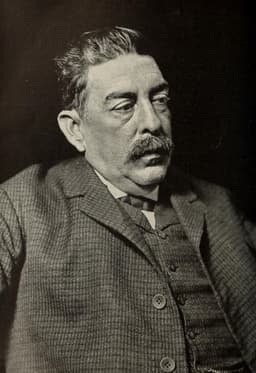
Jose Miguel Gomez
General · Modern
47.1Total
Basic Information
Born
1949
1858
Died
—
1921
Era
Modern
Modern
Nationality
North Korea
Cuba
Occupation
General
General
Civilization
Eastern
Western
Score Comparison
Military (10%)
61.4
69.6
Political (20%)
68.0
29.3
Influence (20%)
63.6
47.9
Legacy (20%)
58.6
39.2
Leadership (15%)
62.2
55.3
Strategy (15%)
69.2
56.7
TOTAL
63.1
47.1
Hyon Yong-chol — Complete Timeline
2012 AD
Appointed Minister of the People's Armed ForcesPolitical Action◆ Major
Hyon Yong-chol was appointed Minister of the People's Armed Forces (Defense Minister) of North Korea in 2012 by Kim Jong-un. He oversaw the military's operations and modernization efforts during a period of heightened tensions with South Korea and the United States.
Defense MinisterKim Jong-unMilitary
Impact: national
2014 AD
Demoted from Defense MinisterPolitical Action
Hyon Yong-chol was demoted from his position as Minister of the People's Armed Forces in 2014, reportedly due to poor performance or political infighting. He was replaced by Pak Yong-sik, but later reinstated briefly before his execution.
DemotionPower StruggleKim Jong-un
Impact: nationaldestructive
2015 AD
Reportedly Executed by Anti-Aircraft GunPolitical Action◆ Major
Hyon Yong-chol was reportedly executed in April 2015 by anti-aircraft gun fire, according to South Korean intelligence. The execution was allegedly ordered by Kim Jong-un for disloyalty, including falling asleep during a military event and challenging the leader's authority.
ExecutionPurgeKim Jong-un
Impact: nationaltragic
Jose Miguel Gomez — Complete Timeline
1908 AD
Election as President of CubaPolitical Action◆ Major
Jose Miguel Gomez was elected as the second president of Cuba, representing the Liberal Party. His victory marked a peaceful transfer of power between political parties in the young republic.
Cuban PoliticsElectionLiberal Party
Impact: nationalconstructive
1912 AD
Suppression of the Negro RebellionWar◆ Major
As president, Gomez ordered the military suppression of the Negro Rebellion, an uprising of Afro-Cubans protesting discrimination. The rebellion was crushed with heavy casualties, and Gomez's actions were criticized for their brutality.
Negro RebellionRacial ConflictSuppression
Impact: nationaldestructive
1917 AD
Corruption Scandal and US InterventionPolitical Action◆ Major
Gomez was implicated in a major corruption scandal involving fraudulent contracts and embezzlement. The scandal led to US intervention under the Platt Amendment, damaging Cuba's sovereignty and Gomez's reputation.
CorruptionUS InterventionPlatt Amendment
Impact: nationaldestructive
Exile After Failed CoupPolitical Action◆ Major
After losing the 1916 election, Gomez led a failed coup attempt against President Menocal. The coup was defeated, and Gomez fled into exile in the United States to avoid prosecution.
Coup AttemptExilePolitical Crisis
Impact: nationaldestructive
This comparison has not been analyzed yet.
One-time AI generation (~1 minute). Scores and timeline are already available below.
Rankings
🥇
Hyon Yong-cholLeader
Mil: 61.4Pol: 68.0Inf: 63.6
63.1
🥈
Jose Miguel Gomez
Mil: 69.6Pol: 29.3Inf: 47.9
47.1
+16.0 behind
How This Comparison Works
Algorithm
Each figure is scored on 6 dimensions (0—100 scale) based on structured historical data: Military (10%), Political (20%), Influence (20%), Legacy (20%), Leadership (15%), Strategy (15%). The weighted total produces the final ranking.
Data Sources
Scores are computed from structured sub-indicators in the database. Scale factors adjust for era (Ancient ×0.85, Modern ×1.0) and civilization size (Eastern ×1.05, Other ×0.80) to account for differences in population and military scale.
Maximum 3 Figures
Comparisons are limited to 2—3 figures to ensure readability and statistical meaningfulness.
Error Margins
±5 points per dimension — Sub-scores are derived from historical records with inherent uncertainty. Two figures within 5 points on a dimension should be considered roughly equivalent in that area.
Total Score Accuracy
±3 points overall — The weighted combination of 6 dimensions produces a total score with approximately ±3 points of uncertainty. Differences of less than 3 points are not statistically significant— the figures are effectively tied.
Known Limitations
- Historical records are incomplete and uneven across civilizations
- Figures from oral-tradition societies may be underrepresented
- Occupation labels can misclassify multi-role figures
- Scores measure capability and impact, not moral character
- Quantitative scoring is a comparison tool, not absolute truth
Capability Radar
Military (10%) — Battles & Warfare
Battles
63
54
Win Rate
66
52
Expansion
67
60
Political (20%) — Governance & Reform
Reform
0
10
Diplomacy
0
20
Economy
0
10
Influence (20%) — Cultural & Global Reach
Cultural
73
10
Global
78
5
Legacy (20%) — Historical Impact
Historical
76
15
Longevity
76
10
Leadership (15%) — Power & Stability
Tenure
10
40
Stability
0
10
Strategy (15%) — Tactics & Innovation
Strategy
72
60
Tactics
79
66
Reform
79
67
Similar Comparisons
Comments & Discussion
No comments yet. Be the first to share your thoughts!