Loading...
Analysis will be generated on first visit.
Scores and timeline are available below. The page will refresh automatically when ready.
Ibn al-Athir vs Julius Caesar
Julius Caesar leads by 15.6 pts · 2 figures compared
…

Ibn al-Athir
Politician · Medieval
67.7Total
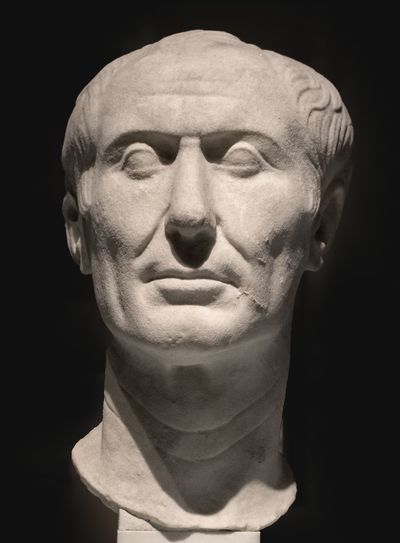
Julius Caesar
General · Ancient
83.3Total
Basic Information
Born
1160
-100
Died
1233
-44
Era
Medieval
Ancient
Nationality
Zengid dynasty
Roman Republic
Occupation
Politician
General
Civilization
Middle Eastern
Western
Score Comparison
Military (10%)
34.6
88.0
Political (20%)
75.7
78.0
Influence (20%)
73.1
85.0
Legacy (20%)
67.4
82.0
Leadership (15%)
87.7
82.0
Strategy (15%)
52.6
88.0
TOTAL
67.7
83.3
Rankings
🥇
Julius CaesarLeader
Mil: 88.0Pol: 78.0Inf: 85.0
83.3
🥈
Ibn al-Athir
Mil: 34.6Pol: 75.7Inf: 73.1
67.7
+15.6 behind
How This Comparison Works
Algorithm
Each figure is scored on 6 dimensions (0—100 scale) based on structured historical data: Military (10%), Political (20%), Influence (20%), Legacy (20%), Leadership (15%), Strategy (15%). The weighted total produces the final ranking.
Data Sources
Scores are computed from structured sub-indicators in the database. Scale factors adjust for era (Ancient ×0.85, Modern ×1.0) and civilization size (Eastern ×1.05, Other ×0.80) to account for differences in population and military scale.
Maximum 3 Figures
Comparisons are limited to 2—3 figures to ensure readability and statistical meaningfulness.
Error Margins
±5 points per dimension — Sub-scores are derived from historical records with inherent uncertainty. Two figures within 5 points on a dimension should be considered roughly equivalent in that area.
Total Score Accuracy
±3 points overall — The weighted combination of 6 dimensions produces a total score with approximately ±3 points of uncertainty. Differences of less than 3 points are not statistically significant— the figures are effectively tied.
Known Limitations
- Historical records are incomplete and uneven across civilizations
- Figures from oral-tradition societies may be underrepresented
- Occupation labels can misclassify multi-role figures
- Scores measure capability and impact, not moral character
- Quantitative scoring is a comparison tool, not absolute truth
Capability Radar
Military (10%) — Battles & Warfare
Battles
28
95
Win Rate
31
92
Expansion
33
97
Political (20%) — Governance & Reform
Reform
73
90
Diplomacy
77
85
Economy
79
82
Influence (20%) — Cultural & Global Reach
Cultural
65
88
Global
55
94
Legacy (20%) — Historical Impact
Historical
70
95
Longevity
60
96
Leadership (15%) — Power & Stability
Tenure
71
75
Stability
81
60
Strategy (15%) — Tactics & Innovation
Strategy
33
94
Tactics
36
96
Reform
41
88
Analysis will be generated on first visit.
Scores and timeline are available below. The page will refresh automatically when ready.
Ibn al-Athir — Complete Timeline
1190 AD
Served as a high-ranking official under the Zengid dynastyPolitical Action
Ibn al-Athir held administrative positions in Mosul under the Zengid rulers, including serving as a vizier or secretary. This role gave him access to state archives and firsthand knowledge of political and military events he later chronicled.
AdministrationZengid DynastyMosul
1210 AD
Compiled 'The End of the Quest in the History of the Atabegs' (Al-Ta'rikh al-bahir fi al-dawlah al-atabakiyyah)Cultural
Ibn al-Athir wrote a history of the Zengid dynasty, focusing on the reign of Nur al-Din and Saladin. This work provides detailed accounts of the Muslim counter-crusade, including the Battle of Hattin and the capture of Jerusalem.
Zengid DynastyCrusadesSaladin
Impact: regional
1220 AD
Witnessed the Mongol invasion of the Islamic worldWar◆ Major
Ibn al-Athir lived through the Mongol invasions of Persia and the Middle East, including the fall of Baghdad (1258) which he did not live to see. His chronicle records the destruction of cities like Nishapur and the massacre of populations, providing a contemporary account.
Mongol InvasionDestructionHistoriography
Impact: regionaltragic
Wrote 'The Lions of the Forest and the Knowledge of the Companions' (Usd al-ghabah fi ma'rifat al-sahabah)Cultural◆ Major
Ibn al-Athir compiled a biographical dictionary of the Prophet Muhammad's companions, listing over 7,500 entries. This work became a standard reference for Islamic biographical literature, organizing companions by name and tribe.
BiographyIslamic ScholarshipHadith
Impact: regional
1231 AD
Completed 'The Complete History' (Al-Kamil fi al-Tarikh)Cultural◆ Major
Ibn al-Athir finished his universal history, a multi-volume chronicle covering world history from creation to 1231. The work includes detailed accounts of the Crusades from the Muslim perspective, drawing on his own experiences and interviews with participants.
HistoriographyCrusadesIslamic History
Impact: regional
Similar Comparisons
Comments & Discussion
No comments yet. Be the first to share your thoughts!