Loading...
Analysis will be generated on first visit.
Scores and timeline are available below. The page will refresh automatically when ready.
Ibn Sina vs Julius Caesar
Julius Caesar leads by 19.3 pts · 2 figures compared
…

Ibn Sina
Politician · Medieval
64.0Total
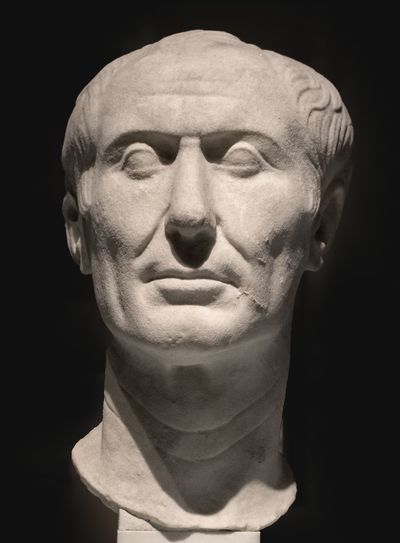
Julius Caesar
General · Ancient
83.3Total
Basic Information
Born
980
-100
Died
1037
-44
Era
Medieval
Ancient
Nationality
Persia
Roman Republic
Occupation
Politician
General
Civilization
Middle Eastern
Western
Score Comparison
Military (10%)
34.6
88.0
Political (20%)
60.9
78.0
Influence (20%)
70.2
85.0
Legacy (20%)
77.0
82.0
Leadership (15%)
73.3
82.0
Strategy (15%)
52.6
88.0
TOTAL
64.0
83.3
Rankings
🥇
Julius CaesarLeader
Mil: 88.0Pol: 78.0Inf: 85.0
83.3
🥈
Ibn Sina
Mil: 34.6Pol: 60.9Inf: 70.2
64.0
+19.3 behind
How This Comparison Works
Algorithm
Each figure is scored on 6 dimensions (0—100 scale) based on structured historical data: Military (10%), Political (20%), Influence (20%), Legacy (20%), Leadership (15%), Strategy (15%). The weighted total produces the final ranking.
Data Sources
Scores are computed from structured sub-indicators in the database. Scale factors adjust for era (Ancient ×0.85, Modern ×1.0) and civilization size (Eastern ×1.05, Other ×0.80) to account for differences in population and military scale.
Maximum 3 Figures
Comparisons are limited to 2—3 figures to ensure readability and statistical meaningfulness.
Error Margins
±5 points per dimension — Sub-scores are derived from historical records with inherent uncertainty. Two figures within 5 points on a dimension should be considered roughly equivalent in that area.
Total Score Accuracy
±3 points overall — The weighted combination of 6 dimensions produces a total score with approximately ±3 points of uncertainty. Differences of less than 3 points are not statistically significant— the figures are effectively tied.
Known Limitations
- Historical records are incomplete and uneven across civilizations
- Figures from oral-tradition societies may be underrepresented
- Occupation labels can misclassify multi-role figures
- Scores measure capability and impact, not moral character
- Quantitative scoring is a comparison tool, not absolute truth
Capability Radar
Military (10%) — Battles & Warfare
Battles
24
95
Win Rate
31
92
Expansion
32
97
Political (20%) — Governance & Reform
Reform
20
90
Diplomacy
40
85
Economy
25
82
Influence (20%) — Cultural & Global Reach
Cultural
95
88
Global
90
94
Legacy (20%) — Historical Impact
Historical
95
95
Longevity
95
96
Leadership (15%) — Power & Stability
Tenure
30
75
Stability
20
60
Strategy (15%) — Tactics & Innovation
Strategy
36
94
Tactics
36
96
Reform
43
88
Analysis will be generated on first visit.
Scores and timeline are available below. The page will refresh automatically when ready.
Ibn Sina — Complete Timeline
1015 AD
Served as vizier in HamadanPolitical Action
Ibn Sina served as vizier to the Buyid ruler Shams al-Dawla in Hamadan. He managed state affairs while continuing his scholarly work. His political career was marked by periods of favor and conflict, including imprisonment by a rival ruler, reflecting the volatile court politics of the time.
VizierBuyidsCourt Politics
Impact: regional
1020 AD
Developed the concept of 'floating man'Cultural
Ibn Sina developed the 'floating man' thought experiment to argue for the existence of the soul. He posited a person suspended in air, devoid of sensory input, who would still be aware of their own existence, demonstrating the soul's immateriality and self-awareness.
PhilosophyPsychologySoul
Impact: globalconstructive
1024 AD
Imprisoned by Sultan Mahmud of GhazniPolitical Action
Ibn Sina was imprisoned by Sultan Mahmud of Ghazni after being accused of heresy and political intrigue. He spent several months in prison, during which he continued writing. His release was secured through the intervention of a sympathetic official.
ImprisonmentPersecutionGhaznavids
Impact: regionaldestructive
1025 AD
Completed 'The Canon of Medicine'Cultural
Ibn Sina completed 'The Canon of Medicine' (Al-Qanun fi al-Tibb), a five-volume medical encyclopedia. It systematized all known medical knowledge of the time, including Greek and Islamic sources, and became the standard medical textbook in Europe and the Islamic world for centuries.
MedicineEncyclopediaMedical Canon
Impact: globalconstructive
1027 AD
Wrote 'The Book of Healing'Cultural◆ Major
Ibn Sina wrote 'The Book of Healing' (Al-Shifa), a comprehensive philosophical and scientific encyclopedia. It covered logic, natural sciences, mathematics, and metaphysics, synthesizing Aristotelian and Neoplatonic thought, and profoundly influenced medieval European scholasticism.
PhilosophyEncyclopediaScholasticism
Impact: globalconstructive
Similar Comparisons
Comments & Discussion
No comments yet. Be the first to share your thoughts!