Loading...
This comparison has not been analyzed yet.
One-time AI generation (~1 minute). Scores and timeline are already available below.
Ibrahim al-Hamdi vs Werner von Fritsch
Werner von Fritsch leads by 6.8 pts · 2 figures compared
…
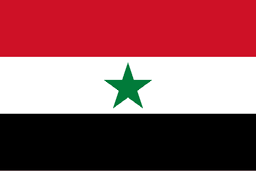
Ibrahim al-Hamdi
General · Modern
42.6Total

Werner von Fritsch
General · Modern
49.4Total
Basic Information
Born
1943
1880
Died
—
1939
Era
Modern
Modern
Nationality
North Yemen
Germany
Occupation
General
General
Civilization
Middle Eastern
Western
Score Comparison
Military (10%)
25.9
20.0
Political (20%)
45.1
45.1
Influence (20%)
49.4
51.8
Legacy (20%)
40.0
46.7
Leadership (15%)
45.0
68.0
Strategy (15%)
41.0
58.0
TOTAL
42.6
49.4
Ibrahim al-Hamdi — Complete Timeline
1974 AD
Led the 1974 Coup in North YemenPolitical Action◆ Major
Ibrahim al-Hamdi led a bloodless military coup that ousted President Abdul Rahman al-Iryani. He established a military government, promising reforms and modernization.
YemenCoupMilitary
Impact: national
1975 AD
Implemented Modernization ReformsReform◆ Major
Al-Hamdi initiated economic and social reforms, including infrastructure development, land reform, and efforts to reduce tribal influence. His policies aimed to centralize state power and modernize Yemen.
YemenReformModernization
Impact: nationalconstructive
1977 AD
Assassinated with His BrotherPolitical Action◆ Major
Ibrahim al-Hamdi and his brother Abdullah were assassinated in Sana'a under unclear circumstances. Their deaths were widely attributed to rival political factions, ending his reformist rule.
YemenAssassinationMystery
Impact: nationaltragic
Werner von Fritsch — Complete Timeline
1934 AD
Appointment as Commander-in-Chief of the German ArmyPolitical Action◆ Major
Fritsch was appointed Oberbefehlshaber des Heeres (Commander-in-Chief of the German Army). He oversaw the army's expansion and rearmament in violation of the Treaty of Versailles. He was a traditionalist who sought to maintain the army's independence from the Nazi Party.
German ArmyRearmamentNazi Era
Impact: national
1938 AD
Blomberg-Fritsch AffairPolitical Action
Fritsch was falsely accused of homosexuality by the Gestapo and SS in a campaign to remove conservative generals. He was forced to resign as Army Commander-in-Chief. A court of honor later cleared him, but his career was ruined. The affair allowed Hitler to take direct control of the armed forces.
Nazi PurgeMilitary LeadershipFalse Accusation
Impact: nationaldestructive
1939 AD
Killed in Action in PolandWar
Fritsch, serving as a colonel of artillery in the invasion of Poland, was killed by a Polish bullet during the siege of Warsaw. He was the first German general to die in World War II. His death was officially reported as a hero's death, but some accounts suggest he may have sought death.
World War IIInvasion of PolandDeath
Impact: nationaltragic
This comparison has not been analyzed yet.
One-time AI generation (~1 minute). Scores and timeline are already available below.
Rankings
🥇
Werner von FritschLeader
Mil: 20.0Pol: 45.1Inf: 51.8
49.4
🥈
Ibrahim al-Hamdi
Mil: 25.9Pol: 45.1Inf: 49.4
42.6
+6.8 behind
How This Comparison Works
Algorithm
Each figure is scored on 6 dimensions (0—100 scale) based on structured historical data: Military (10%), Political (20%), Influence (20%), Legacy (20%), Leadership (15%), Strategy (15%). The weighted total produces the final ranking.
Data Sources
Scores are computed from structured sub-indicators in the database. Scale factors adjust for era (Ancient ×0.85, Modern ×1.0) and civilization size (Eastern ×1.05, Other ×0.80) to account for differences in population and military scale.
Maximum 3 Figures
Comparisons are limited to 2—3 figures to ensure readability and statistical meaningfulness.
Error Margins
±5 points per dimension — Sub-scores are derived from historical records with inherent uncertainty. Two figures within 5 points on a dimension should be considered roughly equivalent in that area.
Total Score Accuracy
±3 points overall — The weighted combination of 6 dimensions produces a total score with approximately ±3 points of uncertainty. Differences of less than 3 points are not statistically significant— the figures are effectively tied.
Known Limitations
- Historical records are incomplete and uneven across civilizations
- Figures from oral-tradition societies may be underrepresented
- Occupation labels can misclassify multi-role figures
- Scores measure capability and impact, not moral character
- Quantitative scoring is a comparison tool, not absolute truth
Capability Radar
Military (10%) — Battles & Warfare
Battles
10
45
Win Rate
10
40
Expansion
10
30
Political (20%) — Governance & Reform
Reform
40
40
Diplomacy
25
35
Economy
30
20
Influence (20%) — Cultural & Global Reach
Cultural
15
20
Global
10
20
Legacy (20%) — Historical Impact
Historical
20
40
Longevity
10
30
Leadership (15%) — Power & Stability
Tenure
20
50
Stability
15
25
Strategy (15%) — Tactics & Innovation
Strategy
15
65
Tactics
15
60
Reform
20
70
Similar Comparisons
Comments & Discussion
No comments yet. Be the first to share your thoughts!