Loading...
Ibrahim Pasha vs Napoleon Bonaparte
Napoleon Bonaparte leads by 2.2 pts · 2 figures compared
…
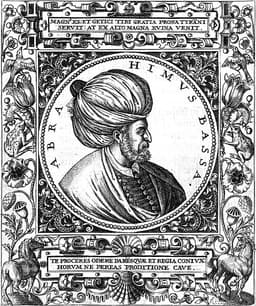
Ibrahim Pasha
Politician · Medieval
68.7Total

Napoleon Bonaparte
General · Modern
70.9Total
Basic Information
Born
1493
1769
Died
1536
1821
Era
Medieval
Modern
Nationality
Ottoman Empire
France
Occupation
Politician
General
Civilization
Middle Eastern
Western
Score Comparison
Military (10%)
60.0
94.0
Political (20%)
78.0
72.0
Influence (20%)
82.0
40.0
Legacy (20%)
52.0
80.0
Leadership (15%)
80.0
78.0
Strategy (15%)
55.0
90.0
TOTAL
68.7
70.9
Ibrahim Pasha — Complete Timeline
1536 AD
Execution by Suleiman the MagnificentPolitical Action◆ Major
Sultan Suleiman ordered the execution of Grand Vizier Ibrahim Pasha, his longtime friend and confidant. Ibrahim was strangled in the Topkapi Palace after being accused of overreaching his authority and possibly plotting against the sultan. His death shocked the Ottoman court.
Ottoman PoliticsExecutionSuleiman
Impact: nationaltragic
Napoleon Bonaparte — Complete Timeline
1799 AD
Coup of 18 BrumaireOther◆ Major
Napoleon Bonaparte, with support from his brother Lucien and key political figures, overthrew the Directory in a bloodless coup. He established the Consulate with himself as First Consul, effectively becoming the ruler of France. This event ended the French Revolution's most unstable period.
French RevolutionCoupRise to Power
Impact: regional
1804 AD
Promulgation of the Napoleonic CodeOther◆ Major
Napoleon enacted the Civil Code of the French, known as the Napoleonic Code, a comprehensive set of laws that replaced the fragmented feudal legal systems. The code established legal equality, protected property rights, and secularized law. It became the basis for legal systems in many European and world countries.
Legal ReformNapoleonic CodeCivil Law
Impact: globalconstructive
1805 AD
Battle of AusterlitzWar◆ Major
Napoleon's Grande Arm
Napoleonic WarsBattleDecisive Victory
Impact: global
1812 AD
Invasion of RussiaWar◆ Major
Napoleon led the Grande Arm
Napoleonic WarsInvasionDisaster
Impact: globaldestructive
1815 AD
Battle of WaterlooWar◆ Major
Napoleon's French army was defeated by the combined forces of the Duke of Wellington's Anglo-Allied army and Gebhard Leberecht von Bl
Napoleonic WarsBattleFinal Defeat
Impact: globaldestructive
Expert Analysis
ibrahim-pasha-vs-napoleon-bonaparte
# The Rise and Fall of Two Titans: Napoleon and Ibrahim Pasha
In the spring of 1815, Napoleon Bonaparte stood on a hill near Waterloo, surveying a muddy battlefield where his destiny would be decided. Two decades earlier, in 1493, a Greek-born boy named Ibrahim had been sold into slavery in the Ottoman Empire, beginning a journey that would make him the second most powerful man in the world. Both men rose from obscurity to dominate vast empires, yet one fell in a blaze of glory, while the other was quietly strangled in his sleep by the very friend who had elevated him. What drove these two figures down such different paths?
Origins
Napoleon Bonaparte was born in 1769 on the island of Corsica, a Mediterranean backwater that had only recently become French territory. His family was minor nobility, but they were poor, and Napoleon grew up speaking Italian-accented French, an outsider in the nation he would one day rule. The French Revolution, erupting when he was twenty, shattered the old order and created a world where talent could vault a man to the top. For a brilliant, ambitious young officer, it was the perfect storm.
Ibrahim Pasha, born in 1493, came from a very different world. He was likely the son of a Greek fisherman from Parga, captured by pirates and sold into the household of the Ottoman prince Suleiman. In the Ottoman system, slavery was not a permanent stigma—it was a path to power. The sultan's household was a meritocracy of the enslaved, where boys from Christian families were converted to Islam, trained in administration and warfare, and could rise to become grand viziers. Ibrahim was lucky: he caught the eye of the young Suleiman, and the two became inseparable friends.
Rise to Power
Napoleon's ascent was meteoric and public. In 1793, at age twenty-four, he drove the British out of Toulon and was promoted to brigadier general. By 1795, he had saved the revolutionary government from a royalist uprising with a "whiff of grapeshot." In 1796, he took command of the French army in Italy and, in a series of lightning campaigns, destroyed Austria's power in the peninsula. Each victory was a step upward, and by 1799, he had seized control of France itself in a coup. His path was one of constant movement, constant conquest.
Ibrahim Pasha's rise was quieter but no less dramatic. When Suleiman became sultan in 1520, Ibrahim was already his closest advisor. Suleiman appointed him grand vizier in 1523, a position that made him the effective ruler of the Ottoman Empire. Ibrahim commanded armies, negotiated with European powers, and managed the vast bureaucracy of an empire stretching from Hungary to Persia. His power rested entirely on Suleiman's favor, but that favor seemed absolute.
Leadership & Governance
Napoleon governed through force and reform. His Napoleonic Code, established in 1804, standardized French law, abolished feudal privileges, and spread the ideals of the Revolution across Europe. He built roads, founded banks, and created a centralized education system. But he was also a conqueror who bled France dry. His military genius—scoring a 93.0 in strategy and 94.0 in military skill—was legendary, but it was also his undoing. He could win battles but not peace.
Ibrahim Pasha governed through diplomacy and patronage. He negotiated the 1526 Treaty of Constantinople with the Habsburgs, secured the loyalty of the Janissaries, and managed the empire's finances with skill. His political score of 73.3 reflects a man who knew how to wield power within a system, not against it. He was a builder, not a destroyer—he commissioned mosques, palaces, and aqueducts in Istanbul, leaving a physical mark on the city.
Triumph & Tragedy
Napoleon's greatest triumph was Austerlitz in 1805, where he crushed the combined armies of Russia and Austria. It was a masterpiece of strategy, a battle that cemented his legend. His greatest tragedy was the invasion of Russia in 1812, where he lost half a million men to the cold and the Cossacks. From that point, his fall was inevitable. Exiled to Elba, he escaped, only to meet final defeat at Waterloo in 1815. He died in 1821 on Saint Helena, a prisoner of the British.
Ibrahim Pasha's triumph was his intimacy with Suleiman. The sultan called him "my brother," and Ibrahim wielded power that no vizier before or since has matched. His tragedy came in 1536, when Suleiman, perhaps fearing Ibrahim's ambition, perhaps pressured by his wife Roxelana, ordered his execution. Ibrahim was found strangled in his sleep. The man who had risen from slavery to rule an empire was destroyed by a whisper.
Character & Destiny
Napoleon was driven by an insatiable need for glory. "Glory is fleeting, but obscurity is forever," he said, and he lived by those words. He was restless, arrogant, and brilliant—a man who believed he could impose his will on the world. His total score of 82.4 reflects a figure of immense capability but fatal flaws. He could not stop, and so he fell.
Ibrahim Pasha was more cautious, more aware of the limits of power. He knew that in the Ottoman system, the sultan's favor was the only currency that mattered. Yet he grew overconfident. He built a palace that rivaled the sultan's, he amassed wealth that provoked envy, and he forgot that a slave's rise is always precarious. His total score of 70.6 reflects a competent but ultimately tragic figure, a man who reached the summit only to realize that the summit itself was a trap.
Legacy
Napoleon's legacy is global. He reshaped Europe, inspired nationalism, and left his code of law in countries from Egypt to Brazil. He is remembered as both a liberator and a tyrant, a man whose ambition changed the world. His legacy score of 78.0 is high, but it is also contested.
Ibrahim Pasha's legacy is more subtle. He is remembered as the architect of Suleiman's golden age, the vizier who made the empire run. But he is also a cautionary tale—a reminder that in absolute monarchies, proximity to power is proximity to death. His legacy score of 69.6 reflects a figure who is known to historians but not to the general public, a servant rather than a master.
Conclusion
Napoleon and Ibrahim Pasha both rose from nothing to rule the world, but their ends could not be more different. Napoleon died in exile, his empire shattered, but his name immortal. Ibrahim died in his bed, strangled by his best friend, and his name faded into the archives. The difference lies in the systems they served. Napoleon was a product of revolution, where power flows from the people and glory is eternal. Ibrahim was a product of empire, where power flows from the sultan and loyalty is the only virtue. One man tried to conquer the world; the other tried to serve it. Both failed, but their failures teach us something about the nature of ambition and the price of power.
Rankings
🥇
Napoleon BonaparteLeader
Mil: 94.0Pol: 72.0Inf: 40.0
70.9
🥈
Ibrahim Pasha
Mil: 60.0Pol: 78.0Inf: 82.0
68.7
+2.2 behind
How This Comparison Works
Algorithm
Each figure is scored on 6 dimensions (0—100 scale) based on structured historical data: Military (10%), Political (20%), Influence (20%), Legacy (20%), Leadership (15%), Strategy (15%). The weighted total produces the final ranking.
Data Sources
Scores are computed from structured sub-indicators in the database. Scale factors adjust for era (Ancient ×0.85, Modern ×1.0) and civilization size (Eastern ×1.05, Other ×0.80) to account for differences in population and military scale.
Maximum 3 Figures
Comparisons are limited to 2—3 figures to ensure readability and statistical meaningfulness.
Error Margins
±5 points per dimension — Sub-scores are derived from historical records with inherent uncertainty. Two figures within 5 points on a dimension should be considered roughly equivalent in that area.
Total Score Accuracy
±3 points overall — The weighted combination of 6 dimensions produces a total score with approximately ±3 points of uncertainty. Differences of less than 3 points are not statistically significant— the figures are effectively tied.
Known Limitations
- Historical records are incomplete and uneven across civilizations
- Figures from oral-tradition societies may be underrepresented
- Occupation labels can misclassify multi-role figures
- Scores measure capability and impact, not moral character
- Quantitative scoring is a comparison tool, not absolute truth
Capability Radar
Military (10%) — Battles & Warfare
Battles
75
95
Win Rate
80
90
Expansion
85
95
Political (20%) — Governance & Reform
Reform
80
95
Diplomacy
90
80
Economy
75
85
Influence (20%) — Cultural & Global Reach
Cultural
65
85
Global
65
90
Legacy (20%) — Historical Impact
Historical
70
95
Longevity
60
90
Leadership (15%) — Power & Stability
Tenure
85
85
Stability
70
70
Strategy (15%) — Tactics & Innovation
Strategy
82
95
Tactics
78
98
Reform
70
92
Similar Comparisons
Comments & Discussion
WaterlooWonk6/17/2026
People romanticize Napoleon's "outsider" rise, but Ibrahim's arc is way more extreme for its era. Napoleon leveraged a revolutionary chaos that dissolved aristocracy overnight—tactical genius, sure, but the deck was pre-shuffled. Ibrahim went from enslaved Greek fisherman's son to Grand Vizier in a rigid Ottoman hierarchy without a single institutional collapse to help him. That's raw ability bending a system that historically ate men alive. Napoleon's failure at Waterloo is studied; Ibrahim's q