Loading...
Idris Alooma vs Shivaji
Shivaji leads by 3.9 pts · 2 figures compared
…

Idris Alooma
Emperor · Modern
64.6Total
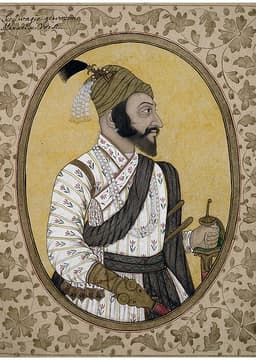
Shivaji
Emperor · Modern
68.5Total
Basic Information
Born
1542
1630
Died
1603
1680
Era
Modern
Modern
Nationality
Kanem-Bornu
India
Occupation
Emperor
Emperor
Civilization
Other
Indian
Score Comparison
Military (10%)
65.0
80.0
Political (20%)
78.0
72.0
Influence (20%)
59.0
82.0
Legacy (20%)
52.0
40.0
Leadership (15%)
78.0
79.8
Strategy (15%)
69.1
72.0
TOTAL
64.6
68.5
Idris Alooma — Complete Timeline
1570 AD
Military Reforms with FirearmsReform◆ Major
Idris Alooma introduced firearms, including muskets and cannons, to the Kanem-Bornu army. He hired Turkish and North African mercenaries to train his troops, creating a professional standing army that gave Bornu a military advantage.
Military ReformFirearmsStanding Army
Impact: regionalconstructive
1571 AD
Pilgrimage to MeccaCultural
Idris Alooma made a pilgrimage to Mecca, traveling through Egypt and Arabia. He established diplomatic ties with the Ottoman Empire and secured support for his military reforms, including the supply of firearms.
PilgrimageMeccaOttoman Alliance
Impact: regionalconstructive
1575 AD
Conquest of the SaoWar
Idris Alooma led campaigns against the Sao people, who had long raided Bornu. He defeated them and incorporated their territory, securing the empire's southern borders and gaining control over trade routes.
ConquestSaoBorder Security
Impact: regional
1580 AD
Construction of Fortified CampsReform
Idris Alooma built fortified military camps (ribats) along Bornu's borders. These camps housed garrisons and served as bases for campaigns, improving defense against raids from the Tuareg and other groups.
FortificationsDefenseMilitary
Impact: regionalconstructive
1585 AD
Legal and Administrative ReformsReform◆ Major
Idris Alooma codified Islamic law and established a system of courts in Bornu. He appointed qadis (judges) and standardized legal procedures, strengthening the rule of law and centralizing authority.
Legal ReformIslamic LawCourts
Impact: regionalconstructive
Shivaji — Complete Timeline
1646 AD
Capture of Torna FortWar◆ Major
Shivaji captured the Torna Fort from the Bijapur Sultanate at age 16, his first major military action. This victory provided him with a strategic base and treasure to fund further campaigns, marking the beginning of Maratha expansion.
Military CampaignFort Capture
Impact: regional
1659 AD
Battle of PratapgadWar◆ Major
Shivaji defeated the Bijapur general Afzal Khan at the Battle of Pratapgad. Shivaji killed Afzal Khan in a personal encounter, and the Maratha forces routed the Bijapur army, eliminating a major threat to his nascent kingdom.
BattleMaratha-Bijapur Conflict
Impact: regional
1664 AD
Sack of SuratWar◆ Major
Shivaji attacked and plundered the wealthy Mughal port city of Surat, seizing vast amounts of treasure. This raid demonstrated Maratha military capability and weakened Mughal economic power, while enriching Shivaji's treasury.
RaidMughal-Maratha Conflict
Impact: regional
1665 AD
Treaty of PurandarPolitical Action◆ Major
Shivaji signed the Treaty of Purandar with the Mughal general Jai Singh I, ceding 23 forts to the Mughals and agreeing to serve as a Mughal vassal. This treaty temporarily ended hostilities but allowed Shivaji to retain his core territory.
TreatyMughal-Maratha Relations
Impact: regional
1666 AD
Escape from AgraPolitical Action◆ Major
Shivaji escaped from house arrest in Agra, where he had been detained by Emperor Aurangzeb. He hid in a basket of sweets and fled to the Deccan, resuming his campaign against the Mughals and rebuilding Maratha power.
EscapeMughal-Maratha Conflict
Impact: regional
1674 AD
Coronation at RaigadPolitical Action◆ Major
Shivaji was formally crowned as Chhatrapati (emperor) at Raigad Fort, establishing the Maratha Empire. The coronation included Hindu rituals and the assumption of royal titles, legitimizing his rule and sovereignty.
CoronationState Formation
Impact: regionalconstructive
Expert Analysis
Origins
Idris Alooma (c. 1571–1603) was born into the ruling Sayfawa dynasty of the Kanem-Bornu Empire in West Africa. He received a traditional Islamic education and was trained in military command from a young age. His father, Mai Ali, had already introduced some firearms, but Idris would take this much further. Shivaji (1630–1680) was born in the hill fort of Shivneri in present-day Maharashtra, India. His father Shahaji was a Maratha general serving the Bijapur Sultanate, and his mother Jijabai instilled in him a strong sense of Hindu pride and resistance against Muslim rule. Unlike Idris, Shivaji grew up in a turbulent political landscape of competing sultanates and the Mughal Empire.
Rise to Power
Idris Alooma ascended to the throne in 1571 after a period of internal strife. He immediately began reorganizing the army, hiring Turkish and North African mercenaries to train his troops in the use of muskets and cannons. His first major campaign was against the Sao people, who had long raided Bornu. By 1580, he had decisively defeated them, securing the empire's eastern borders. Shivaji's rise began earlier and more dramatically. At age 16, he captured the Torna Fort from the Bijapur Sultanate in 1645, using a combination of stealth and local support. His victory over Afzal Khan at Pratapgad in 1659 eliminated a major threat and boosted his reputation. While Idris relied on gradual military reforms and diplomatic ties with the Ottoman Empire, Shivaji used audacious guerrilla tactics and personal charisma to build a following.
Leadership & Governance
Idris Alooma was a reformer who centralized power. He codified Islamic law, established a system of courts with appointed qadis, and built fortified camps (ribats) along borders to project authority. His governance was bureaucratic and religiously orthodox. Shivaji, by contrast, created a decentralized administration with a council of ministers (Ashta Pradhan) and a strong emphasis on Hindu traditions. He introduced a revenue system based on land surveys and built a navy to secure the coastline. Both leaders were pragmatic: Idris allied with the Ottoman Empire for military support, while Shivaji signed the Treaty of Purandar (1665) with the Mughals when outmatched. However, Shivaji's governance was more innovative in its blend of guerrilla warfare and state-building, while Idris focused on institutionalizing existing structures.
Triumph & Tragedy
Idris Alooma's greatest triumph was transforming Kanem-Bornu into a military power capable of resisting external threats. His use of firearms and fortified camps secured the empire for decades. However, his reliance on mercenaries and expensive firearms strained the economy, and after his death, the empire declined. Shivaji's coronation as Chhatrapati in 1674 was the pinnacle of his career, establishing the Maratha Empire. His sack of Surat in 1664 filled his coffers and demonstrated Mughal vulnerability. Yet his tragedy was his inability to fully consolidate gains: the Treaty of Purandar forced him to cede 23 forts, and his death in 1680 led to a succession crisis. Shivaji scored 80.0 in military compared to Idris's 65.0, reflecting his tactical genius, but Idris's political score of 78.0 edged out Shivaji's 72.0, indicating more stable governance.
Character & Destiny
Idris Alooma was methodical and devout. He made a pilgrimage to Mecca in 1580, strengthening ties with the Islamic world. His character was that of a builder, not a conqueror. Shivaji was bold and opportunistic, often taking personal risks like the encounter with Afzal Khan. His Hindu nationalism shaped his destiny, unifying Marathas against Muslim rule. Idris's more cautious approach ensured stability but limited expansion; Shivaji's aggression built an empire but invited powerful enemies. Historians note that Idris's reforms were sustainable, while Shivaji's conquests relied on his personal leadership.
Legacy
Idris Alooma's legacy is confined to West African history. His military reforms influenced later Sahelian states, but the Kanem-Bornu Empire collapsed in the 19th century. Shivaji's legacy is far broader: the Maratha Empire grew after his death, challenging the Mughals and paving the way for eventual British rule. He is a national hero in India, celebrated as a symbol of Hindu resistance. Shivaji's influence score of 82.0 dwarfs Idris's 59.0, and his legacy score of 40.0 is lower only because his empire did not endure, but his cultural impact is immense.
Conclusion
While Idris Alooma was a capable reformer who modernized Kanem-Bornu, Shivaji had greater impact due to his military innovation and lasting cultural legacy. Shivaji's total score of 68.5 versus Idris's 64.6 reflects this. Shivaji's guerrilla tactics influenced future anti-colonial movements, and his empire reshaped Indian politics. Idris's achievements, though significant, were more localized and ephemeral. Therefore, Shivaji emerges as the more consequential figure.
Rankings
🥇
ShivajiLeader
Mil: 80.0Pol: 72.0Inf: 82.0
68.5
🥈
Idris Alooma
Mil: 65.0Pol: 78.0Inf: 59.0
64.6
+3.9 behind
How This Comparison Works
Algorithm
Each figure is scored on 6 dimensions (0—100 scale) based on structured historical data: Military (10%), Political (20%), Influence (20%), Legacy (20%), Leadership (15%), Strategy (15%). The weighted total produces the final ranking.
Data Sources
Scores are computed from structured sub-indicators in the database. Scale factors adjust for era (Ancient ×0.85, Modern ×1.0) and civilization size (Eastern ×1.05, Other ×0.80) to account for differences in population and military scale.
Maximum 3 Figures
Comparisons are limited to 2—3 figures to ensure readability and statistical meaningfulness.
Error Margins
±5 points per dimension — Sub-scores are derived from historical records with inherent uncertainty. Two figures within 5 points on a dimension should be considered roughly equivalent in that area.
Total Score Accuracy
±3 points overall — The weighted combination of 6 dimensions produces a total score with approximately ±3 points of uncertainty. Differences of less than 3 points are not statistically significant— the figures are effectively tied.
Known Limitations
- Historical records are incomplete and uneven across civilizations
- Figures from oral-tradition societies may be underrepresented
- Occupation labels can misclassify multi-role figures
- Scores measure capability and impact, not moral character
- Quantitative scoring is a comparison tool, not absolute truth
Capability Radar
Military (10%) — Battles & Warfare
Battles
65
75
Win Rate
70
80
Expansion
60
75
Political (20%) — Governance & Reform
Reform
80
75
Diplomacy
70
70
Economy
65
65
Influence (20%) — Cultural & Global Reach
Cultural
55
75
Global
40
65
Legacy (20%) — Historical Impact
Historical
60
80
Longevity
50
75
Leadership (15%) — Power & Stability
Tenure
75
70
Stability
70
60
Strategy (15%) — Tactics & Innovation
Strategy
70
85
Tactics
75
90
Reform
85
80
Similar Comparisons
Comments & Discussion
No comments yet. Be the first to share your thoughts!