Loading...
Idris of Libya vs William Ernest of Saxe-Weimar
Idris of Libya leads by 13.7 pts · 2 figures compared
…

Idris of Libya
Emperor · Modern
52.6Total
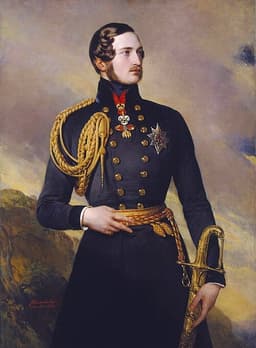
William Ernest of Saxe-Weimar
Emperor · Modern
38.9Total
Basic Information
Born
1889
1876
Died
1983
1923
Era
Modern
Modern
Nationality
Libya
Saxe-Weimar
Occupation
Emperor
Emperor
Civilization
Middle Eastern
Western
Score Comparison
Military (10%)
43.3
45.6
Political (20%)
61.3
26.4
Influence (20%)
50.2
45.5
Legacy (20%)
40.0
33.3
Leadership (15%)
74.0
41.5
Strategy (15%)
54.3
45.0
TOTAL
52.6
38.9
Idris of Libya — Complete Timeline
1951 AD
Became King of LibyaPolitical Action◆ Major
Idris was proclaimed King of the newly independent United Kingdom of Libya. His reign established a constitutional monarchy and aligned Libya with the West, granting military bases to the United States and Britain.
IndependenceMonarchyLibyan State
Impact: national
1969 AD
Ousted by Muammar Gaddafi's CoupPolitical Action
While undergoing medical treatment in Turkey, King Idris was overthrown in a bloodless military coup led by Muammar Gaddafi. The coup ended the Libyan monarchy and ushered in decades of Gaddafi's rule.
Coup d'étatGaddafiEnd of Monarchy
Impact: nationaltragic
1983 AD
Died in Exile in EgyptPolitical Action
Idris died in Cairo, Egypt, where he had lived in exile since his overthrow. His death marked the end of the Senussi dynasty's political influence in Libya, though the family remained a symbol of the pre-Gaddafi era.
ExileDeathSenussi Dynasty
Impact: nationaltragic
William Ernest of Saxe-Weimar — Complete Timeline
1901 AD
Succeeded as Grand Duke of Saxe-Weimar-EisenachPolitical Action
William Ernest inherited the grand duchy upon his grandfather Charles Alexander's death. He ruled during the late German Empire, a period of increasing political tension and the lead-up to World War I.
SuccessionGerman Empire
Impact: national
1908 AD
Construction of the Weimar Court TheatreCultural
William Ernest oversaw the construction of a new court theatre building in Weimar, designed by architect Max Littmann. The theatre became a major cultural venue, continuing Weimar's tradition of performing arts.
TheatreWeimarArchitecture
constructive
1918 AD
Abdicated the ThronePolitical Action◆ Major
William Ernest abdicated following the German Revolution of 1918, which overthrew the monarchies of the German Empire. Saxe-Weimar-Eisenach became part of the Free State of Thuringia in the Weimar Republic, ending the dynasty's rule.
AbdicationGerman RevolutionEnd of Monarchy
Impact: nationaltragic
Expert Analysis
Origins
**Idris of Libya** (born 1889) was the grandson of the Grand Senussi, founder of the Senussi religious order. He grew up in a Bedouin environment in Cyrenaica, deeply influenced by Islamic scholarship and desert traditions. His education was informal, centered on religious studies and tribal leadership. As a young man, he led the Senussi resistance against Italian colonization, gaining military and political experience that shaped his later rule.
**William Ernest of Saxe-Weimar** (born 1876) was the last ruling Grand Duke of Saxe-Weimar-Eisenach. He was raised in a traditional German princely household, with a strong emphasis on military discipline and courtly etiquette. He studied at the University of Bonn and served in the Prussian army. His upbringing was typical of the minor German royalty, focused on preserving hereditary privileges amid the rising tide of nationalism and democracy.
Rise to Power
**Idris** became the recognized leader of the Senussi order in 1916 after his cousin's death. During World War I, he negotiated with the British, who supported his anti-Ottoman stance. In 1920, he was recognized as Emir of Cyrenaica under Italian suzerainty, but the Italian invasion of 1922 forced him into exile in Egypt. There, he continued to lead the resistance until Italy's defeat in 1943. With British backing, he became the head of the Cyrenaican government in 1949, and when Libya became independent in 1951, he was proclaimed King. His rise was a product of his religious authority, tribal alliances, and strategic alignment with the Allies.
**William Ernest** inherited the grand duchy in 1901 upon the death of his grandfather, Charles Alexander. His rule was largely ceremonial, as the German Empire's federal structure limited the powers of its constituent monarchs. He was a conservative, supporting Kaiser Wilhelm II's policies and maintaining the traditional court. His rise was automatic, by birth and inheritance, without significant political maneuvering. He faced no major challenges to his succession, but his authority was circumscribed by the imperial constitution.
Leadership & Governance
**Idris** governed as a constitutional monarch, but he retained significant influence through his religious role and tribal connections. He pursued a cautious foreign policy, aligning with the West (especially Britain and the US) while maintaining conservative domestic policies. His governance was characterized by stability and slow modernization, but he failed to build strong national institutions or a broad-based political system. He concentrated power in the hands of the Senussi family and Cyrenaican elites, alienating Tripolitania and Fezzan.
**William Ernest** was a traditional autocrat within his small state, but his power was increasingly constrained by the Reichstag and the federal government. He focused on cultural patronage, notably funding the construction of the Weimar Court Theatre (1908), which became a hub for classical music. He opposed democratic reforms and supported the monarchy's prerogatives, but his influence waned as Germany industrialized. His leadership score of 41.5 reflects his inability to adapt to changing political realities.
Triumph & Tragedy
**Idris's** greatest success was leading Libya to independence and establishing a monarchy that provided stability for nearly two decades. He maintained Libya's neutrality in the Cold War and leveraged oil revenues to begin infrastructure development. However, his greatest failure was his detachment from the populace. While undergoing medical treatment in Turkey in 1969, he was overthrown in a bloodless coup by Muammar Gaddafi. His regime collapsed almost instantly, revealing its weak popular support. He died in exile in Egypt in 1983, largely forgotten.
**William Ernest's** triumph was his cultural patronage, especially the Weimar Court Theatre, which enhanced Weimar's reputation as a cultural center. He also modernized the grand duchy's infrastructure. But his tragedy was his abdication in 1918 during the German Revolution. He refused to compromise with democratic forces and was forced to flee. Saxe-Weimar-Eisenach became part of the new Thuringia state, and he lost all political power. He died in 1923, a relic of a bygone era.
Character & Destiny
**Idris** was reserved, cautious, and deeply religious. He preferred consensus and avoided confrontation, which made him a poor leader in the face of radical change. His character—aloof and reliant on a narrow circle—doomed him when the military and popular sentiment turned against him. He scored 74.0 in leadership, reflecting his ability to maintain power for years, but his political score of 61.3 shows his failure to build lasting institutions.
**William Ernest** was stubborn, conservative, and out of touch with the masses. He believed in divine right and rejected any limitation on his authority. This rigidity led to his abdication without a fight. His political score of 26.4 highlights his inability to navigate the turbulent politics of the German Empire. His character was ill-suited for an era of democratization.
Legacy
**Idris's** legacy is mixed. He is remembered as the founder of modern Libya but also as a monarch who failed to create a unified national identity. His overthrow paved the way for Gaddafi's dictatorship. His influence score of 50.2 reflects his role in Libya's independence, but his legacy score of 40.0 shows how quickly his achievements were erased.
**William Ernest** is largely a footnote in history. The Weimar Court Theatre still stands, but his abdication ended the Saxe-Weimar dynasty. His legacy is overshadowed by the larger forces of German unification and the Weimar Republic. His influence score of 45.5 is similar to Idris's, but his total score of 38.9 is significantly lower, reflecting his limited impact.
Conclusion
Idris of Libya had a greater impact than William Ernest of Saxe-Weimar, despite the latter's longer reign. Idris's total score of 52.6 versus 38.9 reflects his role in creating a nation-state and navigating the Cold War, while William Ernest presided over a minor German state that was absorbed into a larger federation. Idris's failures were more consequential—his overthrow led to decades of dictatorship—but his achievements in independence and stability outweigh William Ernest's cultural contributions. The score gap of 13.7 points is justified: Idris shaped Libya's destiny, while William Ernest was a passive figure in history's current.
Rankings
🥇
Idris of LibyaLeader
Mil: 43.3Pol: 61.3Inf: 50.2
52.6
🥈
William Ernest of Saxe-Weimar
Mil: 45.6Pol: 26.4Inf: 45.5
38.9
+13.7 behind
How This Comparison Works
Algorithm
Each figure is scored on 6 dimensions (0—100 scale) based on structured historical data: Military (10%), Political (20%), Influence (20%), Legacy (20%), Leadership (15%), Strategy (15%). The weighted total produces the final ranking.
Data Sources
Scores are computed from structured sub-indicators in the database. Scale factors adjust for era (Ancient ×0.85, Modern ×1.0) and civilization size (Eastern ×1.05, Other ×0.80) to account for differences in population and military scale.
Maximum 3 Figures
Comparisons are limited to 2—3 figures to ensure readability and statistical meaningfulness.
Error Margins
±5 points per dimension — Sub-scores are derived from historical records with inherent uncertainty. Two figures within 5 points on a dimension should be considered roughly equivalent in that area.
Total Score Accuracy
±3 points overall — The weighted combination of 6 dimensions produces a total score with approximately ±3 points of uncertainty. Differences of less than 3 points are not statistically significant— the figures are effectively tied.
Known Limitations
- Historical records are incomplete and uneven across civilizations
- Figures from oral-tradition societies may be underrepresented
- Occupation labels can misclassify multi-role figures
- Scores measure capability and impact, not moral character
- Quantitative scoring is a comparison tool, not absolute truth
Capability Radar
Military (10%) — Battles & Warfare
Battles
5
23
Win Rate
5
28
Expansion
5
33
Political (20%) — Governance & Reform
Reform
40
10
Diplomacy
50
15
Economy
40
10
Influence (20%) — Cultural & Global Reach
Cultural
30
5
Global
20
5
Legacy (20%) — Historical Impact
Historical
30
5
Longevity
20
5
Leadership (15%) — Power & Stability
Tenure
60
20
Stability
30
10
Strategy (15%) — Tactics & Innovation
Strategy
5
32
Tactics
5
35
Reform
5
37
Similar Comparisons
Comments & Discussion
No comments yet. Be the first to share your thoughts!