Loading...
Ilham Aliyev vs Woodrow Wilson
Woodrow Wilson leads by 5.9 pts · 2 figures compared
…

Ilham Aliyev
Politician · Modern
49.0Total
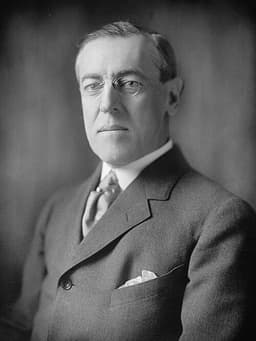
Woodrow Wilson
Politician · Modern
54.9Total
Basic Information
Born
1961
1856
Died
—
1924
Era
Modern
Modern
Nationality
Azerbaijan
United States
Occupation
Politician
Politician
Civilization
Eastern
Western
Score Comparison
Military (10%)
14.9
48.2
Political (20%)
45.0
55.0
Influence (20%)
54.9
55.0
Legacy (20%)
43.3
52.0
Leadership (15%)
72.0
72.0
Strategy (15%)
54.3
42.5
TOTAL
49.0
54.9
Ilham Aliyev — Complete Timeline
2003 AD
Became President of AzerbaijanPolitical Action◆ Major
Ilham Aliyev succeeded his father Heydar Aliyev as President of Azerbaijan after winning a controversial election. He had previously served as Prime Minister. His presidency continued the authoritarian regime established by his father, with a focus on economic development and energy exports.
Dynastic SuccessionElectionAuthoritarian Continuity
Impact: national
2005 AD
Suppressed Political OppositionPolitical Action◆ Major
Ilham Aliyev's government cracked down on political opposition, arresting activists and journalists. The crackdown intensified after the 2005 parliamentary elections, which were marred by fraud. International organizations criticized the regime for human rights abuses and lack of political freedom.
Political RepressionHuman RightsAuthoritarianism
Impact: nationaldestructive
2012 AD
Hosted Eurovision Song ContestCultural◆ Major
Azerbaijan hosted the Eurovision Song Contest in Baku, a major international event that showcased the country's development. The event was used by Aliyev to project an image of modernity and openness. However, it was also criticized for the government's human rights record and the displacement of local residents.
International EventCultural DiplomacyImage Building
Impact: regionalconstructive
2020 AD
Won Nagorno-Karabakh WarWar◆ Major
Ilham Aliyev led Azerbaijan to a decisive military victory in the Second Nagorno-Karabakh War, recapturing most of the disputed territory. The war lasted 44 days and ended with a Russian-brokered ceasefire. Aliyev's popularity soared, and he was hailed as a national hero.
Military VictoryNagorno-KarabakhTerritorial Gain
Impact: regionalconstructive
2021 AD
Signed Shusha DeclarationPolitical Action◆ Major
Ilham Aliyev signed the Shusha Declaration with Turkey, strengthening military and economic ties between the two countries. The declaration was seen as a strategic alliance that would counterbalance Russian influence in the region. It also affirmed Turkey's support for Azerbaijan's territorial integrity.
International TreatyTurkey-Azerbaijan RelationsStrategic Alliance
Impact: regionalconstructive
Woodrow Wilson — Complete Timeline
1913 AD
Federal Reserve ActPolitical Action◆ Major
Wilson signed the Federal Reserve Act, creating the Federal Reserve System to regulate the US banking system and monetary policy. This established a central bank to manage economic stability.
Federal ReserveBanking ReformEconomic Policy
Impact: nationalconstructive
Segregation of the Federal GovernmentPolitical Action◆ Major
Wilson allowed his cabinet members to segregate federal government offices, reversing post-Reconstruction integration. This policy increased racial discrimination in federal employment and was criticized by civil rights leaders.
SegregationCivil RightsRacial Discrimination
Impact: nationaldestructive
1917 AD
US Entry into World War IWar
Wilson asked Congress to declare war on Germany after unrestricted submarine warfare and the Zimmermann Telegram. US entry shifted the balance of power, leading to the Allied victory in 1918.
World War IUS Foreign PolicyWar Declaration
Impact: global
1918 AD
Fourteen Points SpeechPolitical Action◆ Major
Wilson delivered the Fourteen Points speech outlining his vision for post-war peace, including self-determination, open diplomacy, and the creation of a League of Nations. This shaped the Treaty of Versailles negotiations.
Fourteen PointsWorld War IPeace Plan
Impact: globalconstructive
1919 AD
Treaty of Versailles and League of NationsPolitical Action◆ Major
Wilson participated in the Paris Peace Conference and helped draft the Treaty of Versailles, which included the League of Nations covenant. The US Senate rejected the treaty, and the US never joined the League.
Treaty of VersaillesLeague of NationsDiplomacy
Impact: global
Expert Analysis
Origins
Ilham Aliyev was born on December 24, 1961, in Baku, Azerbaijan, then part of the Soviet Union. His father, Heydar Aliyev, was a KGB officer and later the president of Azerbaijan. Ilham studied at the Moscow State Institute of International Relations, earning a PhD in history. He worked in academia and business before entering politics in the 1990s.
Woodrow Wilson was born on December 28, 1856, in Staunton, Virginia, to a Presbyterian minister. He studied at Princeton University and earned a PhD in political science from Johns Hopkins. He became a professor and later president of Princeton University, then Governor of New Jersey in 1910.
Rise to Power
Ilham Aliyev became Prime Minister of Azerbaijan in 2003 under his father, then won the presidency in a controversial election after Heydar stepped down. He secured 79% of the vote, but international observers noted irregularities. He consolidated power by suppressing opposition and controlling media.
Woodrow Wilson rose through academia, becoming president of Princeton in 1902, where he implemented reforms. He entered politics as Governor of New Jersey in 1911, gaining a reputation as a progressive reformer. In 1912, he won the Democratic nomination and defeated William Howard Taft and Theodore Roosevelt to become the 28th US President.
Leadership & Governance
Ilham Aliyev rules with an authoritarian style, centralizing power within his family and the New Azerbaijan Party. He maintains control through a cult of personality, suppressing dissent, and leveraging oil revenues. His government has been accused of corruption and human rights abuses. Under Aliyev, Azerbaijan experienced economic growth from energy exports, but wealth is concentrated among elites. His military leadership culminated in the 2020 Nagorno-Karabakh war, where he scored a decisive victory. Strategically, Aliyev scores 54.3 in strategy, leveraging Turkish and Israeli support.
Woodrow Wilson championed progressive reforms domestically, including the Federal Reserve Act (1913), the Clayton Antitrust Act, and the establishment of the Federal Trade Commission. He also supported the 19th Amendment granting women's suffrage. However, he expanded segregation in the federal government, reversing post-Reconstruction integration. In foreign policy, Wilson initially pursued neutrality in World War I but entered in 1917 after Germany's unrestricted submarine warfare. He scored 48.2 in military leadership, lower than his political score of 55.0. His idealistic vision for world peace, the Fourteen Points, aimed at self-determination and collective security.
Triumph & Tragedy
Ilham Aliyev's greatest triumph is the recapture of Nagorno-Karabakh in the 2020 war, ending 26 years of Armenian occupation. The Shusha Declaration with Turkey strengthened bilateral ties. His tragedy includes the suppression of political opposition and democratic freedoms, leading to a score of 43.3 in legacy. The 2005 parliamentary crackdown and arrests of journalists tarnish his reputation.
Woodrow Wilson's triumphs include the creation of the Federal Reserve, which stabilized US banking, and his role in the Treaty of Versailles and League of Nations, which laid groundwork for international cooperation. His tragedy is the failure to secure US entry into the League of Nations, as the Senate rejected the treaty. His segregation policies increased racial discrimination, earning him criticism from historians. He scores 52.0 in legacy.
Character & Destiny
Ilham Aliyev is calculating and pragmatic, focused on power consolidation and national interests. His decision to go to war in 2020 was a high-risk but successful gamble. He has been described as shrewd and ruthless, traits that helped him maintain control for two decades. His destiny is tied to Azerbaijan's energy wealth and geopolitical positioning.
Woodrow Wilson was an idealist and moralist, convinced of his own righteousness. He pushed for the League of Nations despite domestic opposition, leading to his greatest failure. His stubbornness and poor political maneuvering with the Senate contributed to the treaty's rejection. Historians note his racism and segregationist policies as a stain on his legacy.
Legacy
Ilham Aliyev's legacy is mixed: he restored Azerbaijan's territorial integrity but at the cost of democratic institutions. He scored 43.3 in legacy, reflecting limited long-term impact beyond his country. His authoritarian model may not endure after his departure.
Woodrow Wilson's legacy is profound: the Federal Reserve still governs US monetary policy, and his vision for international cooperation influenced the United Nations. However, his racial policies have led to a reassessment of his legacy. He scores 52.0 in legacy, indicating broader and more lasting impact globally.
Conclusion
Woodrow Wilson had greater historical impact than Ilham Aliyev, despite both scoring 72.0 in leadership. Wilson's total score of 54.9 surpasses Aliyev's 49.0. Wilson's influence on global governance and US domestic institutions is more far-reaching. Aliyev's impact is largely regional and tied to the Nagorno-Karabakh conflict. While Aliyev achieved a military victory, Wilson's ideas shaped the 20th century. Wilson's failures, like segregation and League rejection, are significant, but his contributions to the Federal Reserve and internationalism outweigh Aliyev's narrower achievements. Thus, Wilson's legacy is greater.
Rankings
🥇
Woodrow WilsonLeader
Mil: 48.2Pol: 55.0Inf: 55.0
54.9
🥈
Ilham Aliyev
Mil: 14.9Pol: 45.0Inf: 54.9
49.0
+5.9 behind
How This Comparison Works
Algorithm
Each figure is scored on 6 dimensions (0—100 scale) based on structured historical data: Military (10%), Political (20%), Influence (20%), Legacy (20%), Leadership (15%), Strategy (15%). The weighted total produces the final ranking.
Data Sources
Scores are computed from structured sub-indicators in the database. Scale factors adjust for era (Ancient ×0.85, Modern ×1.0) and civilization size (Eastern ×1.05, Other ×0.80) to account for differences in population and military scale.
Maximum 3 Figures
Comparisons are limited to 2—3 figures to ensure readability and statistical meaningfulness.
Error Margins
±5 points per dimension — Sub-scores are derived from historical records with inherent uncertainty. Two figures within 5 points on a dimension should be considered roughly equivalent in that area.
Total Score Accuracy
±3 points overall — The weighted combination of 6 dimensions produces a total score with approximately ±3 points of uncertainty. Differences of less than 3 points are not statistically significant— the figures are effectively tied.
Known Limitations
- Historical records are incomplete and uneven across civilizations
- Figures from oral-tradition societies may be underrepresented
- Occupation labels can misclassify multi-role figures
- Scores measure capability and impact, not moral character
- Quantitative scoring is a comparison tool, not absolute truth
Capability Radar
Military (10%) — Battles & Warfare
Battles
10
31
Win Rate
15
33
Expansion
25
35
Political (20%) — Governance & Reform
Reform
55
75
Diplomacy
65
70
Economy
60
55
Influence (20%) — Cultural & Global Reach
Cultural
30
55
Global
40
65
Legacy (20%) — Historical Impact
Historical
35
70
Longevity
25
60
Leadership (15%) — Power & Stability
Tenure
70
60
Stability
50
50
Strategy (15%) — Tactics & Innovation
Strategy
15
41
Tactics
10
42
Reform
20
41
Similar Comparisons
Comments & Discussion
No comments yet. Be the first to share your thoughts!