Loading...
Imam Quli Khan vs William III of Orange
William III of Orange leads by 11.7 pts · 2 figures compared
…
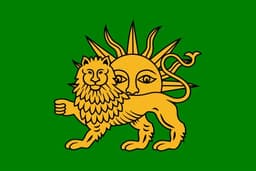
Imam Quli Khan
Emperor · Modern
50.0Total

William III of Orange
Emperor · Modern
61.7Total
Basic Information
Born
1582
1650
Died
1644
1702
Era
Modern
Modern
Nationality
Khanate of Bukhara
Netherlands
Occupation
Emperor
Emperor
Civilization
Eastern
Western
Score Comparison
Military (10%)
50.0
63.3
Political (20%)
61.3
62.7
Influence (20%)
51.0
55.0
Legacy (20%)
39.2
55.0
Leadership (15%)
68.0
78.0
Strategy (15%)
30.3
67.2
TOTAL
50.0
61.7
Imam Quli Khan — Complete Timeline
1611 AD
Accession to the throne of BukharaPolitical Action◆ Major
Imam Quli Khan became the Jani-Begid ruler of the Khanate of Bukhara. His reign was marked by stability and relative peace, as he maintained the territorial gains of his predecessors.
Jani-BegidsAccessionBukhara
Impact: regionalconstructive
1620 AD
Conflict with the KazakhsWar
Imam Quli Khan led military campaigns against the Kazakh Khanate to defend Bukhara's northern borders. These conflicts were inconclusive but prevented Kazakh incursions into Transoxiana.
Jani-BegidsWarKazakhs
Impact: regional
1641 AD
Abdication to perform HajjPolitical Action◆ Major
Imam Quli Khan abdicated the throne to perform the Hajj pilgrimage to Mecca. He was succeeded by his brother Nadir Muhammad. This act was unusual for a ruler and demonstrated his religious devotion.
Jani-BegidsAbdicationHajj
Impact: regional
William III of Orange — Complete Timeline
1688 AD
Invasion of England (Glorious Revolution)War
William landed at Torbay with a Dutch fleet and army, invited by English nobles to overthrow King James II. James fled, and William and his wife Mary were declared joint monarchs. This event established Protestant succession and parliamentary supremacy in England.
Glorious RevolutionInvasionConstitutional Change
Impact: globalconstructive
1689 AD
Signed the Bill of Rights 1689Political Action
William accepted the Bill of Rights, which limited royal powers and affirmed parliamentary authority. It prohibited the monarch from suspending laws, levying taxes without Parliament's consent, or maintaining a standing army in peacetime. This became a cornerstone of British constitutional law.
Constitutional ReformParliamentary SupremacyRights
Impact: globalprogressive
Formed the Grand Alliance against FrancePolitical Action◆ Major
William organized the Grand Alliance (England, Dutch Republic, Holy Roman Empire, Spain, Savoy) to oppose Louis XIV's expansion. This coalition fought the Nine Years' War, aiming to contain French power. The alliance system became a model for European coalitions.
DiplomacyCoalitionBalance of Power
Impact: globalconstructive
1690 AD
Battle of the BoyneWar◆ Major
William personally led his army to victory over the Jacobite forces of James II in Ireland. The battle secured Protestant control of Ireland and confirmed William's throne. It remains a symbol of Protestant-Orange identity in Northern Ireland.
Jacobite WarIrelandBattle
Impact: regional
1697 AD
Treaty of RyswickPolitical Action◆ Major
William negotiated the end of the Nine Years' War with France. The treaty recognized William as king of England and restored most territories conquered during the war. It temporarily stabilized European borders but did not resolve the underlying conflict over Spanish succession.
Peace TreatyDiplomacyNine Years' War
Impact: globalconstructive
1702 AD
Death from pneumonia after a riding accidentOther◆ Major
William died at Kensington Palace after his horse stumbled on a molehill, breaking his collarbone. His death without heirs led to the end of the Stuart line and the accession of Queen Anne. Jacobites toasted 'the little gentleman in black velvet' (the mole).
DeathSuccessionJacobite Symbolism
Impact: nationaltragic
Expert Analysis
Origins
Imam Quli Khan was born around 1582 into the Jani-Begid dynasty, a branch of the Shaybanids ruling the Khanate of Bukhara. His father, Din Muhammad Khan, was a prominent figure, but little is known of his early education. The Khanate of Bukhara was a Central Asian power centered on the Silk Road, with a tradition of Islamic scholarship and Turkic-Mongol governance. Imam Quli Khan likely received training in military tactics and administration, as was customary for princely heirs.
William III of Orange was born on November 4, 1650, in The Hague, Netherlands, just days after his father's death. He was the posthumous son of William II of Orange and Mary Stuart, daughter of Charles I of England. Raised in a climate of political tension between the Orangist faction and the republican States of Holland, William was educated in Calvinist theology, military science, and statecraft. His childhood was marked by the Exclusion Act (1654) barring his family from the stadtholderate, which shaped his resolve to restore Orange authority.
Rise to Power
Imam Quli Khan ascended to the throne of Bukhara around 1611 after the death of his father. His accession was relatively peaceful, as he was the eldest son and had the support of the tribal aristocracy. His early reign focused on consolidating power and defending the northern borders against Kazakh raids. Unlike his predecessors, he avoided costly expansionist wars, instead maintaining a stable realm through diplomacy and limited military action.
William III's rise was more turbulent. In 1672, the Dutch Republic faced the "Disaster Year" as France and England invaded. William was appointed stadtholder and captain-general of the Dutch army at age 22. He repelled the French by flooding the waterline (1672–1673) and secured peace through alliances. His political acumen grew as he outmaneuvered republican opponents like the De Witt brothers. By 1688, he was invited by English nobles to invade England, leading to the Glorious Revolution. In 1689, he and his wife Mary were crowned joint monarchs of England, Scotland, and Ireland.
Leadership & Governance
Imam Quli Khan governed as a traditional Islamic monarch, relying on a council of emirs and Islamic law. He maintained stability by balancing tribal factions and avoiding major reforms. His most notable act was abdicating in 1642 to perform the Hajj, a decision that reflected personal piety over political ambition. This was unusual for a ruler, as it left the khanate in the hands of his brother Nadir Muhammad, who later faced internal strife. Imam Quli Khan's leadership scored 68.0 in Leadership, but his Strategy score was low at 30.3, indicating a reactive rather than proactive approach.
William III was a constitutional innovator. After the Glorious Revolution, he accepted the Bill of Rights in 1689, which limited royal powers, banned Catholic succession, and required parliamentary consent for taxation and war. This shifted England toward a constitutional monarchy. William also reorganized the Dutch Republic's finances and military, creating a professional army. His Leadership score of 78.0 reflects his ability to coordinate coalitions, such as the Grand Alliance (1689) against Louis XIV. His Strategy score of 67.2 shows his skill in long-term planning, though his reliance on foreign alliances sometimes backfired.
Triumph & Tragedy
Imam Quli Khan's greatest success was maintaining peace and stability in Bukhara for three decades, avoiding the destructive wars that plagued neighboring states. His abdication for Hajj was seen as a pious act but also a strategic failure, as it led to internal power struggles after his departure. His military score of 50.0 indicates he was not a conqueror; his campaigns against the Kazakhs were defensive and inconclusive. His legacy score of 39.2 suggests limited long-term impact.
William III's triumph was the Glorious Revolution, which secured Protestant succession and parliamentary supremacy. His victory at the Battle of the Boyne (1690) cemented his control over Ireland. However, his reign was marked by constant warfare: the Nine Years' War (1688–1697) drained resources, and he died from complications of a fall from his horse in 1702, leaving no direct heir. His political score of 62.7 reflects his ability to manage coalitions, but his influence score of 55.0 shows he was often dependent on allies.
Character & Destiny
Imam Quli Khan was known for his piety and modesty. His decision to abdicate for Hajj suggests a personality prioritizing religious duty over power. This contrasts with typical monarchs who cling to thrones. However, his lack of strategic ambition meant he left no lasting institutional legacy. His total score of 50.0 reflects a competent but unremarkable ruler.
William III was determined and pragmatic, often placing strategic interests above personal feelings. He was a Calvinist with a strong sense of divine mission, but he could be cold and manipulative. His health was fragile, yet he led armies personally. His character drove him to combat Louis XIV's dominance, but his single-minded focus on war alienated some allies. His total score of 61.7 is boosted by his Leadership and Strategy, but his Legacy score of 55.0 is moderate because his constitutional changes were built upon by successors.
Legacy
Imam Quli Khan is remembered in Central Asia as a just ruler who prioritized peace and piety. However, his abdication weakened the Jani-Begid dynasty, which declined after his brother's rule. His legacy is localized, with few lasting institutions or reforms. His influence score of 51.0 reflects his limited global impact.
William III's legacy is profound. The Bill of Rights and the Glorious Revolution established a framework for constitutional monarchy that influenced the American Founders and modern democracies. His Grand Alliance set a precedent for multinational coalitions. The Treaty of Ryswick (1697) recognized his kingship and stabilized European borders. His impact on England's political structure and European balance of power is enduring. His legacy score of 55.0, while not maximal, is higher than Imam Quli Khan's 39.2.
Conclusion
William III of Orange had a greater impact than Imam Quli Khan, as evidenced by his higher total score (61.7 vs 50.0). While Imam Quli Khan provided stable governance for a regional state, William's actions reshaped the political landscape of England and Europe. His leadership in the Glorious Revolution and acceptance of the Bill of Rights established constitutional principles that spread globally. Imam Quli Khan's abdication, though personally admirable, had limited systemic effects. In the long arc of history, William's reforms and wars altered the trajectory of Western governance, whereas Imam Quli Khan's reign was a footnote in Central Asian history. Therefore, William III stands as the more consequential figure.
Rankings
🥇
William III of OrangeLeader
Mil: 63.3Pol: 62.7Inf: 55.0
61.7
🥈
Imam Quli Khan
Mil: 50.0Pol: 61.3Inf: 51.0
50.0
+11.7 behind
How This Comparison Works
Algorithm
Each figure is scored on 6 dimensions (0—100 scale) based on structured historical data: Military (10%), Political (20%), Influence (20%), Legacy (20%), Leadership (15%), Strategy (15%). The weighted total produces the final ranking.
Data Sources
Scores are computed from structured sub-indicators in the database. Scale factors adjust for era (Ancient ×0.85, Modern ×1.0) and civilization size (Eastern ×1.05, Other ×0.80) to account for differences in population and military scale.
Maximum 3 Figures
Comparisons are limited to 2—3 figures to ensure readability and statistical meaningfulness.
Error Margins
±5 points per dimension — Sub-scores are derived from historical records with inherent uncertainty. Two figures within 5 points on a dimension should be considered roughly equivalent in that area.
Total Score Accuracy
±3 points overall — The weighted combination of 6 dimensions produces a total score with approximately ±3 points of uncertainty. Differences of less than 3 points are not statistically significant— the figures are effectively tied.
Known Limitations
- Historical records are incomplete and uneven across civilizations
- Figures from oral-tradition societies may be underrepresented
- Occupation labels can misclassify multi-role figures
- Scores measure capability and impact, not moral character
- Quantitative scoring is a comparison tool, not absolute truth
Capability Radar
Military (10%) — Battles & Warfare
Battles
20
75
Win Rate
25
70
Expansion
20
65
Political (20%) — Governance & Reform
Reform
40
80
Diplomacy
35
85
Economy
40
70
Influence (20%) — Cultural & Global Reach
Cultural
30
60
Global
15
70
Legacy (20%) — Historical Impact
Historical
25
75
Longevity
20
70
Leadership (15%) — Power & Stability
Tenure
60
75
Stability
45
65
Strategy (15%) — Tactics & Innovation
Strategy
20
85
Tactics
20
80
Reform
15
70
Similar Comparisons
Comments & Discussion
No comments yet. Be the first to share your thoughts!