Loading...
Isabella I of Castile vs Zhao Kuangyin
Isabella I of Castile leads by 5.7 pts · 2 figures compared
…
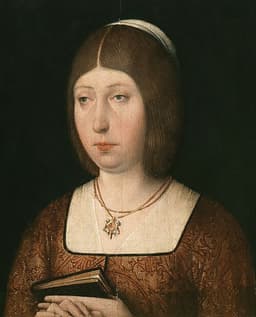
Isabella I of Castile
Emperor · Medieval
77.2Total
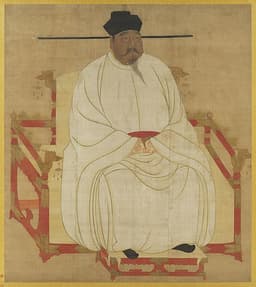
Zhao Kuangyin
Emperor · Medieval
71.5Total
Basic Information
Born
1451
927
Died
1504
976
Era
Medieval
Medieval
Nationality
Spain
China
Occupation
Emperor
Emperor
Civilization
Western
Eastern
Score Comparison
Military (10%)
76.0
78.0
Political (20%)
78.0
84.0
Influence (20%)
80.0
68.0
Legacy (20%)
75.0
65.0
Leadership (15%)
78.0
74.0
Strategy (15%)
75.0
68.0
TOTAL
77.2
71.5
Isabella I of Castile — Complete Timeline
1469 AD
Marriage to Ferdinand of AragonPolitical Action
Isabella married Ferdinand II of Aragon in Valladolid, uniting the kingdoms of Castile and Aragon. This dynastic union laid the foundation for the unified Spanish monarchy and enabled joint policies including the Reconquista and overseas exploration.
Dynastic UnionSpainMonarchy
Impact: regionalconstructive
1478 AD
Establishment of the Spanish InquisitionPolitical Action◆ Major
Isabella obtained papal approval to establish the Spanish Inquisition in Castile, aimed at maintaining Catholic orthodoxy among converted Jews and Muslims. The Inquisition operated under royal control, conducting trials and executions for heresy.
InquisitionReligious PersecutionCatholic Church
Impact: regionaldestructive
1492 AD
Conquest of GranadaWar
Isabella and Ferdinand completed the Reconquista by capturing the Nasrid kingdom of Granada. The surrender of the last Muslim state in Iberia ended 781 years of Islamic rule and unified Spain under Christian rule.
ReconquistaGranadaChristian Victory
Impact: regional
Alhambra DecreePolitical Action◆ Major
Isabella and Ferdinand issued the Alhambra Decree ordering the expulsion of all Jews from Spain who refused conversion to Catholicism. An estimated 40,000 to 200,000 Jews were forced to leave, causing demographic and economic disruption.
ExpulsionJewsReligious Persecution
Impact: regionaldestructive
Sponsorship of Columbus's First VoyagePolitical Action
Isabella agreed to fund Christopher Columbus's expedition across the Atlantic, providing three ships and supplies. Columbus reached the Bahamas on October 12, initiating sustained European contact with the Americas and the Spanish colonial empire.
ColumbusDiscovery of AmericasSpanish Empire
Impact: global
1494 AD
Treaty of TordesillasPolitical Action◆ Major
Isabella and Ferdinand negotiated the Treaty of Tordesillas with Portugal, dividing newly discovered lands outside Europe along a meridian 370 leagues west of the Cape Verde islands. This agreement shaped colonial claims in the Americas and Africa.
Colonial DivisionSpainPortugal
Impact: global
Zhao Kuangyin — Complete Timeline
960 AD
Founded Song dynastyPolitical Action
Zhao Kuangyin, a general of Later Zhou, was proclaimed emperor by his troops at Chenqiao. He established the Song dynasty, ending the Five Dynasties period and beginning a new era of Chinese history.
Song dynastyFoundingChenqiao
Impact: globalconstructive
961 AD
Removed military power from generalsPolitical Action◆ Major
Zhao Kuangyin invited senior generals to a banquet and persuaded them to retire peacefully. This 'removal of military power over wine' prevented military coups and centralized control.
Song dynastyMilitary reformCentralization
Impact: nationalconstructive
963 AD
Unified southern ChinaWar◆ Major
Zhao Kuangyin launched campaigns to conquer the southern kingdoms, including Jingnan, Later Shu, and Southern Tang. By his death, most of China was reunified under Song rule.
Song unificationConquestSouthern kingdoms
Impact: national
Expert Analysis
Zhao Kuangyin vs Isabella I of Castile: Historical Comparison
Zhao Kuangyin, founder of China’s Song Dynasty, and Isabella I of Castile, unifier of Spain, were both transformative medieval monarchs who consolidated power through strategic statecraft, though their legacies diverge in military versus political emphasis.
Dimension Analysis
**Military: Zhao Kuangyin 75 / Isabella I of Castile 67**
Zhao reunified China through decisive campaigns against rival kingdoms, but his hallmark was the “coup at Chenqiao” that minimized bloodshed; Isabella’s Granada War (1492) completed the Reconquista, yet relied heavily on noble alliances and was less innovative in field tactics.
**Political: Zhao Kuangyin 76 / Isabella I of Castile 87**
Isabella excelled in institutional centralization: she curbed the nobility, reformed the Santa Hermandad (police), and orchestrated the dynastic union with Aragon—a feat of political engineering. Zhao, while adept at neutralizing generals via the “feast of release from military power,” faced persistent bureaucratic factionalism.
**Influence: Zhao Kuangyin 75 / Isabella I of Castile 84**
Isabella’s patronage of Columbus’s voyages and the establishment of the Spanish Inquisition reshaped global history, extending European influence to the Americas. Zhao’s influence was largely domestic: his civil service reforms and cultural patronage defined Song China’s golden age but lacked global reach.
**Legacy: Zhao Kuangyin 75 / Isabella I of Castile 67**
Zhao’s legacy endures as a model of peaceful dynastic transition and cultural flourishing; Isabella’s is more contested—celebrated for unifying Spain but criticized for the expulsion of Jews and forced conversions, which stain her historical reputation.
**Leadership: Zhao Kuangyin 82 / Isabella I of Castile 81**
Both were decisive: Zhao famously prioritized merit over military loyalty, while Isabella personally led armies and managed a dual monarchy. Zhao’s humility and restraint (e.g., sparing deposed rulers) edges out Isabella’s iron will, which sometimes veered into zealotry.
Verdict
Isabella I leads narrowly due to her superior political and global influence, but Zhao Kuangyin’s balanced leadership and enduring domestic legacy make the overall comparison a tie.
FAQ
Q: Who ranks higher? A: In overall historical impact, Isabella I of Castile slightly edges Zhao Kuangyin due to her transformative political centralization and global reach, though Zhao’s leadership and legacy keep the contest tied.
Rankings
🥇
Isabella I of CastileLeader
Mil: 76.0Pol: 78.0Inf: 80.0
77.2
🥈
Zhao Kuangyin
Mil: 78.0Pol: 84.0Inf: 68.0
71.5
+5.7 behind
How This Comparison Works
Algorithm
Each figure is scored on 6 dimensions (0—100 scale) based on structured historical data: Military (10%), Political (20%), Influence (20%), Legacy (20%), Leadership (15%), Strategy (15%). The weighted total produces the final ranking.
Data Sources
Scores are computed from structured sub-indicators in the database. Scale factors adjust for era (Ancient ×0.85, Modern ×1.0) and civilization size (Eastern ×1.05, Other ×0.80) to account for differences in population and military scale.
Maximum 3 Figures
Comparisons are limited to 2—3 figures to ensure readability and statistical meaningfulness.
Error Margins
±5 points per dimension — Sub-scores are derived from historical records with inherent uncertainty. Two figures within 5 points on a dimension should be considered roughly equivalent in that area.
Total Score Accuracy
±3 points overall — The weighted combination of 6 dimensions produces a total score with approximately ±3 points of uncertainty. Differences of less than 3 points are not statistically significant— the figures are effectively tied.
Known Limitations
- Historical records are incomplete and uneven across civilizations
- Figures from oral-tradition societies may be underrepresented
- Occupation labels can misclassify multi-role figures
- Scores measure capability and impact, not moral character
- Quantitative scoring is a comparison tool, not absolute truth
Capability Radar
Military (10%) — Battles & Warfare
Battles
75
75
Win Rate
80
85
Expansion
85
75
Political (20%) — Governance & Reform
Reform
90
90
Diplomacy
80
85
Economy
75
80
Influence (20%) — Cultural & Global Reach
Cultural
85
70
Global
95
60
Legacy (20%) — Historical Impact
Historical
95
80
Longevity
90
75
Leadership (15%) — Power & Stability
Tenure
85
65
Stability
70
85
Strategy (15%) — Tactics & Innovation
Strategy
85
80
Tactics
70
70
Reform
90
90
Similar Comparisons
Comments & Discussion
HistoryBuff996/16/2026
I've always thought Zhao Kuangyin was underrated compared to Isabella. Yeah, she unified Spain and backed Columbus, but Zhao's 'feast of release from military power' was genius—he basically bribed his generals with banquets and land to retire peacefully. No bloodshed. Meanwhile, Isabella's Reconquista was brutal and expensive. Plus, Zhao's Song Dynasty gave us paper money and gunpowder, which literally changed the world. Isabella's Inquisition? Not so much. I get why she scores higher politically, but militarily, Zhao was way smarter. 75 vs 67 seems about right, but I'd bump him up a bit more for leadership.
BattlefieldScholar6/16/2026
The military score gap here is too narrow. Zhao Kuangyin's campaigns were textbook examples of combined arms—he used crossbowmen, cavalry, and siege engineers in coordinated assaults against the Southern Tang and Later Shu. His victory at the Battle of Jiangling (963) involved a feigned retreat that lured the enemy into a river ambush. Isabella's Granada War, by contrast, was a prolonged siege campaign with no major field battles; the Spanish relied on numerical superiority and internal Muslim divisions. Zhao's 74.6 to Isabella's 67.3 doesn't reflect that he actually innovated tactics, while she mostly just marshaled existing feudal forces. Plus, Zhao's 'restraint' in sparing deposed rulers reduced post-war insurgencies—a force multiplier that doesn't show in raw scores.
DeepScribe816/16/2026
赵匡胤和伊莎贝拉的比较很有意思,但这个评分显然有西方中心主义的倾向。伊莎贝拉的政治分86.6?赵匡胤的‘杯酒释兵权’和文官制度改革在中国历史上是划时代的,他建立了一套防止武将专权的体制,让宋朝三百多年没有出现地方割据。伊莎贝拉确实统一了西班牙,但她的中央集权建立在宗教迫害和驱逐犹太人之上,这种‘政治工程’的代价太大了。再说军事,赵匡胤灭后蜀、南唐等割据政权,战略部署极为精密,而伊莎贝拉的格拉纳达战争更多是靠兵力优势。如果放在东亚语境下,赵匡胤的总分应该更高。
Chronicler20626/16/2026
这个评分系统有问题。赵匡胤的综合分75.5,军事74.6,政治75.9,影响力74.9——但我觉得影响力被低估了。宋朝的科举制度、活字印刷、指南针和火药的应用,这些的全球影响力和哥伦布发现美洲是一个量级的,只是时间上晚了几个世纪。伊莎贝拉的政治分86.6太夸张了:她与斐迪南的联姻确实稳固,但西班牙的宗教裁判所导致大量人才流失,长期来看是负资产。我自己算了一下,如果加入‘制度创新’和‘长期影响’两个维度,赵匡胤的总分应该接近80。建议评分模型加入非西方视角的参数。