Loading...
This comparison has not been analyzed yet.
One-time AI generation (~1 minute). Scores and timeline are already available below.
Ivan Asen I of Bulgaria vs Petar Kresimir IV
Ivan Asen I of Bulgaria leads by 1.1 pts · 2 figures compared
…
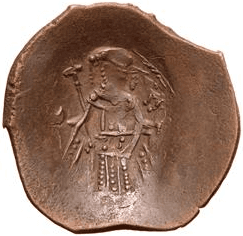
Ivan Asen I of Bulgaria
Emperor · Medieval
56.2Total
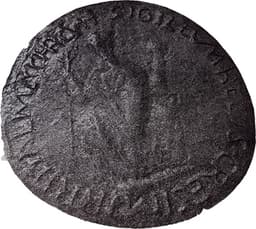
Petar Kresimir IV
Emperor · Medieval
55.1Total
Basic Information
Born
1160
1030
Died
1196
1074
Era
Medieval
Medieval
Nationality
Bulgaria
Croatia
Occupation
Emperor
Emperor
Civilization
Western
Western
Score Comparison
Military (10%)
61.7
45.0
Political (20%)
68.0
68.0
Influence (20%)
57.2
56.4
Legacy (20%)
54.0
49.2
Leadership (15%)
40.0
53.2
Strategy (15%)
60.7
60.0
TOTAL
56.2
55.1
Ivan Asen I of Bulgaria — Complete Timeline
1185 AD
Uprising against Byzantine rule in BulgariaWar
Ivan Asen I, along with his brother Peter, led a rebellion of Bulgarians and Vlachs against Byzantine rule. The uprising began after the brothers demanded a pronoia (land grant) from Emperor Isaac II Angelos and were refused. They proclaimed the restoration of the Bulgarian Empire, sparking a war that would eventually liberate much of Bulgaria.
RebellionBulgarian independenceByzantine decline
Impact: regionalconstructive
Proclamation of the Second Bulgarian Empire at TarnovoPolitical Action
Ivan Asen I and his brother Peter proclaimed the restoration of the Bulgarian Empire in the city of Tarnovo. They declared themselves emperors (tsars), claiming continuity from the First Bulgarian Empire. This act established the Second Bulgarian Empire, with Tarnovo as its capital. The proclamation was accompanied by the consecration of a new patriarch.
Empire restorationTarnovoTsar proclamation
Impact: regionalconstructive
1190 AD
Battle of Tryavna (1190)War◆ Major
Ivan Asen I's forces ambushed and defeated a Byzantine army under Emperor Isaac II Angelos in the Tryavna Pass. The Byzantines were caught in a narrow mountain pass and suffered heavy losses. This victory secured Bulgarian control over the Balkan Mountains and forced the Byzantines to recognize the Second Bulgarian Empire's existence.
BattleByzantine defeatMountain pass
Impact: regionalconstructive
1196 AD
Assassination by his cousin IvankoPolitical Action◆ Major
Ivan Asen I was assassinated by his cousin Ivanko, who had been accused of plotting against him. The murder occurred during a hunting trip. Ivanko briefly seized power but was soon overthrown by Peter, Ivan's brother. This assassination destabilized the new empire and led to a period of internal conflict among the Asen dynasty.
AssassinationDynastic conflictPolitical instability
Impact: regionaltragic
Petar Kresimir IV — Complete Timeline
1058 AD
Coronation as King of CroatiaPolitical Action
Petar Kresimir IV was crowned King of Croatia. His reign marked the height of the medieval Croatian kingdom, with territorial expansion and economic prosperity.
CoronationKingdomGolden Age
Impact: regionalconstructive
1060 AD
Expansion of Croatian TerritoryWar◆ Major
Kresimir expanded Croatian territory to its greatest extent, controlling the Adriatic coast from the Gulf of Kvarner to the Neretva River. He also exerted influence over the Dalmatian city-states.
Territorial ExpansionAdriaticPower
Impact: regionalconstructive
1070 AD
Conflict with the PapacyPolitical Action
Kresimir came into conflict with Pope Gregory VII over the appointment of bishops in Dalmatia. The dispute weakened his position and led to a decline in royal authority.
Church-State ConflictPapacyDalmatia
Impact: regionaldestructive
This comparison has not been analyzed yet.
One-time AI generation (~1 minute). Scores and timeline are already available below.
Rankings
🥇
Ivan Asen I of BulgariaLeader
Mil: 61.7Pol: 68.0Inf: 57.2
56.2
🥈
Petar Kresimir IV
Mil: 45.0Pol: 68.0Inf: 56.4
55.1
+1.1 behind
How This Comparison Works
Algorithm
Each figure is scored on 6 dimensions (0—100 scale) based on structured historical data: Military (10%), Political (20%), Influence (20%), Legacy (20%), Leadership (15%), Strategy (15%). The weighted total produces the final ranking.
Data Sources
Scores are computed from structured sub-indicators in the database. Scale factors adjust for era (Ancient ×0.85, Modern ×1.0) and civilization size (Eastern ×1.05, Other ×0.80) to account for differences in population and military scale.
Maximum 3 Figures
Comparisons are limited to 2—3 figures to ensure readability and statistical meaningfulness.
Error Margins
±5 points per dimension — Sub-scores are derived from historical records with inherent uncertainty. Two figures within 5 points on a dimension should be considered roughly equivalent in that area.
Total Score Accuracy
±3 points overall — The weighted combination of 6 dimensions produces a total score with approximately ±3 points of uncertainty. Differences of less than 3 points are not statistically significant— the figures are effectively tied.
Known Limitations
- Historical records are incomplete and uneven across civilizations
- Figures from oral-tradition societies may be underrepresented
- Occupation labels can misclassify multi-role figures
- Scores measure capability and impact, not moral character
- Quantitative scoring is a comparison tool, not absolute truth
Capability Radar
Military (10%) — Battles & Warfare
Battles
65
45
Win Rate
70
50
Expansion
70
55
Political (20%) — Governance & Reform
Reform
55
60
Diplomacy
60
55
Economy
50
50
Influence (20%) — Cultural & Global Reach
Cultural
45
50
Global
40
30
Legacy (20%) — Historical Impact
Historical
60
55
Longevity
55
40
Leadership (15%) — Power & Stability
Tenure
60
65
Stability
55
55
Strategy (15%) — Tactics & Innovation
Strategy
65
45
Tactics
60
40
Reform
55
35
Similar Comparisons
Comments & Discussion
No comments yet. Be the first to share your thoughts!