Loading...
Analysis will be generated on first visit.
Scores and timeline are available below. The page will refresh automatically when ready.
Ivan IV the Terrible vs Napoleon Bonaparte
Napoleon Bonaparte leads by 13.0 pts · 2 figures compared
…
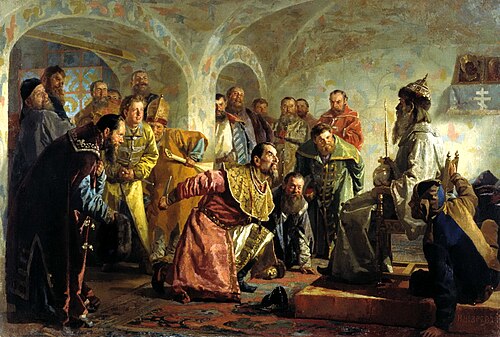
Ivan IV the Terrible
Emperor · Modern
69.4Total
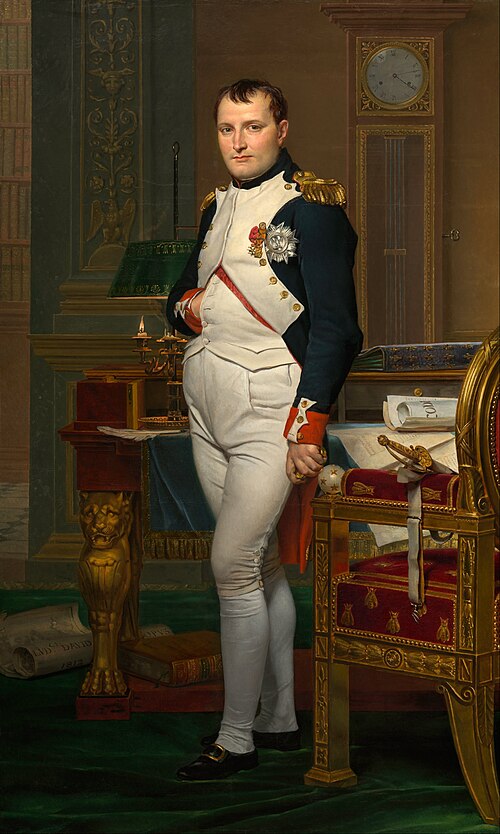
Napoleon Bonaparte
General · Modern
82.4Total
Basic Information
Born
1530
1769
Died
1584
1821
Era
Modern
Modern
Nationality
Russia
France
Occupation
Emperor
General
Civilization
Western
Western
Score Comparison
Military (10%)
72.8
94.0
Political (20%)
70.1
75.0
Influence (20%)
72.0
82.0
Legacy (20%)
55.0
78.0
Leadership (15%)
85.1
80.0
Strategy (15%)
66.4
93.0
TOTAL
69.4
82.4
Rankings
🥇
Napoleon BonaparteLeader
Mil: 94.0Pol: 75.0Inf: 82.0
82.4
🥈
Ivan IV the Terrible
Mil: 72.8Pol: 70.1Inf: 72.0
69.4
+13.0 behind
How This Comparison Works
Algorithm
Each figure is scored on 6 dimensions (0—100 scale) based on structured historical data: Military (10%), Political (20%), Influence (20%), Legacy (20%), Leadership (15%), Strategy (15%). The weighted total produces the final ranking.
Data Sources
Scores are computed from structured sub-indicators in the database. Scale factors adjust for era (Ancient ×0.85, Modern ×1.0) and civilization size (Eastern ×1.05, Other ×0.80) to account for differences in population and military scale.
Maximum 3 Figures
Comparisons are limited to 2—3 figures to ensure readability and statistical meaningfulness.
Error Margins
±5 points per dimension — Sub-scores are derived from historical records with inherent uncertainty. Two figures within 5 points on a dimension should be considered roughly equivalent in that area.
Total Score Accuracy
±3 points overall — The weighted combination of 6 dimensions produces a total score with approximately ±3 points of uncertainty. Differences of less than 3 points are not statistically significant— the figures are effectively tied.
Known Limitations
- Historical records are incomplete and uneven across civilizations
- Figures from oral-tradition societies may be underrepresented
- Occupation labels can misclassify multi-role figures
- Scores measure capability and impact, not moral character
- Quantitative scoring is a comparison tool, not absolute truth
Capability Radar
Military (10%) — Battles & Warfare
Battles
75
95
Win Rate
70
90
Expansion
85
95
Political (20%) — Governance & Reform
Reform
75
95
Diplomacy
40
80
Economy
50
85
Influence (20%) — Cultural & Global Reach
Cultural
65
85
Global
60
90
Legacy (20%) — Historical Impact
Historical
75
95
Longevity
70
90
Leadership (15%) — Power & Stability
Tenure
85
85
Stability
20
70
Strategy (15%) — Tactics & Innovation
Strategy
70
95
Tactics
65
98
Reform
80
92
Analysis will be generated on first visit.
Scores and timeline are available below. The page will refresh automatically when ready.
Ivan IV the Terrible — Complete Timeline
1547 AD
Coronation as First Tsar of RussiaPolitical Action
Ivan IV was crowned Tsar of All Russia at the Dormition Cathedral in Moscow, adopting the title of tsar (Caesar). This marked the formal transformation of the Grand Principality of Moscow into the Tsardom of Russia.
CoronationTsardomMoscow
Impact: national
1552 AD
Conquest of the Khanate of KazanWar
Ivan IV led a campaign that captured the city of Kazan after a long siege. The annexation of the Kazan Khanate opened the Volga River to Russian expansion and marked the beginning of Russian imperialism in the east.
KazanVolgaExpansion
Impact: regional
1558 AD
Livonian WarWar◆ Major
Ivan IV invaded Livonia (modern Latvia and Estonia) to gain access to the Baltic Sea. The war lasted 25 years and involved Poland-Lithuania, Sweden, and Denmark. It ended in Russian defeat with the Treaty of Yam-Zapolsky in 1582.
LivoniaBalticWar
Impact: regional
1565 AD
Establishment of the OprichninaPolitical Action
Ivan IV divided Russia into the oprichnina (his personal domain) and the zemshchina (the rest). He created a separate administration and a corps of oprichniki who carried out mass executions, land confiscations, and terror against the boyars.
OprichninaTerrorBoyars
Impact: nationaldestructive
1570 AD
Massacre of NovgorodWar◆ Major
Ivan IV led the oprichniki in a punitive expedition against Novgorod, suspecting the city of plotting to defect to Lithuania. Thousands were executed, and the city was looted and destroyed, ending its economic and political power.
NovgorodMassacreOprichnina
Impact: regionaltragic
1581 AD
Killed His Son Ivan IvanovichOther◆ Major
Ivan IV struck his eldest son and heir, Tsarevich Ivan Ivanovich, with a pointed staff during an argument, causing fatal injuries. This left the throne to the mentally weak Fyodor I, leading to the end of the Rurikid dynasty.
PatricideSuccessionRurikids
Impact: nationaltragic
Similar Comparisons
Comments & Discussion
No comments yet. Be the first to share your thoughts!