Loading...
This comparison has not been analyzed yet.
One-time AI generation (~1 minute). Scores and timeline are already available below.
Ivan Mazepa vs Mesut Yilmaz
Ivan Mazepa leads by 6.8 pts · 2 figures compared
…

Ivan Mazepa
Politician · Modern
59.0Total
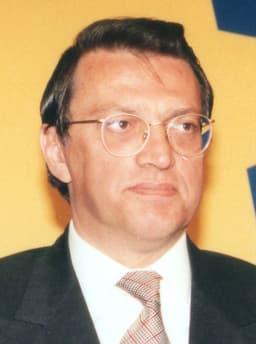
Mesut Yilmaz
Politician · Modern
52.2Total
Basic Information
Born
1639
1947
Died
1709
—
Era
Modern
Modern
Nationality
Ukraine
Turkey
Occupation
Politician
Politician
Civilization
Western
Middle Eastern
Score Comparison
Military (10%)
40.0
27.8
Political (20%)
62.7
68.0
Influence (20%)
62.0
52.5
Legacy (20%)
52.0
43.3
Leadership (15%)
74.0
74.0
Strategy (15%)
60.0
42.1
TOTAL
59.0
52.2
Ivan Mazepa — Complete Timeline
1687 AD
Election as Hetman of Left-Bank UkrainePolitical Action◆ Major
Ivan Mazepa was elected Hetman of the Cossack Hetmanate on the left bank of the Dnieper, with the support of Tsar Peter I. His election marked the beginning of a long rule characterized by modernization and cultural patronage.
ElectionHetmanCossack
Impact: regionalconstructive
1690 AD
Construction of St. Michael's Golden-Domed MonasteryCultural
Mazepa funded the construction and renovation of St. Michael's Golden-Domed Monastery in Kyiv, a major example of Ukrainian Baroque architecture. This project reflected his role as a patron of Orthodox Christianity and Ukrainian culture.
ArchitecturePatronageOrthodox
constructive
1708 AD
Alliance with Charles XII of SwedenPolitical Action
Mazepa formed a secret alliance with King Charles XII of Sweden against Tsar Peter I during the Great Northern War. This decision aimed to secure Ukrainian independence from Russian control.
AllianceSwedenRussia
Impact: regional
1709 AD
Battle of PoltavaWar
Mazepa and Charles XII's forces were decisively defeated by Peter the Great's army at Poltava. The defeat ended the Swedish invasion of Russia and crushed Mazepa's hopes for Ukrainian independence, forcing him to flee to the Ottoman Empire.
BattleDefeatGreat Northern War
Impact: globaltragic
Excommunication by the Russian Orthodox ChurchPolitical Action◆ Major
After his defeat, the Russian Orthodox Church formally anathematized Mazepa on orders of Peter the Great. This act was used to justify his replacement as Hetman and to suppress any future rebellions in Ukraine.
ExcommunicationChurchRussia
Impact: regionaldestructive
Mesut Yilmaz — Complete Timeline
1991 AD
Became Prime Minister for the First TimePolitical Action◆ Major
Mesut Yilmaz became Prime Minister of Turkey on June 23, 1991, leading a coalition government with the Social Democratic Populist Party. His first term lasted only seven months, ending in November 1991 after losing a confidence vote.
Prime MinisterCoalition
Impact: national
1996 AD
Formed the Motherland Party GovernmentPolitical Action
Yilmaz formed a minority government with the Motherland Party in March 1996, but it lasted only three months. He then became prime minister again in 1997, leading a coalition until 1999. His governments were marked by economic instability and corruption allegations.
GovernmentCoalition
Impact: national
Implicated in the Susurluk ScandalPolitical Action
The Susurluk scandal, which emerged in 1996, revealed links between the state, organized crime, and paramilitary groups. Yilmaz's government was criticized for its handling of the affair. The scandal damaged public trust in the political system.
ScandalCorruptionOrganized Crime
Impact: nationaldestructive
This comparison has not been analyzed yet.
One-time AI generation (~1 minute). Scores and timeline are already available below.
Rankings
🥇
Ivan MazepaLeader
Mil: 40.0Pol: 62.7Inf: 62.0
59.0
🥈
Mesut Yilmaz
Mil: 27.8Pol: 68.0Inf: 52.5
52.2
+6.8 behind
How This Comparison Works
Algorithm
Each figure is scored on 6 dimensions (0—100 scale) based on structured historical data: Military (10%), Political (20%), Influence (20%), Legacy (20%), Leadership (15%), Strategy (15%). The weighted total produces the final ranking.
Data Sources
Scores are computed from structured sub-indicators in the database. Scale factors adjust for era (Ancient ×0.85, Modern ×1.0) and civilization size (Eastern ×1.05, Other ×0.80) to account for differences in population and military scale.
Maximum 3 Figures
Comparisons are limited to 2—3 figures to ensure readability and statistical meaningfulness.
Error Margins
±5 points per dimension — Sub-scores are derived from historical records with inherent uncertainty. Two figures within 5 points on a dimension should be considered roughly equivalent in that area.
Total Score Accuracy
±3 points overall — The weighted combination of 6 dimensions produces a total score with approximately ±3 points of uncertainty. Differences of less than 3 points are not statistically significant— the figures are effectively tied.
Known Limitations
- Historical records are incomplete and uneven across civilizations
- Figures from oral-tradition societies may be underrepresented
- Occupation labels can misclassify multi-role figures
- Scores measure capability and impact, not moral character
- Quantitative scoring is a comparison tool, not absolute truth
Capability Radar
Military (10%) — Battles & Warfare
Battles
55
19
Win Rate
45
26
Expansion
40
25
Political (20%) — Governance & Reform
Reform
55
45
Diplomacy
65
50
Economy
50
40
Influence (20%) — Cultural & Global Reach
Cultural
55
20
Global
45
25
Legacy (20%) — Historical Impact
Historical
60
30
Longevity
50
20
Leadership (15%) — Power & Stability
Tenure
60
55
Stability
30
30
Strategy (15%) — Tactics & Innovation
Strategy
65
32
Tactics
60
36
Reform
50
34
Similar Comparisons
Comments & Discussion
No comments yet. Be the first to share your thoughts!