Loading...
James Cook vs Rene-Robert de La Salle
James Cook leads by 3.2 pts · 2 figures compared
…

James Cook
Explorer · Modern
47.7Total
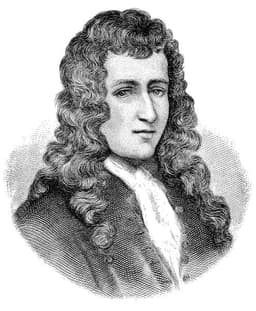
Rene-Robert de La Salle
Explorer · Modern
44.5Total
Basic Information
Born
1728
1643
Died
1779
1687
Era
Modern
Modern
Nationality
England
France
Occupation
Explorer
Explorer
Civilization
Western
Western
Score Comparison
Military (10%)
41.6
33.2
Political (20%)
35.0
35.0
Influence (20%)
55.0
51.0
Legacy (20%)
58.0
44.2
Leadership (15%)
31.8
46.3
Strategy (15%)
52.8
52.3
TOTAL
47.7
44.5
James Cook — Complete Timeline
1768 AD
First voyage to the PacificOther
Cook commanded HMS Endeavour on a scientific expedition to observe the transit of Venus in Tahiti. He then sailed to New Zealand, mapping its coastline, and charted the east coast of Australia, claiming it for Britain as New South Wales.
ExplorationMappingPacific
Impact: globalconstructive
1772 AD
Second voyage to the PacificOther◆ Major
Cook led a two-ship expedition to search for the hypothetical southern continent. He crossed the Antarctic Circle, charted many Pacific islands, and proved that no large landmass existed in the southern ocean, using a chronometer for precise navigation.
ExplorationAntarcticNavigation
Impact: globalconstructive
1776 AD
Third voyage and death in HawaiiOther◆ Major
Cook attempted to find the Northwest Passage from the Pacific. After exploring the Hawaiian Islands, he returned to Hawaii in 1779. A conflict with native Hawaiians over a stolen boat escalated, and Cook was killed on the beach at Kealakekua Bay.
ExplorationDeathHawaii
Impact: globaltragic
Rene-Robert de La Salle — Complete Timeline
1680 AD
First European to navigate the Illinois RiverInvention
La Salle built Fort Crevecoeur on the Illinois River and explored the region, establishing French claims in the Illinois Country. This expedition laid groundwork for later French control of the interior.
ExplorationIllinois RiverFort Crevecoeur
Impact: regional
1682 AD
Explored the Mississippi River to its mouthInvention◆ Major
La Salle led an expedition from the Great Lakes down the Mississippi River to the Gulf of Mexico. He claimed the entire Mississippi River basin for France, naming it Louisiana in honor of King Louis XIV.
ExplorationMississippi RiverLouisiana Claim
Impact: global
1685 AD
Established Fort Saint Louis in TexasPolitical Action◆ Major
La Salle established a settlement called Fort Saint Louis on the Texas coast after failing to find the Mississippi River mouth from the sea. The colony suffered from disease, starvation, and hostile relations with local Native American tribes.
ColonizationTexasFort Saint Louis
Impact: regionaltragic
1687 AD
Murdered by his own men in TexasOther◆ Major
La Salle was ambushed and killed by mutineers near the Brazos River in Texas. His death ended the French attempt to establish a colony in Texas and marked the collapse of the expedition.
DeathMutinyTexas
Impact: regionaltragic
Expert Analysis
Origins
James Cook was born in 1728 in Marton, Yorkshire, England, into a humble farming family. His father was a Scottish farm laborer. Cook received a basic education at the village school and at age 17, he apprenticed with a shipowner in Whitby, learning the trade of coastal navigation. This practical experience shaped his meticulous charting skills. He later joined the Royal Navy in 1755, quickly rising through the ranks due to his mathematical and cartographic abilities.
Rene-Robert de La Salle was born in 1643 in Rouen, France, into a wealthy merchant family. He was educated at Jesuit colleges, but he was more drawn to adventure and exploration. In 1666, he left for New France (Canada), where his brother was a priest. La Salle initially engaged in fur trading, which gave him knowledge of the interior and native languages, but his ambition soon turned to exploration.
Rise to Power
Cook's rise began with his command of HMS Endeavour in 1768 for the first voyage to the Pacific. The Royal Society tasked him with observing the transit of Venus in Tahiti. After the astronomical observations, Cook opened sealed orders to search for the hypothetical southern continent. He circumnavigated and mapped New Zealand, then charted the east coast of Australia, claiming it for Britain. This voyage made him a national hero.
La Salle rose to prominence through his exploration of the Ohio and Mississippi rivers. In 1669, he claimed to have discovered the Ohio River. His major breakthrough came in 1682 when he led an expedition from the Great Lakes down the Mississippi River to its mouth. On April 9, 1682, he claimed the entire Mississippi basin for France, naming it Louisiana in honor of King Louis XIV. This achievement earned him royal patronage and command of a colony.
Leadership & Governance
Cook led with a focus on discipline, health, and science. He implemented strict hygiene and diet on his ships, preventing scurvy—a major cause of death among sailors. His leadership style was authoritative but fair; he maintained order through respect rather than fear. He also engaged with native populations diplomatically, often trading goods rather than using force. On his second voyage, he crossed the Antarctic Circle and charted many Pacific islands, demonstrating strategic planning with a strategy score of 52.8.
La Salle's leadership was more autocratic and less successful. He often clashed with his men, who resented his harsh discipline and relentless drive. He built forts, such as Fort Crevecoeur on the Illinois River, but his governance of colonies was poor. His settlement in Texas, Fort Saint Louis, failed due to disease, hostile natives, and lack of supplies. His political score of 35.0 reflects his inability to manage relationships and sustain colonies.
Triumph & Tragedy
Cook's triumphs include his three voyages, which mapped vast areas of the Pacific, including New Zealand, eastern Australia, Hawaii, and many islands. He disproved the existence of a habitable southern continent. His legacy score of 58.0 reflects his lasting impact on navigation and geography. However, his tragedy came in 1779 in Hawaii. After a peaceful initial reception, a conflict escalated over a stolen boat, and Cook was killed in a skirmish with native Hawaiians. This tragic end cut short his explorations.
La Salle's greatest triumph was claiming the Mississippi River basin for France, opening the interior of North America for French fur trade and influence. His exploration of the Illinois River also established French presence in the region. But his tragedy was profound: his colony in Texas collapsed, and he was murdered by his own men in 1687 near the Brazos River. His death ended French ambitions in Texas and highlighted his leadership failures. His total score of 44.5 is lower than Cook's 47.7.
Character & Destiny
Cook was methodical, disciplined, and scientific. He approached exploration with careful planning, detailed mapping, and a concern for his crew's health. His character—patient and diplomatic—generally served him well, but his fatal mistake in Hawaii (attempting to take a local chief hostage to recover a stolen boat) was a lapse in judgment. His destiny was to be remembered as one of history's greatest navigators.
La Salle was ambitious, determined, but also stubborn and abrasive. He alienated his men and failed to adapt to the realities of colonization. His character led to mutiny and murder. His destiny was to be a tragic figure—his discoveries overshadowed by his failures. His influence score of 51.0 is close to Cook's 55.0, but his legacy is weaker due to his lack of lasting settlements.
Legacy
Cook's legacy is immense. His charts were so accurate that they were used for decades. He opened the Pacific to European colonization, particularly Australia and New Zealand. His methods of preventing scurvy revolutionized naval medicine. He is commemorated in statues, place names, and scientific institutions. His legacy score of 58.0 reflects his enduring impact on geography, navigation, and the course of history.
La Salle's legacy is more limited. His claim of the Mississippi basin laid the foundation for French Louisiana, but France lost it to Spain and then the United States. His explorations contributed to European knowledge of the interior, but no permanent settlements from his efforts survived. He is remembered as a bold explorer who failed to consolidate his gains. His legacy score of 44.2 is lower, reflecting a more fleeting impact.
Conclusion
James Cook had a greater impact than Rene-Robert de La Salle. With a total score of 47.7 against La Salle's 44.5, Cook's achievements in mapping the Pacific and advancing navigation science were more durable and influential. While La Salle's claim of the Mississippi was significant, his inability to establish a colony and his early death limited his legacy. Cook's meticulous work shaped the modern map of the Pacific and influenced British colonization, whereas La Salle's contributions were largely absorbed by later explorers and nations. Therefore, Cook stands as the more impactful explorer.
Rankings
🥇
James CookLeader
Mil: 41.6Pol: 35.0Inf: 55.0
47.7
🥈
Rene-Robert de La Salle
Mil: 33.2Pol: 35.0Inf: 51.0
44.5
+3.2 behind
How This Comparison Works
Algorithm
Each figure is scored on 6 dimensions (0—100 scale) based on structured historical data: Military (10%), Political (20%), Influence (20%), Legacy (20%), Leadership (15%), Strategy (15%). The weighted total produces the final ranking.
Data Sources
Scores are computed from structured sub-indicators in the database. Scale factors adjust for era (Ancient ×0.85, Modern ×1.0) and civilization size (Eastern ×1.05, Other ×0.80) to account for differences in population and military scale.
Maximum 3 Figures
Comparisons are limited to 2—3 figures to ensure readability and statistical meaningfulness.
Error Margins
±5 points per dimension — Sub-scores are derived from historical records with inherent uncertainty. Two figures within 5 points on a dimension should be considered roughly equivalent in that area.
Total Score Accuracy
±3 points overall — The weighted combination of 6 dimensions produces a total score with approximately ±3 points of uncertainty. Differences of less than 3 points are not statistically significant— the figures are effectively tied.
Known Limitations
- Historical records are incomplete and uneven across civilizations
- Figures from oral-tradition societies may be underrepresented
- Occupation labels can misclassify multi-role figures
- Scores measure capability and impact, not moral character
- Quantitative scoring is a comparison tool, not absolute truth
Capability Radar
Military (10%) — Battles & Warfare
Battles
15
15
Win Rate
20
10
Expansion
55
40
Political (20%) — Governance & Reform
Reform
5
10
Diplomacy
30
15
Economy
10
10
Influence (20%) — Cultural & Global Reach
Cultural
75
30
Global
80
35
Legacy (20%) — Historical Impact
Historical
80
45
Longevity
75
40
Leadership (15%) — Power & Stability
Tenure
10
20
Stability
15
5
Strategy (15%) — Tactics & Innovation
Strategy
40
25
Tactics
25
20
Reform
10
5
Similar Comparisons
Comments & Discussion
No comments yet. Be the first to share your thoughts!