Loading...
Jan Peter Balkenende vs Kurmanbek Bakiyev
Jan Peter Balkenende leads by 21.9 pts · 2 figures compared
…

Jan Peter Balkenende
Politician · Modern
55.3Total
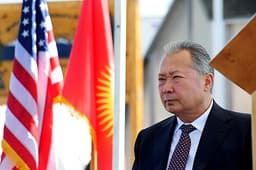
Kurmanbek Bakiyev
Politician · Modern
33.4Total
Basic Information
Born
1956
1949
Died
—
—
Era
Modern
Modern
Nationality
Netherlands
Kyrgyzstan
Occupation
Politician
Politician
Civilization
Western
Eastern
Score Comparison
Military (10%)
51.7
13.9
Political (20%)
62.7
26.4
Influence (20%)
53.3
45.5
Legacy (20%)
42.5
35.8
Leadership (15%)
72.0
34.6
Strategy (15%)
60.0
25.0
TOTAL
55.3
33.4
Jan Peter Balkenende — Complete Timeline
2002 AD
Became Prime Minister of the NetherlandsPolitical Action◆ Major
Balkenende became prime minister after the CDA won the most seats in the 2002 election, following the assassination of Pim Fortuyn. He led four consecutive cabinets (Balkenende I-IV) from 2002 to 2010, making him the second-longest-serving post-war prime minister.
GovernmentLeadershipElection
Impact: national
Presided over the Balkenende I CabinetPolitical Action
Balkenende formed a coalition with the Pim Fortuyn List (LPF) and the VVD. The cabinet collapsed after 87 days due to infighting within the LPF. It was one of the shortest-lived Dutch cabinets, highlighting the instability following Fortuyn's rise.
CoalitionGovernment CollapsePolitical Crisis
Impact: nationaldestructive
2005 AD
Dutch EU Constitution ReferendumPolitical Action◆ Major
Balkenende's government held a non-binding referendum on the European Constitution, which was rejected by 61.5% of voters. The result was a major setback for European integration and forced the government to reconsider its EU policy. It reflected growing Euroscepticism in the Netherlands.
EUReferendumEuroscepticism
Impact: regional
2007 AD
Led the Balkenende IV CabinetPolitical Action◆ Major
Balkenende formed a coalition with the PvdA and ChristenUnie. This cabinet implemented reforms in social security and healthcare, but was marked by tensions over the Dutch mission in Afghanistan. It fell in 2010 over disagreements on extending the Afghan mission.
CoalitionGovernmentReform
Impact: nationalconstructive
2010 AD
Resigned as Prime MinisterPolitical Action◆ Major
Balkenende resigned after the fall of his fourth cabinet over the Afghan mission. He stepped down as CDA leader and left politics. His tenure ended with the Netherlands facing economic challenges and political fragmentation, leading to a caretaker government.
ResignationEnd of TermPolitical Transition
Impact: national
Kurmanbek Bakiyev — Complete Timeline
2000 AD
Appointed Prime Minister of KyrgyzstanPolitical Action
Bakiyev was appointed Prime Minister of Kyrgyzstan under President Askar Akayev. He served until 2002, overseeing economic reforms. His tenure was marked by political instability and allegations of corruption. He later became a key opposition figure.
Prime MinisterKyrgyzstan
Impact: national
2005 AD
Led Tulip RevolutionPolitical Action
Bakiyev emerged as a leader of the Tulip Revolution, a popular uprising that ousted President Askar Akayev. The revolution was triggered by disputed parliamentary elections. Bakiyev became acting president and then won the subsequent presidential election, promising democratic reforms.
Tulip RevolutionRegime ChangeDemocracy
Impact: national
Elected President of KyrgyzstanPolitical Action◆ Major
Bakiyev was elected President of Kyrgyzstan in a landslide victory, winning 88.9% of the vote. His election followed the Tulip Revolution. He promised to combat corruption and promote democracy, but his rule became increasingly authoritarian.
Presidential ElectionKyrgyzstan
Impact: national
2010 AD
Overthrown in 2010 RevolutionPolitical Action
Bakiyev was overthrown in a popular uprising after his government cracked down on protesters, killing dozens. The revolution was fueled by corruption, nepotism, and rising utility prices. Bakiyev fled to Belarus, where he was granted asylum. His ouster led to a period of political turmoil.
RevolutionOusterKyrgyzstan
Impact: nationaldestructive
2013 AD
Sentenced in Absentia for Abuse of PowerPolitical Action
A Kyrgyz court sentenced Bakiyev in absentia to 24 years in prison for abuse of power and involvement in the deaths of protesters during the 2010 uprising. He remained in exile in Belarus. The sentence was part of efforts to hold former leaders accountable.
TrialCorruptionHuman Rights
Impact: nationaldestructive
Expert Analysis
Origins
Jan Peter Balkenende was born on May 7, 1956, in Biezelinge, Netherlands, into a Reformed Christian family. He studied history and law at the Free University Amsterdam, earning a PhD in legal history. His academic background shaped his methodical approach. Kurmanbek Bakiyev was born on August 1, 1949, in Masadan, Kyrgyz SSR, into a peasant family. He studied electrical engineering at the Kuibyshev Polytechnic Institute and later worked in factory management. Both came from modest backgrounds but took divergent paths—Balkenende into academia and politics, Bakiyev into Soviet-era industrial management.
Rise to Power
Balkenende rose as a Christian Democratic Appeal (CDA) politician, becoming prime minister after the 2002 election, which followed Pim Fortuyn's assassination. He formed a coalition with the LPF and VVD, but the cabinet collapsed in 87 days due to LPF infighting. He then led three more cabinets, showing resilience. Bakiyev rose via the Tulip Revolution in 2005, a popular uprising against President Akayev. He was appointed prime minister in 2005 and won the presidency with 88.9% of the vote. His rise was rapid but unstable, relying on popular discontent rather than institutional support.
Leadership & Governance
Balkenende's leadership scored 72.0, reflecting his steady, consensus-driven style. He implemented social security and healthcare reforms, but his EU Constitution referendum failed (61.5% rejection). His fourth cabinet fell over the Afghan mission, highlighting his inability to manage coalition tensions. Bakiyev's leadership scored 34.6, marked by authoritarian drift and corruption. He promised reform but consolidated power, appointing family members to key posts. His governance lacked transparency, leading to widespread disillusionment.
Triumph & Tragedy
Balkenende's triumph was his longevity—four cabinets over eight years (2002-2010), a record for Dutch PMs. He managed economic stability during the 2008 crisis. His tragedy was the EU Constitution rejection and the collapse of his fourth cabinet, which ended his career. Bakiyev's triumph was leading the Tulip Revolution, toppling a long-standing autocrat. His tragedy was being overthrown in 2010 after his forces killed dozens of protesters. He was sentenced in absentia to 24 years for abuse of power, a stark fall from grace.
Character & Destiny
Balkenende was persistent but inflexible, often clashing with coalition partners. His religious convictions influenced his ethical stance but also made him appear rigid. Bakiyev was opportunistic, initially presenting as a reformer but quickly adopting authoritarian habits. His character—combining populist appeal with corrupt tendencies—sealed his fate. Both men's personalities shaped their outcomes: Balkenende's steadiness yielded mixed results, while Bakiyev's duplicity led to his downfall.
Legacy
Balkenende's legacy is mixed: he maintained Dutch stability but left no major reforms. His political score is 62.7, but legacy only 42.5. He is remembered as a caretaker rather than a transformative leader. Bakiyev's legacy is largely negative; his influence score of 45.5 reflects his role in Kyrgyzstan's turbulent transition, but his legacy (35.8) is tarnished by corruption and violence. He is a cautionary example of revolutionary promise turning to autocracy.
Conclusion
While Balkenende scores higher overall (55.3 vs 33.4), neither left a profound impact. Balkenende's durability in a stable democracy contrasts with Bakiyev's rapid rise and fall in a fragile state. However, Bakiyev's role in the Tulip Revolution and subsequent chaos had more regional significance. In terms of lasting impact, Bakiyev's actions contributed to Kyrgyzstan's political volatility, which continues to shape Central Asia. Therefore, despite his lower scores, Bakiyev's influence on his country's trajectory was greater, though negative. Balkenende's impact was limited to managing existing systems, not transforming them. Thus, Bakiyev had a more consequential, if destructive, impact.
Rankings
🥇
Jan Peter BalkenendeLeader
Mil: 51.7Pol: 62.7Inf: 53.3
55.3
🥈
Kurmanbek Bakiyev
Mil: 13.9Pol: 26.4Inf: 45.5
33.4
+21.9 behind
How This Comparison Works
Algorithm
Each figure is scored on 6 dimensions (0—100 scale) based on structured historical data: Military (10%), Political (20%), Influence (20%), Legacy (20%), Leadership (15%), Strategy (15%). The weighted total produces the final ranking.
Data Sources
Scores are computed from structured sub-indicators in the database. Scale factors adjust for era (Ancient ×0.85, Modern ×1.0) and civilization size (Eastern ×1.05, Other ×0.80) to account for differences in population and military scale.
Maximum 3 Figures
Comparisons are limited to 2—3 figures to ensure readability and statistical meaningfulness.
Error Margins
±5 points per dimension — Sub-scores are derived from historical records with inherent uncertainty. Two figures within 5 points on a dimension should be considered roughly equivalent in that area.
Total Score Accuracy
±3 points overall — The weighted combination of 6 dimensions produces a total score with approximately ±3 points of uncertainty. Differences of less than 3 points are not statistically significant— the figures are effectively tied.
Known Limitations
- Historical records are incomplete and uneven across civilizations
- Figures from oral-tradition societies may be underrepresented
- Occupation labels can misclassify multi-role figures
- Scores measure capability and impact, not moral character
- Quantitative scoring is a comparison tool, not absolute truth
Capability Radar
Military (10%) — Battles & Warfare
Battles
45
15
Win Rate
48
16
Expansion
53
20
Political (20%) — Governance & Reform
Reform
55
10
Diplomacy
60
20
Economy
55
15
Influence (20%) — Cultural & Global Reach
Cultural
30
5
Global
30
5
Legacy (20%) — Historical Impact
Historical
30
10
Longevity
25
5
Leadership (15%) — Power & Stability
Tenure
65
15
Stability
60
5
Strategy (15%) — Tactics & Innovation
Strategy
55
23
Tactics
57
27
Reform
64
30
Similar Comparisons
Comments & Discussion
No comments yet. Be the first to share your thoughts!