Loading...
Analysis will be generated on first visit.
Scores and timeline are available below. The page will refresh automatically when ready.
Jan Zizka vs Napoleon Bonaparte
Napoleon Bonaparte leads by 8.0 pts · 2 figures compared
…
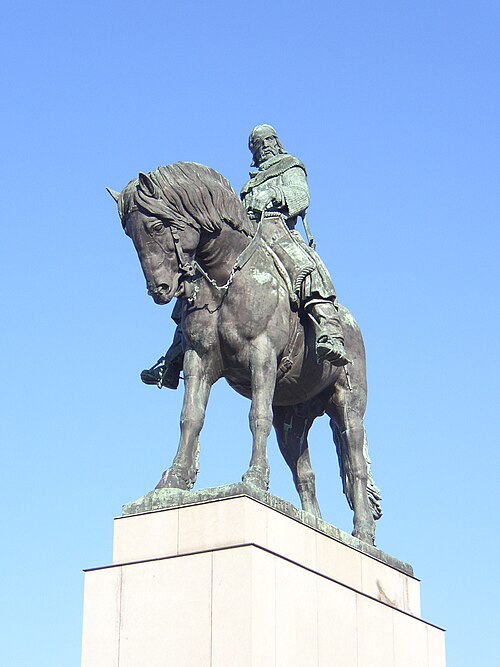
Jan Zizka
General · Medieval
74.4Total
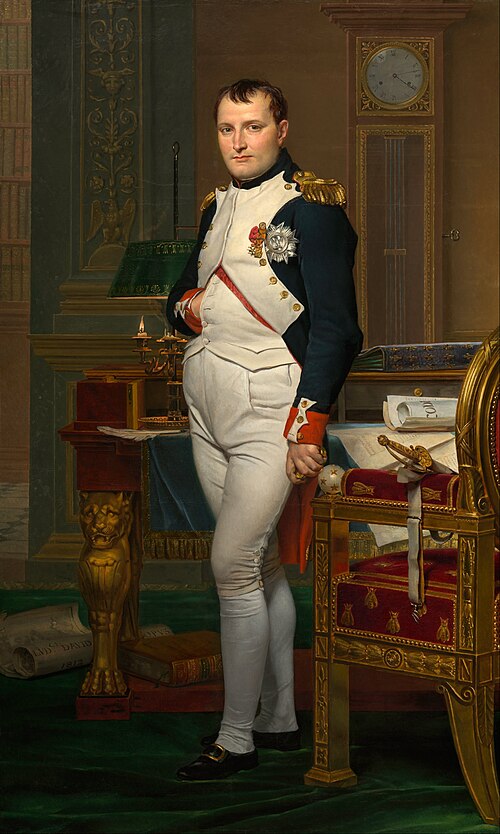
Napoleon Bonaparte
General · Modern
82.4Total
Basic Information
Born
1360
1769
Died
1424
1821
Era
Medieval
Modern
Nationality
Bohemia
France
Occupation
General
General
Civilization
Western
Western
Score Comparison
Military (10%)
83.6
94.0
Political (20%)
72.0
75.0
Influence (20%)
74.5
82.0
Legacy (20%)
67.5
78.0
Leadership (15%)
72.0
80.0
Strategy (15%)
82.9
93.0
TOTAL
74.4
82.4
Rankings
🥇
Napoleon BonaparteLeader
Mil: 94.0Pol: 75.0Inf: 82.0
82.4
🥈
Jan Zizka
Mil: 83.6Pol: 72.0Inf: 74.5
74.4
+8.0 behind
How This Comparison Works
Algorithm
Each figure is scored on 6 dimensions (0—100 scale) based on structured historical data: Military (10%), Political (20%), Influence (20%), Legacy (20%), Leadership (15%), Strategy (15%). The weighted total produces the final ranking.
Data Sources
Scores are computed from structured sub-indicators in the database. Scale factors adjust for era (Ancient ×0.85, Modern ×1.0) and civilization size (Eastern ×1.05, Other ×0.80) to account for differences in population and military scale.
Maximum 3 Figures
Comparisons are limited to 2—3 figures to ensure readability and statistical meaningfulness.
Error Margins
±5 points per dimension — Sub-scores are derived from historical records with inherent uncertainty. Two figures within 5 points on a dimension should be considered roughly equivalent in that area.
Total Score Accuracy
±3 points overall — The weighted combination of 6 dimensions produces a total score with approximately ±3 points of uncertainty. Differences of less than 3 points are not statistically significant— the figures are effectively tied.
Known Limitations
- Historical records are incomplete and uneven across civilizations
- Figures from oral-tradition societies may be underrepresented
- Occupation labels can misclassify multi-role figures
- Scores measure capability and impact, not moral character
- Quantitative scoring is a comparison tool, not absolute truth
Capability Radar
Military (10%) — Battles & Warfare
Battles
85
95
Win Rate
95
90
Expansion
60
95
Political (20%) — Governance & Reform
Reform
50
95
Diplomacy
45
80
Economy
30
85
Influence (20%) — Cultural & Global Reach
Cultural
60
85
Global
55
90
Legacy (20%) — Historical Impact
Historical
70
95
Longevity
65
90
Leadership (15%) — Power & Stability
Tenure
40
85
Stability
35
70
Strategy (15%) — Tactics & Innovation
Strategy
80
95
Tactics
95
98
Reform
90
92
Analysis will be generated on first visit.
Scores and timeline are available below. The page will refresh automatically when ready.
Jan Zizka — Complete Timeline
1420 AD
Battle of SudoměřWar◆ Major
Jan Žižka led a Hussite force to victory against a larger Catholic army at Sudoměř. Using a wagon fort formation, he repelled the attack and established the tactical superiority of the Hussite war wagons, a key innovation in medieval warfare.
Hussite WarsWagon FortSudoměř
Impact: regional
Battle of Vítkov HillWar◆ Major
Žižka defended Prague against a crusader army at Vítkov Hill. His small force of Hussites defeated the attacking Imperial troops, securing the city and preventing the fall of the Hussite movement. The victory made Žižka a national hero.
PragueVítkovCrusade
Impact: regional
Development of Wagon Fort TacticsInvention◆ Major
Žižka perfected the use of the wagon fort (Wagenburg) as a mobile defensive structure. He armed wagons with cannons and crossbows, creating a fortified position that could move on the battlefield. This innovation revolutionized medieval warfare.
Wagon FortTacticsInnovation
Impact: globalconstructive
1422 AD
Battle of Německý BrodWar◆ Major
Žižka defeated a second crusader army at Německý Brod. He used a feigned retreat to lure the enemy into a trap, then destroyed them with his wagon fort. The victory ended the second crusade against the Hussites.
CrusadeNěmecký BrodFeigned Retreat
Impact: regional
1424 AD
Battle of MalešovWar◆ Major
Žižka won his final battle at Malešov against a coalition of Catholic and Utraquist forces. Despite being blind in one eye, he commanded his army to a decisive victory, demonstrating his tactical genius and the effectiveness of the wagon fort.
MalešovUtraquistsFinal Battle
Impact: regional
Similar Comparisons
Comments & Discussion
No comments yet. Be the first to share your thoughts!