Loading...
This comparison has not been analyzed yet.
One-time AI generation (~1 minute). Scores and timeline are already available below.
Jani Beg vs Jogaila
Jani Beg leads by 0.2 pts · 2 figures compared
…
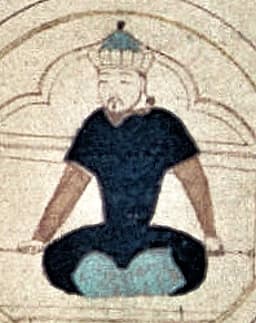
Jani Beg
Emperor · Medieval
58.3Total

Jogaila
Emperor · Medieval
58.1Total
Basic Information
Born
1310
1362
Died
1357
1434
Era
Medieval
Medieval
Nationality
Golden Horde
Lithuania
Occupation
Emperor
Emperor
Civilization
Eastern
Western
Score Comparison
Military (10%)
63.3
67.5
Political (20%)
68.0
55.0
Influence (20%)
59.0
61.0
Legacy (20%)
49.2
52.0
Leadership (15%)
65.0
66.0
Strategy (15%)
50.0
50.0
TOTAL
58.3
58.1
Jani Beg — Complete Timeline
1346 AD
Siege of CaffaWar◆ Major
Jani Beg besieged the Genoese trading colony of Caffa in Crimea. During the siege, the Mongol army reportedly catapulted plague-infected corpses into the city, contributing to the spread of the Black Death to Europe. The siege was eventually lifted.
Golden HordeGenoaBlack DeathCrimea
Impact: globaldestructive
1350 AD
War with the IlkhanateWar◆ Major
Jani Beg continued the Golden Horde's conflict with the Ilkhanate, launching campaigns into the Caucasus. The war weakened both states and contributed to the decline of the Ilkhanate, but also drained the Golden Horde's resources.
Golden HordeIlkhanateWarCaucasus
Impact: regional
1356 AD
Conquest of TabrizWar
Jani Beg led the Golden Horde army in the conquest of Tabriz, the capital of the Chobanid dynasty in Persia. The city was sacked, and the Golden Horde reached its greatest territorial extent, controlling the Caucasus and parts of Persia.
Golden HordePersiaConquestTabriz
Impact: global
Jogaila — Complete Timeline
1385 AD
Union of KrewoPolitical Action
Jogaila signed the Union of Krewo, agreeing to convert Lithuania to Christianity and marry Queen Jadwiga of Poland. This created a personal union between Poland and Lithuania, making Jogaila King W
UnionChristianization
Impact: regionalconstructive
1387 AD
Baptism of LithuaniaCultural
Jogaila oversaw the official baptism of Lithuania into Roman Catholicism. This ended the pagan period of Lithuanian history and aligned the state with Western Christendom, reducing pressure from the Teutonic Knights.
ChristianizationReligion
Impact: regionalconstructive
1410 AD
Battle of GrunwaldWar◆ Major
Jogaila, as King of Poland, co-commanded the Polish-Lithuanian army at the Battle of Grunwald. The victory over the Teutonic Knights was a defining moment of his reign, securing Polish-Lithuanian dominance.
Teutonic KnightsBattle
Impact: regionalconstructive
1413 AD
Union of HorodłoPolitical Action◆ Major
Jogaila and Vytautas signed the Union of Horod
UnionNobility
Impact: regionalconstructive
This comparison has not been analyzed yet.
One-time AI generation (~1 minute). Scores and timeline are already available below.
Rankings
🥇
Jani BegLeader
Mil: 63.3Pol: 68.0Inf: 59.0
58.3
🥈
Jogaila
Mil: 67.5Pol: 55.0Inf: 61.0
58.1
+0.2 behind
How This Comparison Works
Algorithm
Each figure is scored on 6 dimensions (0—100 scale) based on structured historical data: Military (10%), Political (20%), Influence (20%), Legacy (20%), Leadership (15%), Strategy (15%). The weighted total produces the final ranking.
Data Sources
Scores are computed from structured sub-indicators in the database. Scale factors adjust for era (Ancient ×0.85, Modern ×1.0) and civilization size (Eastern ×1.05, Other ×0.80) to account for differences in population and military scale.
Maximum 3 Figures
Comparisons are limited to 2—3 figures to ensure readability and statistical meaningfulness.
Error Margins
±5 points per dimension — Sub-scores are derived from historical records with inherent uncertainty. Two figures within 5 points on a dimension should be considered roughly equivalent in that area.
Total Score Accuracy
±3 points overall — The weighted combination of 6 dimensions produces a total score with approximately ±3 points of uncertainty. Differences of less than 3 points are not statistically significant— the figures are effectively tied.
Known Limitations
- Historical records are incomplete and uneven across civilizations
- Figures from oral-tradition societies may be underrepresented
- Occupation labels can misclassify multi-role figures
- Scores measure capability and impact, not moral character
- Quantitative scoring is a comparison tool, not absolute truth
Capability Radar
Military (10%) — Battles & Warfare
Battles
65
65
Win Rate
60
60
Expansion
75
65
Political (20%) — Governance & Reform
Reform
45
70
Diplomacy
55
80
Economy
50
65
Influence (20%) — Cultural & Global Reach
Cultural
45
55
Global
50
50
Legacy (20%) — Historical Impact
Historical
55
70
Longevity
40
65
Leadership (15%) — Power & Stability
Tenure
60
75
Stability
40
60
Strategy (15%) — Tactics & Innovation
Strategy
70
60
Tactics
55
55
Reform
40
50
Similar Comparisons
Comments & Discussion
No comments yet. Be the first to share your thoughts!