Loading...
This comparison has not been analyzed yet.
One-time AI generation (~1 minute). Scores and timeline are already available below.
Jayalalithaa vs S. Nijalingappa
Jayalalithaa leads by 9.2 pts · 2 figures compared
…
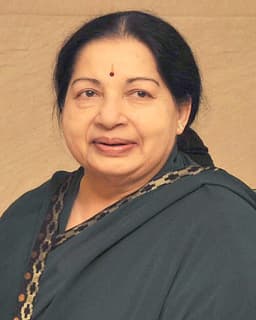
Jayalalithaa
Politician · Modern
57.2Total

S. Nijalingappa
Politician · Modern
48.0Total
Basic Information
Born
1948
1902
Died
—
2000
Era
Modern
Modern
Nationality
India
India
Occupation
Politician
Politician
Civilization
Indian
Indian
Score Comparison
Military (10%)
32.5
40.3
Political (20%)
60.0
39.4
Influence (20%)
55.0
49.4
Legacy (20%)
54.0
41.7
Leadership (15%)
78.0
62.2
Strategy (15%)
60.0
60.0
TOTAL
57.2
48.0
Jayalalithaa — Complete Timeline
1982 AD
Joined AIADMK and became propaganda secretaryPolitical Action◆ Major
Jayalalithaa joined the AIADMK, the party founded by M.G. Ramachandran (MGR). She was appointed propaganda secretary, using her oratory skills to promote the party. This marked her entry into full-time politics after a successful film career.
Political EntryAIADMKTamil Nadu
Impact: regionalconstructive
1991 AD
Became Chief Minister of Tamil Nadu for first timePolitical Action◆ Major
Jayalalithaa led the AIADMK to a landslide victory in the 1991 Tamil Nadu election, winning 164 out of 234 seats. She became Chief Minister for the first time. Her government focused on populist schemes but also faced allegations of corruption and authoritarianism.
Chief MinisterTamil NaduAIADMK
Impact: regionalconstructive
2011 AD
Implemented Amma brand welfare schemesReform◆ Major
Jayalalithaa's government launched a series of subsidized welfare schemes under the 'Amma' brand, including Amma canteens (low-cost meals), Amma water, and Amma pharmacies. These schemes provided affordable services to the poor and became a model for other states.
WelfareAmmaTamil Nadu
Impact: regionalconstructive
2014 AD
Convicted in disproportionate assets case (2014)Political Action◆ Major
Jayalalithaa was convicted by a special court in Bangalore for amassing disproportionate assets worth
CorruptionConvictionDisproportionate Assets
Impact: nationaldestructive
2015 AD
Returned as Chief Minister after acquittal (2015)Political Action◆ Major
After the Karnataka High Court acquitted her in the disproportionate assets case, Jayalalithaa returned as Chief Minister of Tamil Nadu in 2015. She led the AIADMK to victory in the 2016 election, winning a second consecutive term. Her return consolidated her power.
AcquittalChief MinisterTamil Nadu
Impact: regionalconstructive
S. Nijalingappa — Complete Timeline
1956 AD
Served as Chief Minister of Mysore StatePolitical Action◆ Major
Nijalingappa became Chief Minister of Mysore State (later Karnataka), serving from 1956 to 1958 and again from 1962 to 1968. His tenure focused on agricultural development, irrigation projects, and the establishment of educational institutions.
Chief MinisterMysoreDevelopment
Impact: regionalconstructive
1968 AD
Elected President of the Indian National CongressPolitical Action◆ Major
Nijalingappa was elected President of the Indian National Congress, representing the conservative 'Syndicate' faction. His presidency was marked by growing tensions with Prime Minister Indira Gandhi, leading to the party split in 1969.
Congress PresidentSyndicateParty Split
Impact: national
1969 AD
Led the Congress Party during the 1969 SplitPolitical Action◆ Major
As Congress President, Nijalingappa was a central figure in the party split when Indira Gandhi was expelled from the party. He led the 'Syndicate' faction, which became the Congress (O), while Gandhi formed the Congress (R). The split weakened the party.
Congress SplitSyndicateIndira Gandhi
Impact: nationaldestructive
1971 AD
Lost Leadership in the 1971 General ElectionsPolitical Action◆ Major
Nijalingappa's Congress (O) faction suffered a crushing defeat in the 1971 general elections, winning only 16 seats compared to Indira Gandhi's Congress (R) landslide. This defeat ended his influence in national politics.
Election DefeatCongress (O)1971 Elections
Impact: nationaltragic
This comparison has not been analyzed yet.
One-time AI generation (~1 minute). Scores and timeline are already available below.
Rankings
🥇
JayalalithaaLeader
Mil: 32.5Pol: 60.0Inf: 55.0
57.2
🥈
S. Nijalingappa
Mil: 40.3Pol: 39.4Inf: 49.4
48.0
+9.2 behind
How This Comparison Works
Algorithm
Each figure is scored on 6 dimensions (0—100 scale) based on structured historical data: Military (10%), Political (20%), Influence (20%), Legacy (20%), Leadership (15%), Strategy (15%). The weighted total produces the final ranking.
Data Sources
Scores are computed from structured sub-indicators in the database. Scale factors adjust for era (Ancient ×0.85, Modern ×1.0) and civilization size (Eastern ×1.05, Other ×0.80) to account for differences in population and military scale.
Maximum 3 Figures
Comparisons are limited to 2—3 figures to ensure readability and statistical meaningfulness.
Error Margins
±5 points per dimension — Sub-scores are derived from historical records with inherent uncertainty. Two figures within 5 points on a dimension should be considered roughly equivalent in that area.
Total Score Accuracy
±3 points overall — The weighted combination of 6 dimensions produces a total score with approximately ±3 points of uncertainty. Differences of less than 3 points are not statistically significant— the figures are effectively tied.
Known Limitations
- Historical records are incomplete and uneven across civilizations
- Figures from oral-tradition societies may be underrepresented
- Occupation labels can misclassify multi-role figures
- Scores measure capability and impact, not moral character
- Quantitative scoring is a comparison tool, not absolute truth
Capability Radar
Military (10%) — Battles & Warfare
Battles
42
45
Win Rate
48
48
Expansion
52
48
Political (20%) — Governance & Reform
Reform
70
30
Diplomacy
65
35
Economy
60
25
Influence (20%) — Cultural & Global Reach
Cultural
60
20
Global
45
15
Legacy (20%) — Historical Impact
Historical
65
30
Longevity
50
20
Leadership (15%) — Power & Stability
Tenure
85
40
Stability
55
20
Strategy (15%) — Tactics & Innovation
Strategy
52
51
Tactics
58
53
Reform
56
58
Similar Comparisons
Comments & Discussion
No comments yet. Be the first to share your thoughts!