Loading...
Jean-Baptiste Bernadotte vs Yitzhak Rabin
Yitzhak Rabin leads by 5.4 pts · 2 figures compared
…
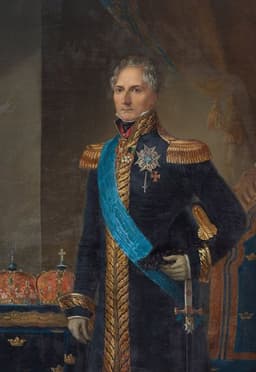
Jean-Baptiste Bernadotte
General · Modern
61.0Total
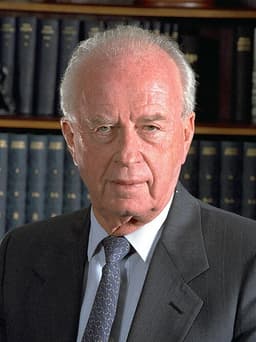
Yitzhak Rabin
General · Modern
66.4Total
Basic Information
Born
1763
1922
Died
1844
—
Era
Modern
Modern
Nationality
France
Israel
Occupation
General
General
Civilization
Western
Middle Eastern
Score Comparison
Military (10%)
67.5
61.7
Political (20%)
62.7
82.0
Influence (20%)
55.0
68.0
Legacy (20%)
52.0
55.0
Leadership (15%)
80.0
78.0
Strategy (15%)
61.2
55.0
TOTAL
61.0
66.4
Jean-Baptiste Bernadotte — Complete Timeline
1805 AD
Battle of AusterlitzWar◆ Major
Bernadotte commanded the I Corps at Austerlitz. His corps held the Allied left flank and participated in the encirclement of the Russian and Austrian forces, contributing to the French victory.
Napoleonic WarsBattleCorps Command
Impact: global
1809 AD
Battle of WagramWar◆ Major
Bernadotte commanded the Saxon IX Corps at Wagram. His corps was routed by Austrian forces, and he was criticized by Napoleon for his performance, leading to his dismissal from the Grande Arm
Napoleonic WarsBattleDefeatDismissal
Impact: regional
1810 AD
Elected Crown Prince of SwedenPolitical Action
The Swedish Riksdag elected Bernadotte as Crown Prince, due to his popularity and perceived ability to secure Norway. He converted to Lutheranism and was adopted by King Charles XIII, becoming heir to the throne.
SwedenSuccessionNapoleonic Era
Impact: nationalconstructive
1813 AD
Battle of LeipzigWar◆ Major
Bernadotte, now Crown Prince of Sweden, commanded the Swedish contingent and the Army of the North in the Allied coalition. His forces fought against Napoleon at Leipzig, contributing to the French defeat.
Napoleonic WarsBattleAllied Coalition
Impact: global
1814 AD
Treaty of KielPolitical Action◆ Major
Bernadotte negotiated the Treaty of Kiel with Denmark, which ceded Norway to Sweden. This fulfilled a key Swedish war aim and established the union between Sweden and Norway.
TreatySwedenNorwayDiplomacy
Impact: regionalconstructive
1818 AD
Reign as King of Sweden and NorwayReform◆ Major
As king, Bernadotte pursued a policy of neutrality and internal development. He improved infrastructure, reformed the legal system, and maintained peace, but faced opposition from liberal factions.
ReignReformsNeutrality
Impact: nationalconstructive
Accession as King Charles XIV JohnPolitical Action
Bernadotte ascended the Swedish throne as King Charles XIV John upon the death of Charles XIII. He founded the House of Bernadotte, which continues to reign in Sweden.
MonarchySwedenBernadotte Dynasty
Impact: nationalconstructive
Yitzhak Rabin — Complete Timeline
1967 AD
Chief of Staff during the Six-Day WarWar
As Chief of Staff of the Israel Defense Forces, Rabin commanded the Israeli military during the Six-Day War against Egypt, Jordan, and Syria. Israel captured the Sinai Peninsula, Gaza Strip, West Bank, East Jerusalem, and Golan Heights, reshaping the region.
Six-Day WarTerritorial ExpansionMilitary Victory
Impact: global
1993 AD
Signing of the Oslo AccordsPolitical Action
As prime minister, Rabin signed the Oslo Accords with PLO Chairman Yasser Arafat on the White House lawn. The agreement established the Palestinian Authority and set a framework for Palestinian self-governance in the West Bank and Gaza Strip.
Peace ProcessPalestiniansOslo
Impact: globalconstructive
1995 AD
Assassination at Peace RallyPolitical Action
Rabin was assassinated by Israeli extremist Yigal Amir after a peace rally in Tel Aviv. The assassination shocked Israel and the world, derailing the Oslo peace process and leading to a period of political instability.
AssassinationPeace ProcessPolitical Violence
Impact: globaltragic
Expert Analysis
Origins
Jean-Baptiste Bernadotte was born in 1763 in Pau, France, into a bourgeois family. His father was a lawyer, but Bernadotte chose a military career, enlisting in the French Army in 1780. He rose through the ranks during the French Revolutionary Wars, demonstrating tactical skill and political acumen. Yitzhak Rabin was born in 1922 in Jerusalem, then British Mandate of Palestine, to Jewish immigrants from Ukraine. His father was a labor activist, and his mother was a nurse. Rabin grew up in a socialist Zionist environment, attending the agricultural school at Kadoorie, where he excelled. He joined the Palmach, the elite strike force of the Haganah, in 1941, beginning his military career.
Rise to Power
Bernadotte's rise accelerated during the Napoleonic Wars. He was appointed Marshal of the Empire in 1804 and commanded the I Corps at Austerlitz (1805), where his forces held the Allied left flank. However, his relationship with Napoleon soured due to perceived hesitancy and independence. In 1810, the Swedish Riksdag elected him Crown Prince, impressed by his military reputation and humane treatment of Swedish prisoners. Bernadotte converted to Lutheranism and adopted the name Charles John. He then switched sides, joining the coalition against Napoleon. He led the Swedish army in the Battle of Leipzig (1813) and later negotiated the Treaty of Kiel (1814), securing Norway for Sweden. Rabin rose through the military ranks. He commanded the Harel Brigade in the 1948 Arab-Israeli War, capturing Jerusalem's western corridor. In 1964, he became Chief of Staff of the Israel Defense Forces. His planning and leadership during the Six-Day War (1967) brought a decisive victory, capturing the Sinai, Gaza, West Bank, and Golan Heights. After retiring from the military, Rabin served as ambassador to the United States (1968-1973) and entered politics, becoming Prime Minister in 1974.
Leadership & Governance
Bernadotte as King Charles XIV John of Sweden and Norway (1818-1844) pursued a policy of neutrality, avoiding entanglements in European conflicts. He focused on internal development: improving infrastructure, reforming the legal system, and promoting agriculture and commerce. His leadership was pragmatic, balancing conservatism with necessary reforms. He maintained stability but faced opposition from liberals seeking more democracy. Rabin's governance was marked by a shift from hawkish security policies to peacemaking. As Prime Minister (1974-1977, 1992-1995), he initially authorized settlements but later embraced the Oslo Accords (1993), establishing the Palestinian Authority. He prioritized security through peace, believing diplomacy could reduce conflict. His leadership style was direct and analytical, but his willingness to negotiate with the PLO alienated many Israelis.
Triumph & Tragedy
Bernadotte's greatest success was founding the House of Bernadotte, which still rules Sweden. He secured Norway for Sweden and kept the country neutral through the Napoleonic wars. However, his reign saw limited political reforms; the Swedish constitution remained unchanged, and he faced criticism for authoritarian tendencies. His failure to fully integrate Norway led to tensions that eventually dissolved the union in 1905. Rabin's triumph was the Oslo Accords, which won him the Nobel Peace Prize in 1994. He also strengthened Israel's economy and international standing. His tragedy was his assassination in 1995 by a Jewish extremist who opposed the peace process. The assassination derailed the Oslo process and plunged Israel into political turmoil. Rabin's failure was his inability to build a domestic consensus for peace, leading to his death.
Character & Destiny
Bernadotte was pragmatic, adaptable, and ambitious. He switched sides when advantageous, showing political survival instinct. His destiny was to become a king, a remarkable rise from a French soldier to a Scandinavian monarch. He was known for his charm and diplomatic skill, but also for his vanity and autocratic tendencies. Rabin was reserved, analytical, and determined. He was a 'reluctant peacemaker' who believed in security above all but concluded that peace was necessary for Israel's future. His character—stubborn yet open to change—led him to take risks for peace, which ultimately cost him his life. Historians see him as a tragic figure whose vision was cut short.
Legacy
Bernadotte's legacy is the enduring Bernadotte dynasty, which has provided Sweden with stable monarchs for over 200 years. He set a precedent for Swedish neutrality that lasted through two world wars. His domestic reforms laid groundwork for modernization. Rabin's legacy is his role as a peace icon. The Oslo Accords, though flawed, established the framework for Israeli-Palestinian negotiations. His assassination made him a martyr for peace, but the peace process stalled. Rabin's military achievements also remain part of Israel's strategic doctrine.
Conclusion
While Bernadotte scored 61.0 overall and Rabin scored 66.4, Rabin's impact on global history is more profound. Bernadotte's influence was largely regional and dynastic, whereas Rabin's actions shaped the modern Middle East and the Israeli-Palestinian conflict. Rabin's willingness to risk his life for peace, and his subsequent assassination, mark him as a transformative figure. Bernadotte, despite his successful reign, did not fundamentally alter the course of European history. Therefore, Yitzhak Rabin had a greater impact, as his decisions and death continue to resonate in contemporary geopolitics.
Rankings
🥇
Yitzhak RabinLeader
Mil: 61.7Pol: 82.0Inf: 68.0
66.4
🥈
Jean-Baptiste Bernadotte
Mil: 67.5Pol: 62.7Inf: 55.0
61.0
+5.4 behind
How This Comparison Works
Algorithm
Each figure is scored on 6 dimensions (0—100 scale) based on structured historical data: Military (10%), Political (20%), Influence (20%), Legacy (20%), Leadership (15%), Strategy (15%). The weighted total produces the final ranking.
Data Sources
Scores are computed from structured sub-indicators in the database. Scale factors adjust for era (Ancient ×0.85, Modern ×1.0) and civilization size (Eastern ×1.05, Other ×0.80) to account for differences in population and military scale.
Maximum 3 Figures
Comparisons are limited to 2—3 figures to ensure readability and statistical meaningfulness.
Error Margins
±5 points per dimension — Sub-scores are derived from historical records with inherent uncertainty. Two figures within 5 points on a dimension should be considered roughly equivalent in that area.
Total Score Accuracy
±3 points overall — The weighted combination of 6 dimensions produces a total score with approximately ±3 points of uncertainty. Differences of less than 3 points are not statistically significant— the figures are effectively tied.
Known Limitations
- Historical records are incomplete and uneven across civilizations
- Figures from oral-tradition societies may be underrepresented
- Occupation labels can misclassify multi-role figures
- Scores measure capability and impact, not moral character
- Quantitative scoring is a comparison tool, not absolute truth
Capability Radar
Military (10%) — Battles & Warfare
Battles
65
65
Win Rate
60
70
Expansion
55
50
Political (20%) — Governance & Reform
Reform
70
65
Diplomacy
85
85
Economy
65
60
Influence (20%) — Cultural & Global Reach
Cultural
50
55
Global
55
70
Legacy (20%) — Historical Impact
Historical
65
75
Longevity
60
60
Leadership (15%) — Power & Stability
Tenure
80
70
Stability
75
40
Strategy (15%) — Tactics & Innovation
Strategy
75
75
Tactics
70
60
Reform
60
55
Similar Comparisons
Comments & Discussion
No comments yet. Be the first to share your thoughts!