Loading...
Jean Bart vs Li Zongren
Li Zongren leads by 8.6 pts · 2 figures compared
…
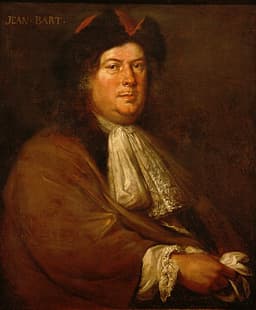
Jean Bart
General · Modern
49.9Total
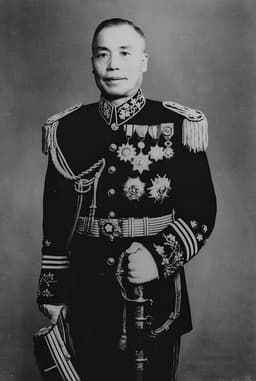
Li Zongren
General · Modern
58.5Total
Basic Information
Born
1650
1890
Died
1702
1969
Era
Modern
Modern
Nationality
France
China
Occupation
General
General
Civilization
Western
Eastern
Score Comparison
Military (10%)
52.5
65.0
Political (20%)
36.5
53.8
Influence (20%)
61.0
58.0
Legacy (20%)
47.5
52.0
Leadership (15%)
40.4
72.0
Strategy (15%)
60.0
56.8
TOTAL
49.9
58.5
Jean Bart — Complete Timeline
1690 AD
Battle of Beachy HeadWar
Jean Bart served as a privateer captain under the French admiral Tourville at the Battle of Beachy Head. The French fleet defeated the Anglo-Dutch fleet, gaining temporary control of the English Channel.
Nine Years' WarNaval BattleFrench Victory
Impact: regional
1694 AD
Battle of the TexelWar◆ Major
Jean Bart commanded a French squadron that broke through a Dutch blockade at the Battle of the Texel. He captured a large Dutch grain convoy, relieving a famine in France and demonstrating his skill as a naval commander.
Nine Years' WarNaval BattleFrench Victory
Impact: national
1695 AD
Raid on the Scottish CoastWar
Jean Bart led a raid on the Scottish coast, burning several villages and capturing ships. This raid was part of French efforts to support the Jacobite cause and disrupt English trade in the North Sea.
Nine Years' WarRaidJacobite Support
destructive
1696 AD
Capture of the English Convoy at Dogger BankWar
Jean Bart captured an English convoy off Dogger Bank, taking 25 merchant ships and their escort. This action disrupted English trade and demonstrated the effectiveness of French privateering during the Nine Years' War.
Nine Years' WarPrivateeringEnglish Loss
Impact: regional
1697 AD
Promoted to Chef d'EscadrePolitical Action◆ Major
Jean Bart was promoted to Chef d'Escadre (squadron commander) in the French navy, a high rank for a former privateer. This promotion recognized his successful service and made him a nobleman.
French NavyPromotionNobility
Impact: nationalconstructive
Li Zongren — Complete Timeline
1921 AD
Command of the Guangxi ArmyPolitical Action◆ Major
Li Zongren became a commander in the Guangxi Army and helped unify Guangxi province under the New Guangxi Clique. He established a powerful regional base that rivaled other warlords.
Guangxi CliqueMilitary CommandWarlord Era
Impact: regional
1926 AD
Alliance with the Nationalist GovernmentPolitical Action◆ Major
Li Zongren allied the Guangxi Clique with Chiang Kai-shek's Nationalist government during the Northern Expedition. His forces played a key role in defeating warlords and unifying China under KMT rule.
Northern ExpeditionAllianceKMT
Impact: nationalconstructive
1938 AD
Battle of TaierzhuangWar
Li Zongren commanded Chinese forces to a major victory over the Japanese at the Battle of Taierzhuang during the Second Sino-Japanese War. This was the first significant Chinese victory of the war and boosted national morale.
Second Sino-Japanese WarBattleVictory
Impact: nationalconstructive
1949 AD
Acting Presidency of the Republic of ChinaPolitical Action◆ Major
Li Zongren served as Acting President of the Republic of China after Chiang Kai-shek's resignation during the Chinese Civil War. He attempted to negotiate peace with the Communists but failed, leading to the KMT's retreat to Taiwan.
Chinese Civil WarPresidencyKMT
Impact: nationaltragic
Exile to the United StatesPolitical Action
After the Communist victory, Li Zongren fled to the United States, where he lived in exile. He criticized Chiang Kai-shek's leadership and advocated for a reformed KMT, but remained politically marginalized.
ExileChinese Civil WarPolitics
Impact: nationaltragic
Expert Analysis
Origins
**Jean Bart** (1650-1702) was born in Dunkirk, France, into a family of fishermen and privateers. His father, a ship captain, taught him seamanship. Bart lacked formal education but learned navigation and combat at sea from age 12. He served briefly in the Dutch navy before returning to France.
**Li Zongren** (1890-1969) was born in Guilin, Guangxi province, to a modest farming family. He studied at the Guangxi Military Academy, graduating in 1913. His early career included service under various warlords before he built his own power base.
Rise to Power
Jean Bart's rise began during the Franco-Dutch War (1672-1678). In 1674, he commanded a small frigate and captured several Dutch merchantmen. His breakthrough came in 1689 at the **Battle of the Texel**, where he broke a Dutch blockade and captured a grain convoy, relieving famine in France. This feat earned him promotion to Chef d'Escadre in 1690, a rare honor for a privateer.
Li Zongren rose through the ranks of the Guangxi army. By 1923, he controlled Guangxi province as part of the **New Guangxi Clique**. In 1926, he allied with Chiang Kai-shek's Nationalists during the Northern Expedition, contributing to the defeat of warlords. His forces played a key role in capturing Wuhan and Beijing.
Leadership & Governance
Jean Bart led by example, often boarding enemy ships personally. He commanded small squadrons (5-10 ships) with aggressive tactics. His governance was limited: he operated under royal commissions, focusing on disrupting enemy trade. He scored **40.4 in Leadership** and **36.5 in Political**, reflecting his narrow role.
Li Zongren combined military command with political governance. He administered Guangxi with reforms in education and infrastructure, earning a **72.0 in Leadership**. He scored **53.8 in Political**, higher than Bart, as he served as Acting President in 1949. However, his alliance with Chiang was fraught with tension.
Triumph & Tragedy
Jean Bart's greatest triumph was the **Battle of the Texel (1689)**, where he captured 25 ships. He also raided the Scottish coast in 1694, supporting Jacobites. His failures include the **Battle of Beachy Head (1690)** where he served under Tourville; though a French victory, Bart's role was minor. He died in 1702 from illness, with no major defeats.
Li Zongren's triumph was the **Battle of Taierzhuang (1938)**, the first major Chinese victory over Japan. He coordinated 100,000 troops to encircle and defeat 60,000 Japanese soldiers. His tragedy was his failed peace negotiations with Mao in 1949, leading to Communist victory and his exile. He scored **65.0 in Military**, higher than Bart's 52.5.
Character & Destiny
Jean Bart was bold and impetuous, known for his temper. He refused to serve under Admiral Tourville due to personal disputes. His character drove him to take risks, but his lack of political skill limited his influence. He scored **60.0 in Strategy**, reflecting tactical acumen.
Li Zongren was pragmatic and ambitious. He balanced alliances with Chiang while building his own power. His decision to negotiate with Mao instead of fighting to the end led to exile. Historians note his integrity but criticize his indecisiveness in 1949.
Legacy
Jean Bart is remembered as a symbol of French naval prowess. His name adorns warships, statues, and streets in Dunkirk. His tactics influenced privateering, but his impact on naval doctrine was limited (Legacy 47.5).
Li Zongren's legacy is mixed. In China, he is celebrated for Taierzhuang but criticized for his role in the Civil War. His memoir 'The Memoirs of Li Zongren' offers insight into warlord politics. He scored **52.0 in Legacy**, slightly higher than Bart.
Conclusion
Li Zongren had greater impact than Jean Bart. His military score (65.0 vs 52.5) and leadership (72.0 vs 40.4) reflect broader influence. Bart's naval victories were localized, while Li's actions shaped China's 20th-century history. With a total score of 58.5 vs 49.9, Li Zongren emerges as the more significant figure.
Rankings
🥇
Li ZongrenLeader
Mil: 65.0Pol: 53.8Inf: 58.0
58.5
🥈
Jean Bart
Mil: 52.5Pol: 36.5Inf: 61.0
49.9
+8.6 behind
How This Comparison Works
Algorithm
Each figure is scored on 6 dimensions (0—100 scale) based on structured historical data: Military (10%), Political (20%), Influence (20%), Legacy (20%), Leadership (15%), Strategy (15%). The weighted total produces the final ranking.
Data Sources
Scores are computed from structured sub-indicators in the database. Scale factors adjust for era (Ancient ×0.85, Modern ×1.0) and civilization size (Eastern ×1.05, Other ×0.80) to account for differences in population and military scale.
Maximum 3 Figures
Comparisons are limited to 2—3 figures to ensure readability and statistical meaningfulness.
Error Margins
±5 points per dimension — Sub-scores are derived from historical records with inherent uncertainty. Two figures within 5 points on a dimension should be considered roughly equivalent in that area.
Total Score Accuracy
±3 points overall — The weighted combination of 6 dimensions produces a total score with approximately ±3 points of uncertainty. Differences of less than 3 points are not statistically significant— the figures are effectively tied.
Known Limitations
- Historical records are incomplete and uneven across civilizations
- Figures from oral-tradition societies may be underrepresented
- Occupation labels can misclassify multi-role figures
- Scores measure capability and impact, not moral character
- Quantitative scoring is a comparison tool, not absolute truth
Capability Radar
Military (10%) — Battles & Warfare
Battles
55
65
Win Rate
70
60
Expansion
30
60
Political (20%) — Governance & Reform
Reform
10
45
Diplomacy
25
60
Economy
30
40
Influence (20%) — Cultural & Global Reach
Cultural
45
40
Global
30
40
Legacy (20%) — Historical Impact
Historical
40
55
Longevity
35
45
Leadership (15%) — Power & Stability
Tenure
20
55
Stability
15
35
Strategy (15%) — Tactics & Innovation
Strategy
50
68
Tactics
65
70
Reform
20
55
Similar Comparisons
Comments & Discussion
No comments yet. Be the first to share your thoughts!