Loading...
Jebe vs Li Keyong
Jebe leads by 7.4 pts · 2 figures compared
…

Jebe
General · Medieval
61.0Total
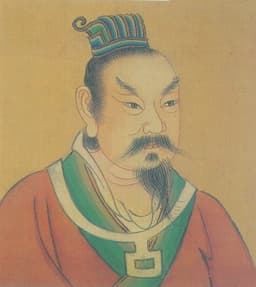
Li Keyong
General · Medieval
53.6Total
Basic Information
Born
1180
856
Died
1225
908
Era
Medieval
Medieval
Nationality
Mongol Empire
China
Occupation
General
General
Civilization
Eastern
Eastern
Score Comparison
Military (10%)
88.5
76.0
Political (20%)
42.3
39.4
Influence (20%)
58.3
51.0
Legacy (20%)
56.0
44.2
Leadership (15%)
61.1
65.0
Strategy (15%)
80.4
65.4
TOTAL
61.0
53.6
Jebe — Complete Timeline
1220 AD
The Great Raid (with Subutai)War◆ Major
Jebe and Subutai led a 20,000-man Mongol army on a multi-year reconnaissance raid through the Caucasus and into the Pontic steppes. They defeated the Cumans and a coalition of Rus' princes at the Battle of the Kalka River in 1223.
CaucasusKalka RiverRus'
Impact: regional
Pursuit of the Khwarezm ShahWar
Jebe led a detachment of 10,000 men to pursue Muhammad II of Khwarezm across Persia. He chased the fleeing shah to the Caspian Sea, where Muhammad died on an island. The pursuit demonstrated Mongol strategic mobility and intelligence gathering.
KhwarezmMuhammad IIPursuit
Impact: regional
1222 AD
Defeat of the KipchaksWar
During the Great Raid, Jebe defeated the Kipchak (Cuman) confederation in the Caucasus. The victory broke the power of the Kipchaks in the region and forced them to flee westward, where they later allied with the Rus' against the Mongols.
KipchaksCaucasusCumans
Impact: regional
1223 AD
Battle of the Kalka RiverWar◆ Major
Jebe and Subutai's Mongol army defeated a coalition of Rus' principalities and Cumans at the Kalka River. The victory was a major demonstration of Mongol military capability against European forces, though the Mongols did not follow up immediately.
Rus'CumansKalka River
Impact: regional
Li Keyong — Complete Timeline
883 AD
Became Prince of JinPolitical Action◆ Major
Li Keyong was appointed Prince of Jin by the Tang court for his role in suppressing the Huang Chao rebellion. He established a power base in Shanxi and became a major warlord during the late Tang period.
AppointmentWarlordTang Dynasty
Impact: regionalconstructive
901 AD
Defeated by Zhu Wen at the Battle of the Yellow RiverWar◆ Major
Li Keyong was defeated by the forces of Zhu Wen (later Emperor Taizu of Later Liang) at the Yellow River. This defeat weakened his position and allowed Zhu Wen to dominate the Central Plains.
BattleDefeatZhu Wen
Impact: regionaldestructive
908 AD
Death from illnessOther◆ Major
Li Keyong died of illness. His son Li Cunxu succeeded him and later founded the Later Tang dynasty, fulfilling Li Keyong's ambition to restore Tang rule.
DeathSuccessionLater Tang
Impact: regionaltragic
Expert Analysis
Origins
Jebe (died c. 1225) was born into the Tayichiud clan of the Mongol steppe, originally named Jirqo'adai. He gained fame as a warrior under Genghis Khan after shooting the khan's horse during a battle—an act that impressed Genghis, who renamed him Jebe ("arrow"). His early life was shaped by the brutal clan warfare of the Mongolian plateau, where he learned archery and cavalry tactics. Li Keyong (856–908) was a Shatuo Turk chieftain, born in what is now Shanxi, China. His father, Li Guochang, was a Tang general who fought against the Tibetans. Li Keyong inherited command of the Shatuo cavalry, a Turkic group settled in northern China, and was raised in a military environment. He was known for his exceptional eyesight and archery skills, earning the nickname "Ke Yong" ("may he be useful"). Both emerged from warrior cultures but in vastly different geopolitical contexts.
Rise to Power
Jebe's rise began when he joined Genghis Khan's forces after the defeat of the Tayichiud. He quickly became a trusted nökor (companion) and was given command of a tumen (10,000 men). His first major independent command came during the conquest of the Khwarezmian Empire (1219–1221), where Genghis sent him with 10,000 troops to pursue Sultan Muhammad II. Jebe chased the sultan across Persia to the Caspian Sea, demonstrating relentless mobility. This pursuit elevated him to the rank of top general. Li Keyong's rise came through his service to the Tang dynasty. In 878, he was appointed Prince of Jin for his role in suppressing the Huang Chao rebellion. He commanded Shatuo cavalry that helped recapture the Tang capital Chang'an in 883. However, his power base in Shanxi was contested by rival warlord Zhu Wen. Li Keyong's rise was marked by shifting alliances and betrayals, unlike Jebe's steady ascent under a unified Mongol leadership.
Leadership & Governance
Jebe's leadership style was defined by speed, discipline, and coordination. He often operated in tandem with Subutai, exemplifying the Mongol command system of independent yet cooperative commands. At the Battle of the Kalka River (1223), Jebe and Subutai used feigned retreats to draw out the Rus' forces, then encircled and annihilated them. Jebe's governance approach was minimal—he conquered but did not administer, leaving local rulers in place under Mongol suzerainty. His military score of 88.5 reflects his tactical brilliance, but his political score of 42.3 indicates limited administrative role. Li Keyong was a charismatic leader of the Shatuo, but his governance was feudal. He ruled his domain through personal loyalty and clan ties, but his political maneuvering was less effective. His defeat by Zhu Wen at the Yellow River (905) showed his inability to adapt to the shifting power dynamics of late Tang. Li Keyong's leadership score of 65.0 and strategy score of 65.4 are lower than Jebe's 80.4, reflecting his more conventional approach.
Triumph & Tragedy
Jebe's greatest triumph was the Great Raid (1220–1224) with Subutai, a 20,000-man army that traversed the Caucasus, defeated the Kipchaks, and crushed a larger Rus' coalition at the Kalka River. This raid demonstrated Mongol strategic reach and intelligence gathering. Jebe's tragedy was his early death soon after the raid, likely from illness or battle wounds, preventing him from capitalizing on his fame. Li Keyong's triumph was his role in suppressing the Huang Chao rebellion, which earned him the title Prince of Jin and a strong base in Shanxi. His tragedy was his failure to unify northern China under his rule. He was decisively defeated by Zhu Wen in 905 and died of illness in 908, leaving his son Li Cunxu to fulfill his ambition. Li Keyong's legacy is overshadowed by his son's founding of the Later Tang dynasty.
Character & Destiny
Jebe was known for his unwavering loyalty to Genghis Khan and his tactical ingenuity. His nickname "Arrow" symbolized his speed and precision. He was a disciplined commander who followed orders but also showed initiative, as in the pursuit of the Khwarezm Shah. His character shaped his destiny as a key instrument of Mongol expansion. Li Keyong was a proud and stubborn leader, deeply loyal to the Tang dynasty even as it crumbled. His decision to trust Zhu Wen led to his defeat. His character—a mix of military prowess and political naivety—prevented him from achieving his goals. Historians note that Jebe's fate was to die young but successful, while Li Keyong's was to see his ambitions unfulfilled.
Legacy
Jebe's legacy is as one of the finest Mongol generals, whose tactics influenced later commanders. The Great Raid demonstrated the effectiveness of long-range reconnaissance and combined arms. He scored 56.0 in legacy and 58.3 in influence, reflecting his role in Mongol military tradition. Li Keyong's legacy is more localized: he is remembered as a founder of the Later Tang dynasty through his son, and his Shatuo cavalry continued to play a role in Chinese history. However, his influence is overshadowed by his son and rival Zhu Wen. His legacy score of 44.2 is lower than Jebe's.
Conclusion
Jebe had greater impact on world history than Li Keyong. Jebe's military score of 88.5 and strategy score of 80.4 far exceed Li Keyong's 76.0 and 65.4. Jebe's campaigns directly shaped the Mongol Empire's expansion into Europe and the Middle East, while Li Keyong's actions were confined to the collapse of Tang China. Jebe's innovations in mobile warfare influenced military strategy for centuries, whereas Li Keyong's impact was limited to a regional transition. Thus, Jebe emerges as the more significant figure.
Rankings
🥇
JebeLeader
Mil: 88.5Pol: 42.3Inf: 58.3
61.0
🥈
Li Keyong
Mil: 76.0Pol: 39.4Inf: 51.0
53.6
+7.4 behind
How This Comparison Works
Algorithm
Each figure is scored on 6 dimensions (0—100 scale) based on structured historical data: Military (10%), Political (20%), Influence (20%), Legacy (20%), Leadership (15%), Strategy (15%). The weighted total produces the final ranking.
Data Sources
Scores are computed from structured sub-indicators in the database. Scale factors adjust for era (Ancient ×0.85, Modern ×1.0) and civilization size (Eastern ×1.05, Other ×0.80) to account for differences in population and military scale.
Maximum 3 Figures
Comparisons are limited to 2—3 figures to ensure readability and statistical meaningfulness.
Error Margins
±5 points per dimension — Sub-scores are derived from historical records with inherent uncertainty. Two figures within 5 points on a dimension should be considered roughly equivalent in that area.
Total Score Accuracy
±3 points overall — The weighted combination of 6 dimensions produces a total score with approximately ±3 points of uncertainty. Differences of less than 3 points are not statistically significant— the figures are effectively tied.
Known Limitations
- Historical records are incomplete and uneven across civilizations
- Figures from oral-tradition societies may be underrepresented
- Occupation labels can misclassify multi-role figures
- Scores measure capability and impact, not moral character
- Quantitative scoring is a comparison tool, not absolute truth
Capability Radar
Military (10%) — Battles & Warfare
Battles
88
75
Win Rate
90
70
Expansion
85
65
Political (20%) — Governance & Reform
Reform
30
35
Diplomacy
65
55
Economy
35
30
Influence (20%) — Cultural & Global Reach
Cultural
55
45
Global
65
30
Legacy (20%) — Historical Impact
Historical
70
55
Longevity
60
40
Leadership (15%) — Power & Stability
Tenure
40
60
Stability
45
40
Strategy (15%) — Tactics & Innovation
Strategy
85
68
Tactics
92
72
Reform
70
40
Similar Comparisons
Comments & Discussion
No comments yet. Be the first to share your thoughts!