Loading...
Ji Xiaolan vs Yi Wan-yong
Ji Xiaolan leads by 12.9 pts · 2 figures compared
…

Ji Xiaolan
Politician · Modern
54.2Total
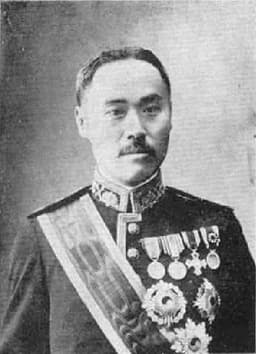
Yi Wan-yong
Politician · Modern
41.3Total
Basic Information
Born
1724
1858
Died
1805
1926
Era
Modern
Modern
Nationality
China
Korea
Occupation
Politician
Politician
Civilization
Eastern
Eastern
Score Comparison
Military (10%)
12.0
15.7
Political (20%)
68.0
32.1
Influence (20%)
68.0
47.1
Legacy (20%)
52.0
37.5
Leadership (15%)
66.0
67.0
Strategy (15%)
28.9
37.3
TOTAL
54.2
41.3
Ji Xiaolan — Complete Timeline
1760 AD
Served as examiner for the imperial examinationsPolitical Action
Ji Xiaolan served multiple times as chief examiner for the imperial civil service examinations. He influenced the selection of scholar-officials and promoted Confucian orthodoxy in the Qing bureaucracy.
ExaminationsBureaucracyConfucianism
Impact: national
1773 AD
Appointed chief compiler of the Siku QuanshuCultural◆ Major
Ji Xiaolan was appointed chief compiler of the Siku Quanshu, the largest imperial encyclopedia in Chinese history. He oversaw the collection, editing, and cataloging of over 3,000 texts from Chinese literature and philosophy.
EncyclopediaScholarshipCultural Preservation
Impact: globalconstructive
1782 AD
Completed the Siku Quanshu compilationCultural
Under Ji Xiaolan's direction, the Siku Quanshu was completed, comprising 36,000 volumes. This monumental work preserved vast amounts of Chinese classical literature and became a cornerstone of Qing scholarship.
EncyclopediaCompletionCultural Achievement
Impact: globalconstructive
Yi Wan-yong — Complete Timeline
1905 AD
Signing of the Japan-Korea Protectorate TreatyPolitical Action◆ Major
Yi Wan-yong, as Minister of Education, was one of five Korean ministers who signed the Eulsa Treaty, which made Korea a protectorate of Japan. This treaty stripped Korea of its diplomatic sovereignty and was widely opposed by the Korean public and many officials.
ProtectorateJapanese ImperialismCollaboration
Impact: nationaldestructive
1907 AD
Yi Wan-yong's role in the dissolution of the Korean armyPolitical Action◆ Major
As Prime Minister, Yi Wan-yong supported the Japanese demand to disband the Korean Imperial Army. This action left Korea defenseless against Japanese control and sparked the Righteous Army uprising, a guerrilla resistance movement.
Military DisbandmentResistanceJapanese Control
Impact: nationaldestructive
1910 AD
Signing of the Japan-Korea Annexation TreatyPolitical Action
Yi Wan-yong, as Prime Minister of Korea, signed the treaty that formally annexed Korea into the Japanese Empire. The treaty was signed under duress and without the consent of King Gojong, leading to Yi's condemnation as a traitor by many Koreans.
AnnexationJapanese Colonial RuleCollaboration
Impact: nationaldestructive
Expert Analysis
Origins
Ji Xiaolan (1724–1805) was born into a scholarly family in Xian County, Hebei Province, during the Qing Dynasty. His father, Ji Rongshu, was a government official, providing Ji with access to education and classical texts. Ji passed the imperial examinations at age 19, earning the juren degree, and later achieved the jinshi degree in 1754 at age 30. His early career involved literary roles, and he became known for his wit and erudition. Yi Wan-yong (1844–1926) was born into the aristocratic Yi family in Seoul, Korea, during the Joseon Dynasty. His father, Yi Ho-jun, served as a high-ranking official. Yi received a traditional Confucian education and passed the civil service examinations in 1865 at age 21. He entered the bureaucracy during a period of internal strife and increasing foreign pressure. Unlike Ji, Yi's early career was marked by factional politics and exposure to Western and Japanese influences.
Rise to Power
Ji Xiaolan's rise came through his literary talents and political connections. In 1773, Emperor Qianlong appointed him as chief compiler of the Siku Quanshu, a project that lasted until 1782. This role placed Ji at the center of Qing intellectual life, overseeing the collection and editing of over 36,000 volumes. He also served multiple times as chief examiner for the imperial examinations (e.g., 1789, 1795), allowing him to shape the scholar-official class. His political skill kept him in favor despite court intrigues. Yi Wan-yong rose through collaboration with Japanese interests. After the Meiji Restoration, Japan sought influence in Korea. Yi aligned with the pro-Japanese faction, serving as Minister of Education in 1904. He signed the Eulsa Treaty in 1905, making Korea a protectorate. In 1907, he became Prime Minister, and in 1910, he signed the Japan-Korea Annexation Treaty, formally ending Korean sovereignty. His rise was marked by key turning points: the Russo-Japanese War (1904–1905) and Japan's victory, which enabled his collaboration.
Leadership & Governance
Ji Xiaolan's leadership was scholarly and bureaucratic. He managed the Siku Quanshu project with administrative efficiency, coordinating hundreds of scholars. His governance style emphasized cultural preservation and Confucian orthodoxy. As examiner, he promoted classical learning. He scored 66.0 in leadership and 68.0 in political acumen. In contrast, Yi Wan-yong's leadership was subservient to Japanese authority. As Prime Minister, he implemented Japanese policies, including the dissolution of the Korean army in 1907, which weakened Korean defense. His political score of 32.1 reflects his collaboration. While Ji used his position to advance scholarship, Yi used his to enforce colonial rule. Ji's strategy (28.9) was lower, as he focused on compilation rather than military or diplomatic maneuvers. Yi's strategy (37.3) was slightly higher, as he navigated power dynamics to maintain his position.
Triumph & Tragedy
Ji Xiaolan's greatest triumph was the completion of the Siku Quanshu, a monumental achievement that preserved thousands of Chinese texts. It remains a cornerstone of Chinese scholarship. His tragedy lies in the project's censorship: the Qing court destroyed works deemed subversive, and Ji participated in this intellectual suppression. Additionally, his political influence waned after Emperor Qianlong's death. Yi Wan-yong's triumph was his rise to power and survival through regime changes. However, his tragedy is profound: he is remembered as a traitor who sold his country. The annexation treaty he signed led to 35 years of Japanese colonial rule, with severe consequences for Koreans. His influence (47.1) is tied to this negative legacy. Ji's influence (68.0) and legacy (52.0) are more positive, though tainted by censorship.
Character & Destiny
Ji Xiaolan was known for his wit, intelligence, and adaptability. He navigated the treacherous Qing court with humor and diplomacy. His destiny was shaped by his erudition, leading to the Siku Quanshu. He died in 1805 at age 81, honored by the court. Yi Wan-yong was pragmatic and ambitious, but his collaboration made him a symbol of betrayal. He was assassinated in 1926 by Korean nationalists. His character—willing to compromise sovereignty for personal gain—determined his fate. Historical assessments: Ji is often celebrated as a scholar, while Yi is universally condemned in Korea. Ji's total score of 54.2 reflects his balanced contributions; Yi's 41.3 reflects his negative impact.
Legacy
Ji Xiaolan's legacy is the Siku Quanshu, which influenced Chinese scholarship for centuries. It set a standard for encyclopedia compilation. His works, like "Notes of the Thatched Abode of Close Observations," are still read. Yi Wan-yong's legacy is one of infamy. In South Korea, his name is synonymous with treachery. The annexation treaty he signed ended Korean independence. His actions contributed to the Korean independence movement, which eventually succeeded in 1945. Ji's legacy is cultural; Yi's is political and cautionary.
Conclusion
Ji Xiaolan had greater impact than Yi Wan-yong. His score of 54.2 versus 41.3 reflects his positive contributions to Chinese culture, while Yi's negative impact on Korean sovereignty is historically significant but less enduring in positive terms. Ji's work preserved knowledge; Yi's actions destroyed national autonomy. While Yi's influence was immediate and devastating, Ji's influence spans centuries. Thus, Ji Xiaolan is the more impactful figure in terms of lasting, positive legacy.
Rankings
🥇
Ji XiaolanLeader
Mil: 12.0Pol: 68.0Inf: 68.0
54.2
🥈
Yi Wan-yong
Mil: 15.7Pol: 32.1Inf: 47.1
41.3
+12.9 behind
How This Comparison Works
Algorithm
Each figure is scored on 6 dimensions (0—100 scale) based on structured historical data: Military (10%), Political (20%), Influence (20%), Legacy (20%), Leadership (15%), Strategy (15%). The weighted total produces the final ranking.
Data Sources
Scores are computed from structured sub-indicators in the database. Scale factors adjust for era (Ancient ×0.85, Modern ×1.0) and civilization size (Eastern ×1.05, Other ×0.80) to account for differences in population and military scale.
Maximum 3 Figures
Comparisons are limited to 2—3 figures to ensure readability and statistical meaningfulness.
Error Margins
±5 points per dimension — Sub-scores are derived from historical records with inherent uncertainty. Two figures within 5 points on a dimension should be considered roughly equivalent in that area.
Total Score Accuracy
±3 points overall — The weighted combination of 6 dimensions produces a total score with approximately ±3 points of uncertainty. Differences of less than 3 points are not statistically significant— the figures are effectively tied.
Known Limitations
- Historical records are incomplete and uneven across civilizations
- Figures from oral-tradition societies may be underrepresented
- Occupation labels can misclassify multi-role figures
- Scores measure capability and impact, not moral character
- Quantitative scoring is a comparison tool, not absolute truth
Capability Radar
Military (10%) — Battles & Warfare
Battles
14
16
Win Rate
19
19
Expansion
21
22
Political (20%) — Governance & Reform
Reform
55
5
Diplomacy
50
5
Economy
45
5
Influence (20%) — Cultural & Global Reach
Cultural
75
5
Global
60
5
Legacy (20%) — Historical Impact
Historical
70
10
Longevity
65
5
Leadership (15%) — Power & Stability
Tenure
60
20
Stability
55
0
Strategy (15%) — Tactics & Innovation
Strategy
26
20
Tactics
26
26
Reform
32
28
Similar Comparisons
Comments & Discussion
No comments yet. Be the first to share your thoughts!