Loading...
Jia Fu vs Lu Bu
Lu Bu leads by 5.8 pts · 2 figures compared
…

Jia Fu
General · Ancient
48.1Total
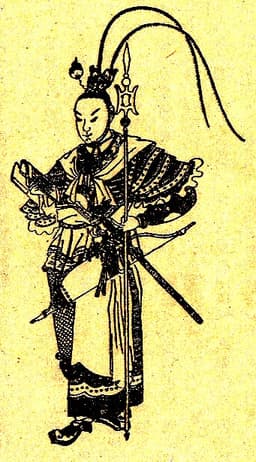
Lu Bu
General · Ancient
53.9Total
Basic Information
Born
-10
156
Died
55
198
Era
Ancient
Ancient
Nationality
China
China
Occupation
General
General
Civilization
Eastern
Eastern
Score Comparison
Military (10%)
55.0
70.0
Political (20%)
35.0
35.0
Influence (20%)
46.3
55.0
Legacy (20%)
38.3
52.0
Leadership (15%)
68.0
62.6
Strategy (15%)
60.0
55.0
TOTAL
48.1
53.9
Jia Fu — Complete Timeline
23 AD
Battle of KunyangWar◆ Major
Jia Fu fought under Liu Xiu (later Emperor Guangwu) at the Battle of Kunyang, a decisive engagement where a smaller Han force defeated the numerically superior Xin dynasty army. Jia Fu's valor in this battle contributed to the restoration of the Han dynasty.
Eastern HanBattleRestoration
Impact: nationalconstructive
27 AD
Suppression of the Chimei RebellionWar◆ Major
Jia Fu played a key role in the Eastern Han campaign against the Chimei (Red Eyebrows) rebels. He led forces in several engagements, helping to defeat the rebel army and consolidate Emperor Guangwu's control over the empire.
Eastern HanRebellionCampaign
Impact: nationalconstructive
Lu Bu — Complete Timeline
192 AD
Lu Bu's Assassination of Dong ZhuoPolitical Action◆ Major
Lu Bu, sworn son and bodyguard of the warlord Dong Zhuo, turned against him and killed him in a palace ambush. This act, orchestrated by Wang Yun, removed the tyrant from power but plunged the capital into further chaos.
AssassinationBetrayalPower Shift
Impact: national
194 AD
Battle of Yan ProvinceWar
Lu Bu, after being driven from Chang'an, attacked Cao Cao's base in Yan Province. He initially gained the support of local officials but was ultimately defeated by Cao Cao at the Battle of Puyang, forcing him to flee east.
BattleCao CaoDefeat
Impact: regional
Lu Bu's Seizure of Xu ProvinceWar◆ Major
While Liu Bei was fighting Yuan Shu, Lu Bu seized control of Xu Province's capital, Xiapi, betraying Liu Bei's hospitality. He then styled himself as the governor of Xu, establishing a short-lived independent base.
BetrayalTerritorial ConquestPower Grab
Impact: regional
198 AD
Battle of XiapiWar◆ Major
Cao Cao and Liu Bei besieged Lu Bu in his stronghold of Xiapi. After a prolonged siege, Lu Bu's own officers mutinied and surrendered him. He was captured, and on Cao Cao's orders, executed by hanging.
SiegeExecutionDefeat
Impact: regionaltragic
Expert Analysis
Origins
Jia Fu was born in 6 AD in Nanyang Commandery (modern Henan) during the late Western Han. His family was of modest official background; his father served as a local magistrate. Jia Fu was known from youth for his physical strength and courage, often engaging in hunting and martial training. He joined the rebellion led by Liu Xiu (later Emperor Guangwu) against Wang Mang's Xin dynasty around 22 AD, initially serving as a cavalry officer.
Lu Bu was born in 151 AD in Wuyuan Commandery (modern Inner Mongolia) at the twilight of the Eastern Han. His family was of military lineage, but not high-ranking. Lu Bu's exceptional archery and horsemanship earned him the nickname "Flying General" early in his career. He began his service under the prefect Ding Yuan, who recognized his martial prowess and took him as a sworn son.
Rise to Power
Jia Fu rose through merit in Liu Xiu's army. At the Battle of Kunyang (23 AD), where Liu Xiu's 9,000 troops faced Wang Mang's 430,000-strong force, Jia Fu led a cavalry charge that broke the enemy's front line. His valor earned him rapid promotion. By 25 AD, he was a key general under Emperor Guangwu, commanding the elite troops. His decisive role in the suppression of the Chimei Rebellion (26-27 AD) solidified his reputation; he personally led the vanguard in several battles, including the Battle of Mihun where the Chimei were crushed.
Lu Bu's rise began with his assassination of his patron Ding Yuan (189 AD) to join Dong Zhuo, who dominated the imperial court. Dong Zhuo adopted Lu Bu as a son and gave him high rank. However, Lu Bu's reputation for betrayal grew when he killed Dong Zhuo in 192 AD, after being swayed by Wang Yun's conspiracy. This act made him a fugitive, but he leveraged his martial fame to carve out territory. In 194 AD, he seized Yan Province from Cao Cao, but was expelled within a year. In 196 AD, he betrayed Liu Bei and took control of Xu Province, becoming a major warlord.
Leadership & Governance
Jia Fu's leadership style was direct and aggressive on the battlefield. He led from the front, inspiring troops through personal example. In governance, he was less involved, as he remained primarily a military commander. He implemented strict discipline among his soldiers, forbidding looting, which helped secure local support during campaigns. His political acumen was limited; he did not engage in court intrigues, focusing instead on loyal service to Liu Xiu.
Lu Bu's leadership was charismatic but erratic. He commanded fierce loyalty from his personal guard, but his inability to manage subordinates led to frequent betrayals. As ruler of Xu Province, he failed to establish stable administration, relying on advisors like Chen Gong but often disregarding their counsel. His governance was marked by indecision: he vacillated between alliances with Yuan Shu and Cao Cao, ultimately alienating both. His military leadership was personalistic; he excelled in single combat but lacked strategic patience, as seen in the Battle of Xiapi where he ignored Chen Gong's advice to attack Cao Cao's supply lines.
Triumph & Tragedy
Jia Fu's greatest triumph was his performance at Kunyang, where his charge turned the tide against overwhelming odds. He also played a pivotal role in defeating the Chimei, contributing to the restoration of Han rule. His greatest tragedy was his early death in 27 AD from a wound infection sustained during the Chimei campaign. He died at age 33, before reaching his full potential. His military score of 55.0 reflects a solid but not transcendent record; his influence (46.3) and legacy (38.3) are limited by his short career.
Lu Bu's greatest triumph was his assassination of Dong Zhuo, which temporarily freed the imperial court from tyranny. His seizure of Xu Province also demonstrated his ability to exploit opportunities. However, his greatest tragedy was his execution after the Battle of Xiapi (199 AD), captured by his own men. His political score of 35.0 and strategy of 55.0 highlight his flaws; his military score of 70.0 underscores his personal combat prowess but not strategic success.
Character & Destiny
Jia Fu's character was defined by unwavering loyalty and courage. He never wavered in his service to Liu Xiu, even when offered chances to switch sides. His straightforward nature made him a trusted general but not a political survivor. His destiny was cut short by a mundane wound, a contrast to his heroic exploits.
Lu Bu's character was marked by opportunism and self-interest. He repeatedly betrayed patrons (Ding Yuan, Dong Zhuo, Liu Bei) for personal gain, earning a reputation for untrustworthiness. His martial skill was legendary, but his inability to build alliances doomed him. As history records, "Lu Bu is brave but lacks strategy; he is fierce but untrustworthy." His destiny was sealed by his own duplicity.
Legacy
Jia Fu is remembered as a model of martial virtue in the Eastern Han. His name appears in historical records as a paragon of courage, but he lacks the fame of later generals. His influence is overshadowed by the broader narrative of the Han restoration. He scored 38.3 in legacy.
Lu Bu's legacy is immense in Chinese culture. He is immortalized in the novel "Romance of the Three Kingdoms" as the ultimate warrior, often depicted as invincible in single combat. His name is synonymous with martial might but also with betrayal. His influence score of 55.0 and legacy of 52.0 reflect his enduring cultural impact, far exceeding Jia Fu's.
Conclusion
While Jia Fu was a loyal and effective general of the Eastern Han, Lu Bu's greater military prowess (70.0 vs 55.0) and lasting cultural footprint (influence 55.0 vs 46.3) make him the more impactful figure. However, Lu Bu's political failures and strategic blunders limit his overall achievement. Jia Fu's total score of 48.1 versus Lu Bu's 53.9 reflects the latter's edge, but Jia Fu's untimely death leaves a what-if. Ultimately, Lu Bu's legend overshadows Jia Fu's reality, but in terms of effective contribution to history, Jia Fu's role in stabilizing the Han dynasty arguably had more concrete impact. Nevertheless, by the metrics of fame and cultural resonance, Lu Bu prevails.
Rankings
🥇
Lu BuLeader
Mil: 70.0Pol: 35.0Inf: 55.0
53.9
🥈
Jia Fu
Mil: 55.0Pol: 35.0Inf: 46.3
48.1
+5.8 behind
How This Comparison Works
Algorithm
Each figure is scored on 6 dimensions (0—100 scale) based on structured historical data: Military (10%), Political (20%), Influence (20%), Legacy (20%), Leadership (15%), Strategy (15%). The weighted total produces the final ranking.
Data Sources
Scores are computed from structured sub-indicators in the database. Scale factors adjust for era (Ancient ×0.85, Modern ×1.0) and civilization size (Eastern ×1.05, Other ×0.80) to account for differences in population and military scale.
Maximum 3 Figures
Comparisons are limited to 2—3 figures to ensure readability and statistical meaningfulness.
Error Margins
±5 points per dimension — Sub-scores are derived from historical records with inherent uncertainty. Two figures within 5 points on a dimension should be considered roughly equivalent in that area.
Total Score Accuracy
±3 points overall — The weighted combination of 6 dimensions produces a total score with approximately ±3 points of uncertainty. Differences of less than 3 points are not statistically significant— the figures are effectively tied.
Known Limitations
- Historical records are incomplete and uneven across civilizations
- Figures from oral-tradition societies may be underrepresented
- Occupation labels can misclassify multi-role figures
- Scores measure capability and impact, not moral character
- Quantitative scoring is a comparison tool, not absolute truth
Capability Radar
Military (10%) — Battles & Warfare
Battles
40
65
Win Rate
45
40
Expansion
20
20
Political (20%) — Governance & Reform
Reform
5
5
Diplomacy
10
10
Economy
5
5
Influence (20%) — Cultural & Global Reach
Cultural
20
70
Global
5
55
Legacy (20%) — Historical Impact
Historical
25
65
Longevity
15
75
Leadership (15%) — Power & Stability
Tenure
15
15
Stability
10
5
Strategy (15%) — Tactics & Innovation
Strategy
35
30
Tactics
50
85
Reform
10
5
Similar Comparisons
Comments & Discussion
No comments yet. Be the first to share your thoughts!