Loading...
Jiang Ziya vs Sima Yi
Jiang Ziya leads by 11.8 pts · 2 figures compared
…

Jiang Ziya
General · Ancient
70.1Total
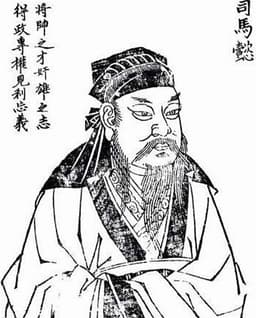
Sima Yi
General · Ancient
58.3Total
Basic Information
Born
-1128
179
Died
-1015
251
Era
Ancient
Ancient
Nationality
China
China
Occupation
General
General
Civilization
Eastern
Eastern
Score Comparison
Military (10%)
88.0
75.0
Political (20%)
68.0
59.2
Influence (20%)
71.0
58.3
Legacy (20%)
71.4
40.0
Leadership (15%)
48.8
66.0
Strategy (15%)
81.9
74.4
TOTAL
70.1
58.3
Jiang Ziya — Complete Timeline
1050 BC
Mentorship of King Wen and King WuPolitical Action◆ Major
Jiang Ziya served as a key advisor to King Wen and later King Wu of Zhou. He provided strategic counsel on military campaigns, governance, and the consolidation of Zhou power against the Shang.
AdvisorZhou kingsStrategic counsel
Impact: regionalconstructive
1046 BC
Battle of MuyeWar
Jiang Ziya served as chief strategist for King Wu of Zhou at the Battle of Muye. The Zhou forces defeated the Shang dynasty army, leading to the fall of King Zhou of Shang and the establishment of the Zhou dynasty.
BattleZhou conquestShang dynasty
Impact: regional
1045 BC
Enfeoffment as Duke of QiPolitical Action◆ Major
King Wu of Zhou enfeoffed Jiang Ziya as the Duke of Qi, granting him the territory of Qi in present-day Shandong. Jiang Ziya established the Qi state, which became a major power during the Spring and Autumn period.
EnfeoffmentQi stateZhou dynasty
Impact: regionalconstructive
1040 BC
Reforms in the state of QiReform◆ Major
Jiang Ziya implemented administrative and economic reforms in Qi, including land distribution and tax policies. He promoted agriculture, trade, and salt production, laying the foundation for Qi's prosperity.
Administrative reformEconomic policyQi state
Impact: regionalconstructive
Sima Yi — Complete Timeline
228 AD
Battle of JietingWar◆ Major
Sima Yi led the Cao Wei forces to defeat the Shu Han army at Jieting, forcing Zhuge Liang to retreat. This victory prevented Shu from capturing the Chang'an region and secured Wei's western border.
BattleCao WeiShu HanThree Kingdoms
Impact: regionalconstructive
231 AD
Defense of HefeiWar
Sima Yi successfully defended the city of Hefei against an Eastern Wu invasion led by Sun Quan. He repelled the Wu forces, maintaining Wei control over the Huai River region.
DefenseCao WeiEastern WuThree Kingdoms
Impact: regionalconstructive
249 AD
Coup at Gaoping TombsPolitical Action
Sima Yi staged a coup against the regent Cao Shuang at the Gaoping Tombs. He seized control of the Cao Wei government, executing Cao Shuang and his faction. This event gave the Sima clan effective control over Wei.
CoupCao WeiThree KingdomsPower Struggle
Impact: nationaldestructive
251 AD
Death and Posthumous HonorsOther◆ Major
Sima Yi died in 251 AD. His descendants later founded the Jin dynasty, fulfilling his ambition. He was posthumously honored as Emperor Xuan of Jin, though he never ruled as emperor himself.
DeathJin DynastyLegacy
Impact: national
Expert Analysis
Origins
Jiang Ziya, born around 1128 BC, was a legendary strategist and statesman from the late Shang dynasty. Little is known of his early life, but he is said to have been a hermit and fisherman before attracting the attention of King Wen of Zhou. His background was humble, but his knowledge of military and political strategy was extensive. Sima Yi, born in 179 AD, came from a prominent official family in the Cao Wei state during the Three Kingdoms period. His grandfather and father were both high-ranking officials. Sima Yi received a classical Confucian education and was known for his intelligence and ambition from a young age.
Rise to Power
Jiang Ziya rose to prominence as the chief advisor to King Wen and later King Wu of Zhou. He played a crucial role in planning the conquest of the Shang dynasty. His defining moment came at the Battle of Muye in 1046 BC, where his strategies led to the decisive defeat of the Shang forces. After the victory, he was enfeoffed as Duke of Qi, establishing one of the most powerful states of the Zhou dynasty. Sima Yi's rise was more gradual. He initially served as a minor official under Cao Cao, but his talents were recognized, and he became a key advisor to Cao Pi. His turning point came in 249 AD when he staged a coup at Gaoping Tombs against the regent Cao Shuang, seizing control of the Wei government. This event allowed him to become the de facto ruler of Wei, paving the way for his descendants to found the Jin dynasty.
Leadership & Governance
Jiang Ziya's leadership was characterized by pragmatic reforms. As Duke of Qi, he implemented land distribution policies that encouraged agriculture, promoted trade by reducing taxes, and established a legal code that balanced punishment with rewards. His governance focused on strengthening the state through economic development and military preparedness. Sima Yi, on the other hand, was a master of political maneuvering. He consolidated power by eliminating rivals, such as Cao Shuang, and placed loyalists in key positions. He also maintained stability through a combination of military deterrence and strategic alliances. While Jiang Ziya built a state from scratch, Sima Yi inherited an existing bureaucracy and reshaped it to serve his family's ambitions.
Triumph & Tragedy
Jiang Ziya's greatest triumph was the founding of the Zhou dynasty and the establishment of the Qi state, which lasted for centuries. His military treatise, the Six Secret Teachings, influenced generations of strategists. However, his reliance on the Zhou feudal system led to eventual fragmentation. Sima Yi's triumph was his successful coup and the foundation for the Jin dynasty, which unified China after the Three Kingdoms period. His defense of Hefei against Wu and victory at Jieting against Shu demonstrated his military capability. Yet, his methods—deception, betrayal, and ruthless elimination of rivals—left a legacy of political instability. The Jin dynasty, founded by his grandson, was short-lived and marked by internal strife.
Character & Destiny
Jiang Ziya was portrayed as a wise and patient figure, willing to wait for the right opportunity. His fishing analogy symbolizes his strategic patience. He was loyal to the Zhou kings and focused on long-term state-building. Sima Yi was cunning and ambitious, often compared to a fox. He was willing to feign illness and bide his time to achieve power. His character led to a destiny where his descendants became emperors, but his methods also sowed distrust and intrigue within the Jin court. Historically, Jiang Ziya is revered as a cultural hero, while Sima Yi is viewed with mixed respect for his intelligence but criticism for his moral flexibility.
Legacy
Jiang Ziya's legacy is monumental: he is considered the father of Chinese military strategy, with his Six Secret Teachings studied for millennia. The state of Qi became a cultural and economic powerhouse under his descendants. Sima Yi's legacy is more ambiguous. He is remembered as a brilliant strategist who paved the way for the Jin dynasty, but his coup and consolidation of power are seen as the beginning of a period of political instability. His descendants ruled for a short time, and the Jin dynasty's collapse led to centuries of division. In terms of scores, Jiang Ziya scores 70.1 overall, with high marks in military (88.0) and strategy (81.9), while Sima Yi scores 58.3, with military (75.0) and strategy (74.4). Jiang Ziya's influence and legacy scores (71.0 and 71.4) far exceed Sima Yi's (58.3 and 40.0).
Conclusion
Jiang Ziya had greater impact on Chinese history than Sima Yi. His military and political achievements laid the foundation for the Zhou dynasty, which lasted over 800 years, and his strategic principles became timeless. Sima Yi, while successful in seizing power, created a dynasty that lasted only 50 years and left a legacy of political machination. The data supports this: Jiang Ziya's total score of 70.1 compared to Sima Yi's 58.3 reflects his superior contributions. Jiang Ziya's work as a strategist and state builder fundamentally shaped Chinese civilization, whereas Sima Yi's influence was more transient and tied to his family's ambition.
Rankings
🥇
Jiang ZiyaLeader
Mil: 88.0Pol: 68.0Inf: 71.0
70.1
🥈
Sima Yi
Mil: 75.0Pol: 59.2Inf: 58.3
58.3
+11.8 behind
How This Comparison Works
Algorithm
Each figure is scored on 6 dimensions (0—100 scale) based on structured historical data: Military (10%), Political (20%), Influence (20%), Legacy (20%), Leadership (15%), Strategy (15%). The weighted total produces the final ranking.
Data Sources
Scores are computed from structured sub-indicators in the database. Scale factors adjust for era (Ancient ×0.85, Modern ×1.0) and civilization size (Eastern ×1.05, Other ×0.80) to account for differences in population and military scale.
Maximum 3 Figures
Comparisons are limited to 2—3 figures to ensure readability and statistical meaningfulness.
Error Margins
±5 points per dimension — Sub-scores are derived from historical records with inherent uncertainty. Two figures within 5 points on a dimension should be considered roughly equivalent in that area.
Total Score Accuracy
±3 points overall — The weighted combination of 6 dimensions produces a total score with approximately ±3 points of uncertainty. Differences of less than 3 points are not statistically significant— the figures are effectively tied.
Known Limitations
- Historical records are incomplete and uneven across civilizations
- Figures from oral-tradition societies may be underrepresented
- Occupation labels can misclassify multi-role figures
- Scores measure capability and impact, not moral character
- Quantitative scoring is a comparison tool, not absolute truth
Capability Radar
Military (10%) — Battles & Warfare
Battles
85
78
Win Rate
90
75
Expansion
85
72
Political (20%) — Governance & Reform
Reform
75
65
Diplomacy
80
82
Economy
70
70
Influence (20%) — Cultural & Global Reach
Cultural
95
65
Global
90
55
Legacy (20%) — Historical Impact
Historical
95
80
Longevity
95
75
Leadership (15%) — Power & Stability
Tenure
70
80
Stability
75
75
Strategy (15%) — Tactics & Innovation
Strategy
95
85
Tactics
95
88
Reform
80
60
Similar Comparisons
Comments & Discussion
No comments yet. Be the first to share your thoughts!