Loading...
Analysis will be generated on first visit.
Scores and timeline are available below. The page will refresh automatically when ready.
Jo Myong-rok vs Napoleon Bonaparte
Napoleon Bonaparte leads by 23.1 pts · 2 figures compared
…

Jo Myong-rok
General · Modern
59.3Total
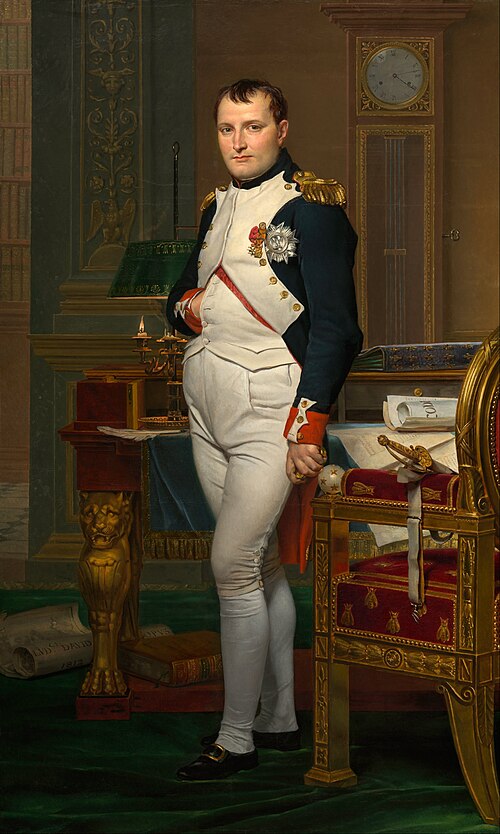
Napoleon Bonaparte
General · Modern
82.4Total
Basic Information
Born
1928
1769
Died
—
1821
Era
Modern
Modern
Nationality
North Korea
France
Occupation
General
General
Civilization
Eastern
Western
Score Comparison
Military (10%)
31.7
94.0
Political (20%)
54.4
75.0
Influence (20%)
70.9
82.0
Legacy (20%)
54.8
78.0
Leadership (15%)
76.2
80.0
Strategy (15%)
57.8
93.0
TOTAL
59.3
82.4
Rankings
🥇
Napoleon BonaparteLeader
Mil: 94.0Pol: 75.0Inf: 82.0
82.4
🥈
Jo Myong-rok
Mil: 31.7Pol: 54.4Inf: 70.9
59.3
+23.1 behind
How This Comparison Works
Algorithm
Each figure is scored on 6 dimensions (0—100 scale) based on structured historical data: Military (10%), Political (20%), Influence (20%), Legacy (20%), Leadership (15%), Strategy (15%). The weighted total produces the final ranking.
Data Sources
Scores are computed from structured sub-indicators in the database. Scale factors adjust for era (Ancient ×0.85, Modern ×1.0) and civilization size (Eastern ×1.05, Other ×0.80) to account for differences in population and military scale.
Maximum 3 Figures
Comparisons are limited to 2—3 figures to ensure readability and statistical meaningfulness.
Error Margins
±5 points per dimension — Sub-scores are derived from historical records with inherent uncertainty. Two figures within 5 points on a dimension should be considered roughly equivalent in that area.
Total Score Accuracy
±3 points overall — The weighted combination of 6 dimensions produces a total score with approximately ±3 points of uncertainty. Differences of less than 3 points are not statistically significant— the figures are effectively tied.
Known Limitations
- Historical records are incomplete and uneven across civilizations
- Figures from oral-tradition societies may be underrepresented
- Occupation labels can misclassify multi-role figures
- Scores measure capability and impact, not moral character
- Quantitative scoring is a comparison tool, not absolute truth
Capability Radar
Military (10%) — Battles & Warfare
Battles
5
95
Win Rate
5
90
Expansion
5
95
Political (20%) — Governance & Reform
Reform
10
95
Diplomacy
40
80
Economy
10
85
Influence (20%) — Cultural & Global Reach
Cultural
10
85
Global
20
90
Legacy (20%) — Historical Impact
Historical
15
95
Longevity
10
90
Leadership (15%) — Power & Stability
Tenure
30
85
Stability
20
70
Strategy (15%) — Tactics & Innovation
Strategy
10
95
Tactics
10
98
Reform
5
92
Analysis will be generated on first visit.
Scores and timeline are available below. The page will refresh automatically when ready.
Jo Myong-rok — Complete Timeline
1997 AD
Promoted to Vice MarshalPolitical Action◆ Major
Jo Myong-rok was promoted to the rank of Vice Marshal, a high military rank in North Korea. This promotion recognized his role in the military and political hierarchy under Kim Jong-il.
Military RankNorth KoreaPromotion
Impact: national
1998 AD
Appointed First Vice Chairman of the National Defense CommissionPolitical Action◆ Major
Jo Myong-rok was appointed First Vice Chairman of the National Defense Commission, the second-highest position in North Korea's top governing body. This made him a key figure in the Kim Jong-il regime.
Political AppointmentNorth KoreaNational Defense Commission
Impact: national
2000 AD
Visited the White HousePolitical Action
Jo Myong-rok, as First Vice Chairman of the National Defense Commission, visited the White House as a special envoy of Kim Jong-il. He met with U.S. President Bill Clinton, marking the highest-level North Korean visit to the United States at that time.
DiplomacyNorth KoreaUnited StatesKim Jong-il
Impact: globalconstructive
Similar Comparisons
Comments & Discussion
No comments yet. Be the first to share your thoughts!