Loading...
Analysis will be generated on first visit.
Scores and timeline are available below. The page will refresh automatically when ready.
Joaquin Balaguer vs Napoleon Bonaparte
Napoleon Bonaparte leads by 12.7 pts · 2 figures compared
…

Joaquin Balaguer
Politician · Modern
69.7Total
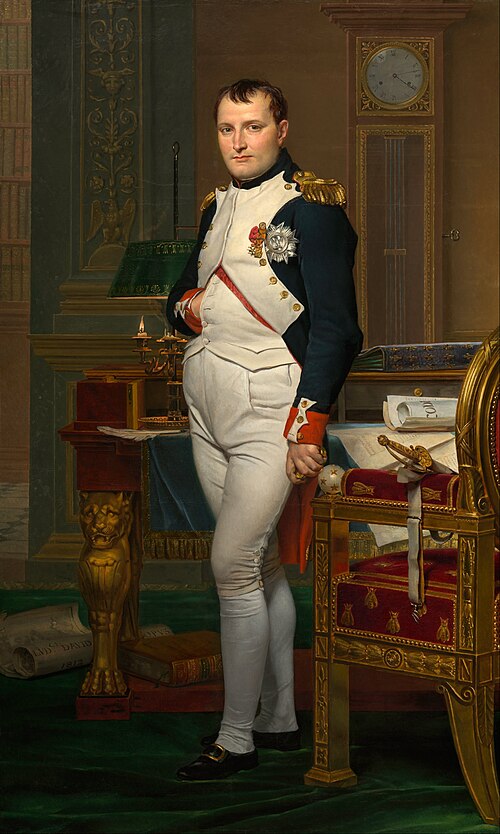
Napoleon Bonaparte
General · Modern
82.4Total
Basic Information
Born
1906
1769
Died
2002
1821
Era
Modern
Modern
Nationality
Dominican Republic
France
Occupation
Politician
General
Civilization
Western
Western
Score Comparison
Military (10%)
24.7
94.0
Political (20%)
85.8
75.0
Influence (20%)
74.6
82.0
Legacy (20%)
70.0
78.0
Leadership (15%)
82.4
80.0
Strategy (15%)
58.7
93.0
TOTAL
69.7
82.4
Rankings
🥇
Napoleon BonaparteLeader
Mil: 94.0Pol: 75.0Inf: 82.0
82.4
🥈
Joaquin Balaguer
Mil: 24.7Pol: 85.8Inf: 74.6
69.7
+12.7 behind
How This Comparison Works
Algorithm
Each figure is scored on 6 dimensions (0—100 scale) based on structured historical data: Military (10%), Political (20%), Influence (20%), Legacy (20%), Leadership (15%), Strategy (15%). The weighted total produces the final ranking.
Data Sources
Scores are computed from structured sub-indicators in the database. Scale factors adjust for era (Ancient ×0.85, Modern ×1.0) and civilization size (Eastern ×1.05, Other ×0.80) to account for differences in population and military scale.
Maximum 3 Figures
Comparisons are limited to 2—3 figures to ensure readability and statistical meaningfulness.
Error Margins
±5 points per dimension — Sub-scores are derived from historical records with inherent uncertainty. Two figures within 5 points on a dimension should be considered roughly equivalent in that area.
Total Score Accuracy
±3 points overall — The weighted combination of 6 dimensions produces a total score with approximately ±3 points of uncertainty. Differences of less than 3 points are not statistically significant— the figures are effectively tied.
Known Limitations
- Historical records are incomplete and uneven across civilizations
- Figures from oral-tradition societies may be underrepresented
- Occupation labels can misclassify multi-role figures
- Scores measure capability and impact, not moral character
- Quantitative scoring is a comparison tool, not absolute truth
Capability Radar
Military (10%) — Battles & Warfare
Battles
5
95
Win Rate
5
90
Expansion
5
95
Political (20%) — Governance & Reform
Reform
40
95
Diplomacy
60
80
Economy
45
85
Influence (20%) — Cultural & Global Reach
Cultural
40
85
Global
30
90
Legacy (20%) — Historical Impact
Historical
55
95
Longevity
50
90
Leadership (15%) — Power & Stability
Tenure
85
85
Stability
30
70
Strategy (15%) — Tactics & Innovation
Strategy
10
95
Tactics
10
98
Reform
15
92
Analysis will be generated on first visit.
Scores and timeline are available below. The page will refresh automatically when ready.
Joaquin Balaguer — Complete Timeline
1960 AD
First PresidencyPolitical Action◆ Major
Joaquín Balaguer was elected President of the Dominican Republic in 1960, succeeding the assassinated Rafael Trujillo. He was Trujillo's former puppet but managed to distance himself from the regime. His first term was marked by political instability and US pressure.
ElectionPost-TrujilloTransition
Impact: national
1966 AD
1966 Election and Return to PowerPolitical Action◆ Major
Balaguer won the 1966 presidential election, defeating Juan Bosch. His victory was supported by the US and the military. He took office after the 1965 civil war and US intervention, and his rule marked the beginning of a 12-year authoritarian period known as the '12 Years'.
ElectionAuthoritarianismUS Support
Impact: national
The '12 Years' Authoritarian RulePolitical Action◆ Major
Balaguer ruled the Dominican Republic from 1966 to 1978 with an iron fist. His regime suppressed political opposition, controlled the press, and used paramilitary groups to intimidate dissent. However, it also oversaw economic growth and infrastructure development.
AuthoritarianismRepressionEconomic Growth
Impact: nationaldestructive
1978 AD
Electoral Defeat and TransitionPolitical Action◆ Major
Balaguer lost the 1978 presidential election to Antonio Guzm
ElectionTransitionDemocracy
Impact: nationalconstructive
1986 AD
Return to Power in 1986Political Action◆ Major
Balaguer returned to the presidency in 1986, winning the election at age 80. He served three more terms (1986-1996), continuing his authoritarian style but also implementing neoliberal reforms. His later years were marked by allegations of electoral fraud.
ReturnElectionNeoliberalism
Impact: national
1994 AD
1994 Election CrisisPolitical Action◆ Major
The 1994 presidential election was marred by widespread fraud, with Balaguer declared winner over Jos
Election FraudCrisisReform
Impact: nationaldestructive
Similar Comparisons
Comments & Discussion
No comments yet. Be the first to share your thoughts!