Loading...
This comparison has not been analyzed yet.
One-time AI generation (~1 minute). Scores and timeline are already available below.
Joe Modise vs Tokugawa Hidetada
Tokugawa Hidetada leads by 2.3 pts · 2 figures compared
…
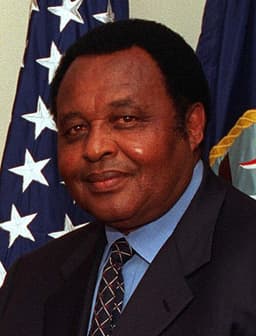
Joe Modise
General · Modern
52.4Total
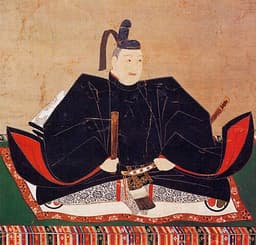
Tokugawa Hidetada
General · Modern
54.7Total
Basic Information
Born
1929
1579
Died
—
1632
Era
Modern
Modern
Nationality
South Africa
Japan
Occupation
General
General
Civilization
Other
Eastern
Score Comparison
Military (10%)
47.5
10.0
Political (20%)
68.0
60.0
Influence (20%)
51.8
56.7
Legacy (20%)
43.3
58.0
Leadership (15%)
68.0
78.0
Strategy (15%)
35.0
43.3
TOTAL
52.4
54.7
Joe Modise — Complete Timeline
1961 AD
Joined Umkhonto we Sizwe (MK)Political Action◆ Major
Modise joined the armed wing of the African National Congress, Umkhonto we Sizwe, after the ANC was banned. He underwent military training abroad and became a key figure in the armed struggle against apartheid.
MKArmed StruggleANC
Impact: national
1965 AD
Became MK CommanderPolitical Action◆ Major
Modise rose to become the commander of Umkhonto we Sizwe, the military wing of the ANC. He oversaw guerrilla operations, including sabotage campaigns and infiltration of fighters into South Africa, from bases in neighboring countries.
MKCommanderGuerrilla Warfare
Impact: national
1994 AD
Oversaw Military IntegrationReform◆ Major
As Defence Minister, Modise oversaw the complex process of integrating MK, the apartheid-era South African Defence Force, and the homelands' armies into a unified force. The process faced challenges but was largely successful.
Military IntegrationReformPost-Apartheid
Impact: nationalconstructive
Appointed South Africa's First Black Defence MinisterPolitical Action
Modise was appointed Minister of Defence in Nelson Mandela's first post-apartheid government. He was responsible for integrating the former apartheid military, MK, and other armed forces into a single South African National Defence Force.
Defence MinisterIntegrationPost-Apartheid
Impact: nationalconstructive
Tokugawa Hidetada — Complete Timeline
1614 AD
Siege of Osaka (Winter Campaign)War◆ Major
Tokugawa Hidetada, as shogun, led the Tokugawa forces in the winter campaign of the Siege of Osaka against Toyotomi Hideyori. The siege ended with a negotiated peace, but Hidetada's forces filled the castle's outer moats, weakening its defenses. This was a key step in eliminating the Toyotomi threat.
SiegeOsakaToyotomi
Impact: national
1615 AD
Siege of Osaka (Summer Campaign)War
Tokugawa Hidetada commanded the Tokugawa army in the summer campaign of the Siege of Osaka. The Tokugawa forces decisively defeated the Toyotomi army, leading to the destruction of Osaka Castle and the death of Toyotomi Hideyori. This ended the last major opposition to Tokugawa rule.
SiegeOsakaTokugawa Victory
Impact: national
Promulgation of the Buke Shohatto (Laws for the Military Houses)Reform◆ Major
Tokugawa Hidetada, with the retired shogun Ieyasu, issued the Buke Shohatto, a code of conduct for daimyo. It restricted castle construction, marriage alliances, and military power, and required daimyo to reside in Edo periodically (sankin kotai). This law consolidated Tokugawa control over the feudal lords.
Legal CodeDaimyo ControlEdo Period
Impact: nationalconstructive
1616 AD
Consolidation of the Bakufu SystemPolitical Action◆ Major
After Tokugawa Ieyasu's death in 1616, Tokugawa Hidetada assumed full authority as shogun. He strengthened the bakufu's administrative structure, appointed loyal fudai daimyo to key positions, and continued policies to centralize power. His reign solidified the Tokugawa shogunate's foundation for over 250 years.
GovernanceCentralizationEdo Period
Impact: nationalconstructive
This comparison has not been analyzed yet.
One-time AI generation (~1 minute). Scores and timeline are already available below.
Rankings
🥇
Tokugawa HidetadaLeader
Mil: 10.0Pol: 60.0Inf: 56.7
54.7
🥈
Joe Modise
Mil: 47.5Pol: 68.0Inf: 51.8
52.4
+2.3 behind
How This Comparison Works
Algorithm
Each figure is scored on 6 dimensions (0—100 scale) based on structured historical data: Military (10%), Political (20%), Influence (20%), Legacy (20%), Leadership (15%), Strategy (15%). The weighted total produces the final ranking.
Data Sources
Scores are computed from structured sub-indicators in the database. Scale factors adjust for era (Ancient ×0.85, Modern ×1.0) and civilization size (Eastern ×1.05, Other ×0.80) to account for differences in population and military scale.
Maximum 3 Figures
Comparisons are limited to 2—3 figures to ensure readability and statistical meaningfulness.
Error Margins
±5 points per dimension — Sub-scores are derived from historical records with inherent uncertainty. Two figures within 5 points on a dimension should be considered roughly equivalent in that area.
Total Score Accuracy
±3 points overall — The weighted combination of 6 dimensions produces a total score with approximately ±3 points of uncertainty. Differences of less than 3 points are not statistically significant— the figures are effectively tied.
Known Limitations
- Historical records are incomplete and uneven across civilizations
- Figures from oral-tradition societies may be underrepresented
- Occupation labels can misclassify multi-role figures
- Scores measure capability and impact, not moral character
- Quantitative scoring is a comparison tool, not absolute truth
Capability Radar
Military (10%) — Battles & Warfare
Battles
20
40
Win Rate
25
45
Expansion
15
25
Political (20%) — Governance & Reform
Reform
50
65
Diplomacy
45
60
Economy
40
55
Influence (20%) — Cultural & Global Reach
Cultural
20
50
Global
20
45
Legacy (20%) — Historical Impact
Historical
30
60
Longevity
20
55
Leadership (15%) — Power & Stability
Tenure
55
70
Stability
50
75
Strategy (15%) — Tactics & Innovation
Strategy
30
40
Tactics
30
35
Reform
40
30
Similar Comparisons
Comments & Discussion
No comments yet. Be the first to share your thoughts!