Loading...
John A. Macdonald vs Khawaja Nazimuddin
John A. Macdonald leads by 13.6 pts · 2 figures compared
…

John A. Macdonald
Politician · Modern
63.7Total
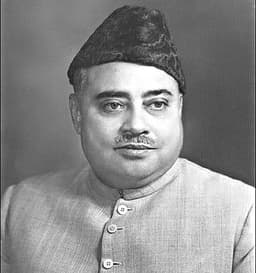
Khawaja Nazimuddin
Politician · Modern
50.1Total
Basic Information
Born
1815
1894
Died
1891
1964
Era
Modern
Modern
Nationality
Canada
Pakistan
Occupation
Politician
Politician
Civilization
Western
Indian
Score Comparison
Military (10%)
45.0
46.3
Political (20%)
62.7
43.7
Influence (20%)
82.0
52.5
Legacy (20%)
55.0
41.7
Leadership (15%)
78.0
62.2
Strategy (15%)
38.6
60.0
TOTAL
63.7
50.1
John A. Macdonald — Complete Timeline
1864 AD
Attended Charlottetown ConferencePolitical Action◆ Major
Macdonald attended the Charlottetown Conference as a leading figure from the Province of Canada. He helped persuade Maritime delegates to support a federal union of British North American colonies, laying the groundwork for Confederation.
ConfederationNegotiationFederalism
Impact: nationalconstructive
1867 AD
Became first Prime Minister of CanadaPolitical Action
Macdonald was appointed the first Prime Minister of the Dominion of Canada following Confederation on July 1, 1867. He led a Conservative government and oversaw the expansion of the new nation from four provinces to a transcontinental dominion.
Government FormationConfederationLeadership
Impact: nationalconstructive
1879 AD
Implemented the National PolicyReform◆ Major
Macdonald introduced the National Policy, a system of protective tariffs on manufactured goods to shield Canadian industry from American competition. The policy also promoted western settlement through the railway and immigration.
Economic PolicyTariffsProtectionism
Impact: nationalconstructive
1880 AD
Approved construction of the Canadian Pacific RailwayPolitical Action◆ Major
Macdonald's government approved the contract to build the Canadian Pacific Railway, a transcontinental railway linking Eastern Canada to British Columbia. The project was completed in 1885, fulfilling a key condition for British Columbia's entry into Confederation.
InfrastructureExpansionRailway
Impact: nationalconstructive
1885 AD
Suppressed the North-West RebellionWar◆ Major
Macdonald's government sent troops to suppress the North-West Rebellion led by Louis Riel in present-day Saskatchewan. The rebellion was crushed, and Riel was executed for treason, a decision that deepened French-English tensions in Canada.
RebellionMilitaryRiel
Impact: nationaldestructive
Khawaja Nazimuddin — Complete Timeline
1948 AD
Appointed Governor-General of PakistanPolitical Action◆ Major
Khawaja Nazimuddin succeeded Muhammad Ali Jinnah as Governor-General after Jinnah's death. He served as the ceremonial head of state during a critical period of consolidation. His tenure saw the early challenges of nation-building and the Kashmir conflict.
Governor-GeneralSuccession
Impact: national
1951 AD
Became Prime Minister of PakistanPolitical Action◆ Major
After the assassination of Liaquat Ali Khan, Nazimuddin became Prime Minister. He faced economic difficulties and political unrest. His government struggled to maintain stability and was dismissed in 1953 by Governor-General Ghulam Muhammad.
Prime MinisterPolitical Instability
Impact: national
1953 AD
Dismissed by Governor-General Ghulam MuhammadPolitical Action◆ Major
Governor-General Ghulam Muhammad dismissed Nazimuddin's government, citing its failure to maintain law and order during the anti-Ahmadiyya riots. The dismissal was controversial and set a precedent for executive overreach. It highlighted the fragility of parliamentary democracy in Pakistan.
DismissalConstitutional Crisis
Impact: nationaldestructive
Expert Analysis
Origins
John A. Macdonald was born on January 11, 1815, in Glasgow, Scotland, and emigrated to Upper Canada as a child. His family settled in Kingston, where he studied law and was called to the bar in 1836. Macdonald's early legal career involved defending accused criminals, honing his skills in negotiation and debate. In contrast, Khawaja Nazimuddin was born on July 19, 1894, in Dhaka, Bengal (now Bangladesh), into a wealthy Muslim landowning family. He studied at Aligarh Muslim University and later at Cambridge University, where he earned a degree in history. Nazimuddin's background in the British colonial administration shaped his moderate political stance.
Rise to Power
Macdonald entered politics in 1843 as a city councillor in Kingston and was elected to the Legislative Assembly of the Province of Canada in 1844. He became a leading figure in the Conservative Party and served as Joint Premier of the Province of Canada from 1856 to 1862. His pivotal role in the Charlottetown Conference (September 1864) and the Quebec Conference (October 1864) led to Confederation in 1867, making him the first Prime Minister of Canada. Nazimuddin rose through the Muslim League ranks, serving as a minister in Bengal's government. After Pakistan's independence in 1947, he became the Chief Minister of East Bengal. Following Muhammad Ali Jinnah's death in September 1948, Nazimuddin was appointed Governor-General, a largely ceremonial role. He succeeded Liaquat Ali Khan as Prime Minister after the latter's assassination in October 1951.
Leadership & Governance
Macdonald's governance was characterized by nation-building through the National Policy (1878) – a system of protective tariffs to foster Canadian industry – and the construction of the Canadian Pacific Railway (completed 1885), which unified the country from coast to coast. He also suppressed the North-West Rebellion (1885) led by Louis Riel, asserting federal authority over the prairies. Macdonald scored 78.0 in leadership, reflecting his ability to manage a fragile confederation. Nazimuddin's tenure as Prime Minister (1951–1953) was marked by economic stagnation and political unrest. His government struggled with food shortages and the anti-Ahmadiyya riots in Punjab in 1953. His leadership score of 62.2 indicates moderate competence but inability to control crises. Unlike Macdonald's decisive actions, Nazimuddin's response to the riots was hesitant, leading to his dismissal by Governor-General Ghulam Muhammad on April 17, 1953, under Section 92-A of the Government of India Act.
Triumph & Tragedy
Macdonald's greatest triumph was the creation of Canada as a self-governing dominion, successfully negotiating the British North America Act (1867). The completion of the Canadian Pacific Railway in 1885 ensured British Columbia's entry into Confederation and symbolized national unity. However, his legacy is marred by the Chinese Head Tax (1885) and the residential school system for Indigenous children, reflecting racist policies that caused long-term harm. Nazimuddin's triumph was his role in the early consolidation of Pakistan as Governor-General, providing stability after Jinnah's death. He also presided over the first constituent assembly. His tragedy was his failure to address economic woes and religious violence, culminating in his dismissal – the first use of constitutional powers to remove a prime minister in Pakistan, setting a precedent for military interventions.
Character & Destiny
Macdonald was a pragmatic and charismatic leader, known for his ability to forge compromises among disparate colonial interests. His political maneuvering earned him the nickname 'Old Tomorrow' for his skill in delaying decisions. His personal life included battles with alcoholism, but he maintained public trust. Nazimuddin was a reserved and religiously devout man, often seen as indecisive. He lacked the political acumen of his predecessors, Jinnah and Liaquat Ali Khan. His reliance on civil servants and inability to assert authority over the military and governor-general led to his downfall. As historian Ayesha Jalal notes, Nazimuddin was 'a man of principle but not of power'.
Legacy
Macdonald's legacy is foundational to Canada. He is revered as a Father of Confederation, with numerous monuments and institutions named after him. The National Policy and the CPR shaped Canada's economic geography. However, his policies toward Indigenous peoples and Chinese immigrants are increasingly criticized. Nazimuddin's legacy is more ambiguous. He is remembered as a transitional figure in Pakistan's turbulent early years. His dismissal highlighted the fragility of civilian rule, and his tenure is often overshadowed by the more dominant figures of Jinnah and Ayub Khan. In Pakistan's historical narrative, Nazimuddin scores 41.7 in legacy, reflecting his limited long-term impact.
Conclusion
John A. Macdonald had a significantly greater impact than Khawaja Nazimuddin. Macdonald's political score of 62.7 and influence score of 82.0 dwarf Nazimuddin's 43.7 and 52.5, respectively. Macdonald's nation-building efforts created a stable, prosperous country that endures today. Nazimuddin, by contrast, was a caretaker who failed to prevent the constitutional crisis that weakened Pakistan's democracy. While both faced challenges, Macdonald's proactive policies built a nation, whereas Nazimuddin's reactive governance allowed instability to fester. The score gap of 13.6 points reflects this reality: Macdonald's total score of 63.7 versus Nazimuddin's 50.1. Therefore, John A. Macdonald stands as the more consequential historical figure.
Rankings
🥇
John A. MacdonaldLeader
Mil: 45.0Pol: 62.7Inf: 82.0
63.7
🥈
Khawaja Nazimuddin
Mil: 46.3Pol: 43.7Inf: 52.5
50.1
+13.6 behind
How This Comparison Works
Algorithm
Each figure is scored on 6 dimensions (0—100 scale) based on structured historical data: Military (10%), Political (20%), Influence (20%), Legacy (20%), Leadership (15%), Strategy (15%). The weighted total produces the final ranking.
Data Sources
Scores are computed from structured sub-indicators in the database. Scale factors adjust for era (Ancient ×0.85, Modern ×1.0) and civilization size (Eastern ×1.05, Other ×0.80) to account for differences in population and military scale.
Maximum 3 Figures
Comparisons are limited to 2—3 figures to ensure readability and statistical meaningfulness.
Error Margins
±5 points per dimension — Sub-scores are derived from historical records with inherent uncertainty. Two figures within 5 points on a dimension should be considered roughly equivalent in that area.
Total Score Accuracy
±3 points overall — The weighted combination of 6 dimensions produces a total score with approximately ±3 points of uncertainty. Differences of less than 3 points are not statistically significant— the figures are effectively tied.
Known Limitations
- Historical records are incomplete and uneven across civilizations
- Figures from oral-tradition societies may be underrepresented
- Occupation labels can misclassify multi-role figures
- Scores measure capability and impact, not moral character
- Quantitative scoring is a comparison tool, not absolute truth
Capability Radar
Military (10%) — Battles & Warfare
Battles
0
42
Win Rate
0
46
Expansion
15
50
Political (20%) — Governance & Reform
Reform
75
30
Diplomacy
80
35
Economy
65
25
Influence (20%) — Cultural & Global Reach
Cultural
55
20
Global
55
25
Legacy (20%) — Historical Impact
Historical
65
30
Longevity
60
20
Leadership (15%) — Power & Stability
Tenure
70
40
Stability
70
20
Strategy (15%) — Tactics & Innovation
Strategy
0
53
Tactics
0
55
Reform
5
59
Similar Comparisons
Comments & Discussion
No comments yet. Be the first to share your thoughts!