Loading...
John A. Macdonald vs Thaksin Shinawatra
John A. Macdonald leads by 13.0 pts · 2 figures compared
…

John A. Macdonald
Politician · Modern
63.7Total
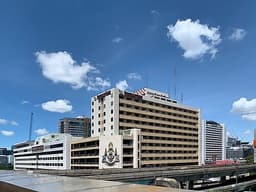
Thaksin Shinawatra
Politician · Modern
50.7Total
Basic Information
Born
1815
1949
Died
1891
—
Era
Modern
Modern
Nationality
Canada
Thailand
Occupation
Politician
Politician
Civilization
Western
Eastern
Score Comparison
Military (10%)
45.0
16.0
Political (20%)
62.7
55.0
Influence (20%)
82.0
60.0
Legacy (20%)
55.0
47.5
Leadership (15%)
78.0
74.0
Strategy (15%)
38.6
29.0
TOTAL
63.7
50.7
John A. Macdonald — Complete Timeline
1864 AD
Attended Charlottetown ConferencePolitical Action◆ Major
Macdonald attended the Charlottetown Conference as a leading figure from the Province of Canada. He helped persuade Maritime delegates to support a federal union of British North American colonies, laying the groundwork for Confederation.
ConfederationNegotiationFederalism
Impact: nationalconstructive
1867 AD
Became first Prime Minister of CanadaPolitical Action
Macdonald was appointed the first Prime Minister of the Dominion of Canada following Confederation on July 1, 1867. He led a Conservative government and oversaw the expansion of the new nation from four provinces to a transcontinental dominion.
Government FormationConfederationLeadership
Impact: nationalconstructive
1879 AD
Implemented the National PolicyReform◆ Major
Macdonald introduced the National Policy, a system of protective tariffs on manufactured goods to shield Canadian industry from American competition. The policy also promoted western settlement through the railway and immigration.
Economic PolicyTariffsProtectionism
Impact: nationalconstructive
1880 AD
Approved construction of the Canadian Pacific RailwayPolitical Action◆ Major
Macdonald's government approved the contract to build the Canadian Pacific Railway, a transcontinental railway linking Eastern Canada to British Columbia. The project was completed in 1885, fulfilling a key condition for British Columbia's entry into Confederation.
InfrastructureExpansionRailway
Impact: nationalconstructive
1885 AD
Suppressed the North-West RebellionWar◆ Major
Macdonald's government sent troops to suppress the North-West Rebellion led by Louis Riel in present-day Saskatchewan. The rebellion was crushed, and Riel was executed for treason, a decision that deepened French-English tensions in Canada.
RebellionMilitaryRiel
Impact: nationaldestructive
Thaksin Shinawatra — Complete Timeline
2001 AD
Election as Prime MinisterPolitical Action◆ Major
Thaksin Shinawatra's Thai Rak Thai party won a landslide victory in the 2001 general election, making him Prime Minister. His populist policies, including universal healthcare and debt relief for farmers, gained widespread support.
ElectionPopulismThailand
Impact: nationalconstructive
2003 AD
War on Drugs campaignPolitical Action◆ Major
Thaksin launched a highly controversial anti-drug campaign that resulted in over 2,500 extrajudicial killings. The campaign was criticized by human rights groups but was popular among the public for reducing drug crime.
Human RightsDrug PolicyThailand
Impact: nationaldestructive
2006 AD
Overthrow in military coupPolitical Action
While attending the UN General Assembly in New York, Thaksin was overthrown by a military coup led by General Sonthi Boonyaratglin. The coup was justified by allegations of corruption, abuse of power, and disrespect to the monarchy.
CoupExileThailand
Impact: nationaldestructive
2008 AD
Conviction for abuse of powerPolitical Action◆ Major
Thaksin was convicted in absentia by the Thai Supreme Court for abuse of power in a land purchase case involving his wife. He was sentenced to two years in prison, remaining in self-exile to avoid serving the sentence.
CorruptionLegalThailand
Impact: nationaldestructive
Expert Analysis
Origins
John A. Macdonald was born on January 11, 1815, in Glasgow, Scotland, and emigrated to Upper Canada as a child. His father, Hugh Macdonald, was a merchant, and his mother, Helen Shaw, instilled ambition. Macdonald studied law and opened a practice in Kingston by age 20. His early career involved defending accused criminals, honing his skills in negotiation and persuasion.
Thaksin Shinawatra was born on July 26, 1949, in Chiang Mai, Thailand, into a wealthy family of Chinese descent. His father was a businessman and politician; his mother came from a prominent local family. Thaksin earned a degree in criminal justice from the Thai Police Cadet Academy and later a master's in criminal justice from Eastern Kentucky University and a PhD in public administration from Sam Houston State University. He served in the Thai police, rising to lieutenant colonel before entering business.
Rise to Power
Macdonald entered politics in 1844 as a Conservative member of the Legislative Assembly of the Province of Canada. He became a key figure in the Great Coalition of 1864, which aimed to unite British North American colonies. At the Charlottetown and Quebec Conferences in 1864, Macdonald led the push for Confederation, culminating in the British North America Act of 1867. He became the first Prime Minister of Canada on July 1, 1867, with a political score of 62.7.
Thaksin entered politics in the 1990s, serving as a minister in various governments. In 1998, he founded the Thai Rak Thai party, which won a landslide victory in the 2001 general election on a populist platform. His policies included universal healthcare, debt moratoriums for farmers, and microcredit schemes. Thaksin's political score is 55.0, lower than Macdonald's, reflecting his controversial methods and eventual downfall.
Leadership & Governance
Macdonald's leadership style was pragmatic and coalition-building. He implemented the National Policy (1879), a system of protective tariffs to shield Canadian industry from American competition. He approved the Canadian Pacific Railway (1881), a transcontinental project that faced financial scandal but was completed in 1885. Macdonald also suppressed the North-West Rebellion (1885) led by Louis Riel, demonstrating his willingness to use force. His leadership score is 78.0.
Thaksin's governance was populist and centralizing. He introduced universal healthcare (the 30-baht scheme), debt relief for farmers, and a war on drugs that resulted in over 2,500 extrajudicial killings in 2003. His leadership score is 74.0, slightly lower than Macdonald's. Thaksin's approach alienated the royalist military and urban elites, leading to his overthrow.
Triumph & Tragedy
Macdonald's greatest triumph was Confederation, creating a transcontinental nation. He also successfully integrated British Columbia and Prince Edward Island into Canada. His failures include the Pacific Scandal (1873), where his government accepted bribes from railway contractors, leading to his resignation. He also mishandled the execution of Louis Riel, which inflamed French-English tensions.
Thaksin's triumph was his electoral success and populist policies that improved rural livelihoods. He also expanded Thailand's telecom sector. His tragedy was the war on drugs, which caused thousands of deaths, and his corruption conviction (2008) for abuse of power. His legacy score is 47.5, lower than Macdonald's 55.0.
Character & Destiny
Macdonald was known for his charm, wit, and heavy drinking. He was a skilled mediator but also manipulative. His character shaped Canada's federal system, balancing central and provincial powers. His destiny was to be remembered as a nation-builder, despite scandals.
Thaksin was charismatic and authoritarian. He used his wealth to influence politics and media. His character led to a polarizing rule: adored by the poor, despised by elites. His destiny was exile and a political movement (Red Shirts) that continued after him.
Legacy
Macdonald's legacy is the Canadian state itself. The National Policy and railway fostered national unity. His scores: military 45.0, political 62.7, influence 82.0, legacy 55.0, leadership 78.0, strategy 38.6, total 63.7. He is celebrated but also criticized for his treatment of Indigenous peoples.
Thaksin's legacy is the populist movement in Thailand. His policies influenced subsequent governments. His scores: military 16.0, political 55.0, influence 60.0, legacy 47.5, leadership 74.0, strategy 29.0, total 50.7. He remains a divisive figure, with his party returning to power in various forms.
Conclusion
John A. Macdonald had a greater impact, as reflected in his total score of 63.7 versus Thaksin's 50.7. Macdonald built a lasting nation, while Thaksin's legacy is marred by corruption and instability. Macdonald's influence score of 82.0 dwarfs Thaksin's 60.0, demonstrating his enduring effect on Canadian identity. Thaksin's leadership score of 74.0 is close to Macdonald's 78.0, but his strategy score of 29.0 is far lower, indicating poor long-term planning. Macdonald's nation-building project endures; Thaksin's populist experiment collapsed under its own weight.
Rankings
🥇
John A. MacdonaldLeader
Mil: 45.0Pol: 62.7Inf: 82.0
63.7
🥈
Thaksin Shinawatra
Mil: 16.0Pol: 55.0Inf: 60.0
50.7
+13.0 behind
How This Comparison Works
Algorithm
Each figure is scored on 6 dimensions (0—100 scale) based on structured historical data: Military (10%), Political (20%), Influence (20%), Legacy (20%), Leadership (15%), Strategy (15%). The weighted total produces the final ranking.
Data Sources
Scores are computed from structured sub-indicators in the database. Scale factors adjust for era (Ancient ×0.85, Modern ×1.0) and civilization size (Eastern ×1.05, Other ×0.80) to account for differences in population and military scale.
Maximum 3 Figures
Comparisons are limited to 2—3 figures to ensure readability and statistical meaningfulness.
Error Margins
±5 points per dimension — Sub-scores are derived from historical records with inherent uncertainty. Two figures within 5 points on a dimension should be considered roughly equivalent in that area.
Total Score Accuracy
±3 points overall — The weighted combination of 6 dimensions produces a total score with approximately ±3 points of uncertainty. Differences of less than 3 points are not statistically significant— the figures are effectively tied.
Known Limitations
- Historical records are incomplete and uneven across civilizations
- Figures from oral-tradition societies may be underrepresented
- Occupation labels can misclassify multi-role figures
- Scores measure capability and impact, not moral character
- Quantitative scoring is a comparison tool, not absolute truth
Capability Radar
Military (10%) — Battles & Warfare
Battles
0
12
Win Rate
0
17
Expansion
15
21
Political (20%) — Governance & Reform
Reform
75
70
Diplomacy
80
55
Economy
65
75
Influence (20%) — Cultural & Global Reach
Cultural
55
50
Global
55
50
Legacy (20%) — Historical Impact
Historical
65
55
Longevity
60
40
Leadership (15%) — Power & Stability
Tenure
70
60
Stability
70
30
Strategy (15%) — Tactics & Innovation
Strategy
0
23
Tactics
0
29
Reform
5
32
Similar Comparisons
Comments & Discussion
No comments yet. Be the first to share your thoughts!