Loading...
John Atta Mills vs Mario Draghi
Mario Draghi leads by 11.6 pts · 2 figures compared
…
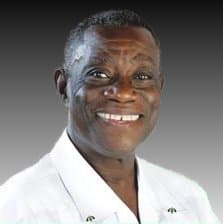
John Atta Mills
Politician · Modern
49.3Total

Mario Draghi
Politician · Modern
60.9Total
Basic Information
Born
1944
1947
Died
—
—
Era
Modern
Modern
Nationality
Ghana
Italy
Occupation
Politician
Politician
Civilization
Other
Western
Score Comparison
Military (10%)
50.0
48.9
Political (20%)
68.0
82.0
Influence (20%)
53.3
58.3
Legacy (20%)
43.3
52.0
Leadership (15%)
40.0
78.0
Strategy (15%)
39.4
44.3
TOTAL
49.3
60.9
John Atta Mills — Complete Timeline
2008 AD
Elected President of GhanaPolitical Action◆ Major
John Atta Mills won the 2008 presidential election as the candidate of the National Democratic Congress (NDC), defeating Nana Akufo-Addo of the NPP. The election was closely contested and required a runoff.
ElectionDemocracyGhana
Impact: nationalconstructive
2009 AD
Discovery of Oil and GasOther◆ Major
Under Mills' presidency, Ghana began commercial oil production from the Jubilee field. The government established the Petroleum Revenue Management Act to manage oil revenues transparently.
Oil ProductionEconomyGhana
Impact: national
2012 AD
Died in OfficeOther◆ Major
President John Atta Mills died suddenly at the 37 Military Hospital in Accra on July 24, 2012. His death was attributed to a short illness. Vice President John Dramani Mahama was sworn in as his successor.
DeathGhanaSuccession
Impact: nationaltragic
Mario Draghi — Complete Timeline
2006 AD
Appointed Governor of the Bank of ItalyPolitical Action◆ Major
Mario Draghi became Governor of the Bank of Italy, overseeing the country's central bank during the global financial crisis. He worked to stabilize Italian banks and implemented reforms to strengthen financial supervision.
Bank of ItalyFinancial CrisisCentral Banking
Impact: nationalconstructive
2011 AD
Appointed President of the European Central BankPolitical Action
Draghi became President of the ECB during the Eurozone debt crisis. He succeeded Jean-Claude Trichet and immediately faced pressure to address rising bond yields in peripheral eurozone countries.
ECBEurozone CrisisMonetary Policy
Impact: globalconstructive
2012 AD
Delivered 'Whatever It Takes' SpeechPolitical Action
Draghi stated the ECB would do 'whatever it takes' to preserve the euro, a pivotal moment in the Eurozone debt crisis. The speech calmed financial markets and led to the creation of the Outright Monetary Transactions (OMT) program.
Eurozone CrisisECBMonetary Policy
Impact: globalconstructive
2015 AD
Launched Quantitative Easing ProgramPolitical Action◆ Major
Draghi initiated a
Quantitative EasingECBMonetary Policy
Impact: regionalconstructive
2021 AD
Appointed Prime Minister of ItalyPolitical Action◆ Major
Draghi became Prime Minister of Italy, leading a national unity government during the COVID-19 pandemic. He oversaw Italy's recovery plan funded by EU NextGenerationEU funds and implemented reforms to access the money.
Italian PoliticsCOVID-19Recovery Plan
Impact: nationalconstructive
2022 AD
Resigned as Prime Minister After Government CollapsePolitical Action◆ Major
Draghi resigned after the Five Star Movement withdrew support from his coalition government. His resignation triggered early elections, ending his tenure as prime minister after 18 months in office.
Italian PoliticsGovernment CollapseResignation
Impact: nationaltragic
Expert Analysis
Origins
John Atta Mills was born on July 21, 1944, in Tarkwa, Ghana, to a Methodist family. His father, John E. Atta Mills, was a teacher and later a member of parliament. Mills studied at Achimota School and then the University of Ghana, earning a law degree. He later obtained a PhD in law from the London School of Economics and a certificate in tax law from the University of London. He became a professor of law at the University of Ghana, specializing in tax law.
Mario Draghi was born on September 3, 1947, in Rome, Italy, to an upper-middle-class family. His father, Carlo Draghi, was a banker, and his mother, Gilda, was a homemaker. Draghi studied at the Sapienza University of Rome, earning a degree in economics. He then obtained a PhD in economics from the Massachusetts Institute of Technology (MIT) in 1977, where he studied under future Nobel laureates Franco Modigliani and Robert Solow. His early career included teaching at the University of Florence and working at the World Bank.
Rise to Power
Mills entered politics in the 1990s, serving as Vice President of Ghana under Jerry Rawlings from 1997 to 2001. After losing the 2000 and 2004 presidential elections, he finally won the 2008 election as the candidate of the National Democratic Congress (NDC), defeating Nana Akufo-Addo of the NPP by a narrow margin of 50.23% to 49.77%. His victory was seen as a peaceful transition of power.
Draghi's rise was through technocratic roles. He served as Director General of the Italian Treasury (1991-2001), where he helped privatize state-owned enterprises. He then became Vice Chairman of Goldman Sachs International (2002-2005). In 2006, he was appointed Governor of the Bank of Italy, stabilizing the country's banking system during the global financial crisis. His reputation as a crisis manager led to his appointment as President of the European Central Bank (ECB) in November 2011, at the height of the Eurozone debt crisis.
Leadership & Governance
Mills governed Ghana with a focus on economic stability and social programs. He established the Petroleum Revenue Management Act to manage oil revenues transparently. However, his leadership style was described as consultative but indecisive, scoring 40.0 in leadership. His government faced challenges with inflation and power shortages, and he was criticized for lacking the assertiveness to push through reforms.
Draghi's leadership was decisive and bold. At the ECB, he introduced unconventional monetary policies: the Long-Term Refinancing Operations (LTROs) and later a €1.1 trillion quantitative easing program. His 'whatever it takes' speech in July 2012 is credited with saving the euro. As Prime Minister of Italy (2021-2022), he led a national unity government, implementing reforms to access EU recovery funds. His leadership score of 78.0 reflects his effectiveness in crisis management.
Triumph & Tragedy
Mills' greatest triumph was the peaceful discovery and management of oil resources, which boosted Ghana's economy. He also oversaw a stable political environment. However, his greatest tragedy was his sudden death in office on July 24, 2012, from a short illness, leaving his vice president to succeed him. His death disrupted ongoing projects and raised questions about his health management.
Draghi's triumph was saving the euro and stabilizing the Eurozone economy. His policies restored confidence and lowered borrowing costs for struggling countries. However, his tragedy came as Prime Minister: his unity government collapsed in July 2022 after the Five Star Movement withdrew support, leading to early elections. Critics argue his austerity-like measures contributed to social tensions. His political score of 82.0 highlights his effectiveness but also his inability to build lasting political coalitions.
Character & Destiny
Mills was known for his humility and integrity, often called 'the professor.' His cautious and consensus-building approach sometimes paralyzed decision-making, leading to a strategy score of 39.4. His destiny was cut short by his untimely death, which cemented his legacy as a tragic figure who could have achieved more.
Draghi is characterized by his calm, analytical demeanor and willingness to take bold action. His MIT background and experience in finance made him a technocrat who trusted data over politics. His destiny was to be the man who saved the euro, but his later political career ended in frustration. His strategy score of 44.3 reflects his focus on monetary tools rather than structural reforms.
Legacy
Mills' legacy in Ghana is mixed. He is remembered for overseeing oil discovery and peaceful elections, but his sudden death meant many initiatives were unfinished. The Petroleum Revenue Management Act remains a positive legacy. His influence score of 53.3 indicates moderate impact, primarily within Ghana.
Draghi's legacy is global. He is credited with saving the euro and transforming the ECB's role. His quantitative easing program set a precedent for central banks worldwide. As Prime Minister, he guided Italy through the pandemic and secured EU funds. His legacy score of 52.0 reflects his profound impact on European economic governance.
Conclusion
While both leaders faced crises, Draghi's impact was broader and more consequential. Mills scored 49.3 total, compared to Draghi's 60.9, a gap of 11.6 points. Draghi's decisive actions at the ECB altered the course of the Eurozone, preventing a potential collapse of the European Union. Mills, despite his integrity, lacked the strategic vision and leadership to achieve similar transformative change. Thus, Mario Draghi had a greater impact on history.
Rankings
🥇
Mario DraghiLeader
Mil: 48.9Pol: 82.0Inf: 58.3
60.9
🥈
John Atta Mills
Mil: 50.0Pol: 68.0Inf: 53.3
49.3
+11.6 behind
How This Comparison Works
Algorithm
Each figure is scored on 6 dimensions (0—100 scale) based on structured historical data: Military (10%), Political (20%), Influence (20%), Legacy (20%), Leadership (15%), Strategy (15%). The weighted total produces the final ranking.
Data Sources
Scores are computed from structured sub-indicators in the database. Scale factors adjust for era (Ancient ×0.85, Modern ×1.0) and civilization size (Eastern ×1.05, Other ×0.80) to account for differences in population and military scale.
Maximum 3 Figures
Comparisons are limited to 2—3 figures to ensure readability and statistical meaningfulness.
Error Margins
±5 points per dimension — Sub-scores are derived from historical records with inherent uncertainty. Two figures within 5 points on a dimension should be considered roughly equivalent in that area.
Total Score Accuracy
±3 points overall — The weighted combination of 6 dimensions produces a total score with approximately ±3 points of uncertainty. Differences of less than 3 points are not statistically significant— the figures are effectively tied.
Known Limitations
- Historical records are incomplete and uneven across civilizations
- Figures from oral-tradition societies may be underrepresented
- Occupation labels can misclassify multi-role figures
- Scores measure capability and impact, not moral character
- Quantitative scoring is a comparison tool, not absolute truth
Capability Radar
Military (10%) — Battles & Warfare
Battles
21
29
Win Rate
27
32
Expansion
28
36
Political (20%) — Governance & Reform
Reform
40
85
Diplomacy
50
90
Economy
45
95
Influence (20%) — Cultural & Global Reach
Cultural
30
30
Global
30
80
Legacy (20%) — Historical Impact
Historical
35
75
Longevity
25
60
Leadership (15%) — Power & Stability
Tenure
45
60
Stability
50
80
Strategy (15%) — Tactics & Innovation
Strategy
31
39
Tactics
36
43
Reform
37
45
Similar Comparisons
Comments & Discussion
No comments yet. Be the first to share your thoughts!