Loading...
John II of France vs Musa II
Musa II leads by 0.8 pts · 2 figures compared
…
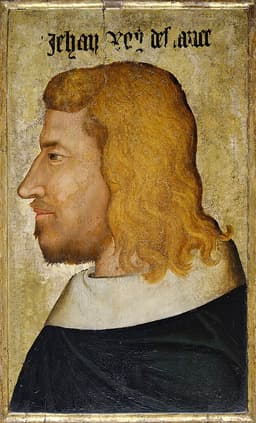
John II of France
Emperor · Medieval
37.5Total
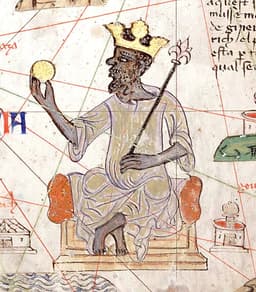
Musa II
Emperor · Medieval
38.3Total
Basic Information
Born
1319
1360
Died
1364
1387
Era
Medieval
Medieval
Nationality
France
Mali Empire
Occupation
Emperor
Emperor
Civilization
Western
Other
Score Comparison
Military (10%)
22.6
20.0
Political (20%)
27.9
33.6
Influence (20%)
47.9
45.5
Legacy (20%)
40.8
35.0
Leadership (15%)
34.6
44.5
Strategy (15%)
36.8
45.0
TOTAL
37.5
38.3
John II of France — Complete Timeline
1356 AD
Battle of PoitiersWar
John II led a French army against the English under Edward the Black Prince at Poitiers. The French were defeated, and John was captured along with many nobles. This was a major disaster for France, leading to a ransom demand and political crisis.
BattleCaptureHundred Years' War
Impact: regionaltragic
1360 AD
Treaty of BrétignyPolitical Action◆ Major
John II, while still a prisoner in England, agreed to the Treaty of Br
TreatyRansomTerritorial Cession
Impact: regional
1364 AD
Return to England as PrisonerPolitical Action
After his release, John II voluntarily returned to England when a hostage, his son Louis, escaped captivity. John cited his honor and the terms of the Treaty of Br
HonorCaptivityDeath
Impact: nationaltragic
Musa II — Complete Timeline
1374 AD
Reign as Mansa of MaliPolitical Action◆ Major
Musa II became mansa of the Mali Empire but was a figurehead controlled by his powerful vizier, Mari Djata. The vizier effectively ruled the empire, making decisions on military, economic, and administrative matters. This period saw further decline of central authority.
ReignMali EmpireVizierDecline
Impact: nationaldestructive
Expert Analysis
Origins
John II of France was born in 1319 to King Philip VI and Joan of Burgundy. He grew up in the shadow of the Hundred Years' War, inheriting a kingdom under strain from English claims and internal nobility struggles. His education focused on chivalric ideals, but he lacked strategic acumen. In contrast, Musa II of Mali, likely born in the early 14th century, was a descendant of Sundiata Keita. He ascended as mansa (emperor) of the Mali Empire, but his rule was overshadowed by the powerful vizier Mari Djata, who controlled affairs. Musa II's origins are obscure, with little recorded about his early life.
Rise to Power
John II became king of France in 1350 upon his father's death. His rise was unremarkable; he inherited a throne embroiled in war with England. His key turning points were negative: the Battle of Poitiers in 1356, where he was captured by Edward the Black Prince, and the subsequent Treaty of Brétigny in 1360, which ceded vast territories. Musa II became mansa around 1374 after the death of his predecessor, Mansa Mari Djata II. However, his vizier, also named Mari Djata, had already consolidated power. Musa II was a figurehead, with the vizier making all decisions. His rise was passive, facilitated by the vizier's manipulation.
Leadership & Governance
John II's leadership was marked by feudal obligation and personal honor over strategic governance. He led his army personally at Poitiers, but his command was ineffective, resulting in a rout. As a prisoner in England (1356-1360), he negotiated the Treaty of Brétigny, which weakened France. His later voluntary return to England in 1364 when a hostage escaped showed his commitment to honor but poor judgment. John's governance score of 34.6 reflects his inability to manage finances or military effectively. Musa II, scoring 44.5 in leadership, was a puppet. His vizier, Mari Djata, implemented policies that maintained Mali's trade networks and Islamic scholarship, but Musa II had no real authority. The empire declined due to internal strife and external pressures, but Musa II's passive style allowed the vizier to rule effectively in the short term.
Triumph & Tragedy
John II's triumph was his capture at Poitiers being viewed by some as chivalric, but strategically it was a disaster. His tragedy was the Treaty of Brétigny, which lost French territory and prestige. His voluntary return to England was a personal noble act but a political failure, leading to his death in captivity in 1364. He scored 37.5 overall. Musa II's triumph was maintaining Mali's stability during his reign, albeit under vizier control. His tragedy was his complete lack of agency; he is remembered as a weak ruler. The Mali Empire fragmented after his death. His total score is 38.3, slightly higher than John II's.
Character & Destiny
John II was chivalric and honor-bound, but his decisions were often impractical. His capture and ransom bankrupted France. His character led to his destiny as a prisoner king. Musa II was passive and likely uninterested in power. His destiny was to be a footnote in Mali's history, overshadowed by his vizier. Both were ultimately failures as rulers, but John II's actions had more direct impact on France's war effort.
Legacy
John II's legacy is negative: he embodied the failures of French chivalry in the Hundred Years' War. His capture and the Treaty of Brétigny set back France for years. He is remembered as John the Good, but his reign weakened the monarchy. Musa II's legacy is minimal; historians focus on Mansa Musa I, not him. His reign saw no major achievements. The Mali Empire's decline continued after his death. In terms of influence and legacy scores, John II (47.9 and 40.8) slightly edges Musa II (45.5 and 35.0), but overall John II's impact is more documented.
Conclusion
While Musa II scores marginally higher overall (38.3 vs 37.5), John II's failures had greater consequences for France and the Hundred Years' War. John II's capture and treaty reshaped European history, whereas Musa II's puppet rule had limited impact. John II's leadership score (34.6) is lower than Musa II's (44.5), but his military and political actions (scoring 22.6 and 27.9) were more consequential. Therefore, John II of France had greater historical impact, despite his lower total score. The comparison shows that numerical scores do not fully capture the weight of historical events.
Rankings
🥇
Musa IILeader
Mil: 20.0Pol: 33.6Inf: 45.5
38.3
🥈
John II of France
Mil: 22.6Pol: 27.9Inf: 47.9
37.5
+0.8 behind
How This Comparison Works
Algorithm
Each figure is scored on 6 dimensions (0—100 scale) based on structured historical data: Military (10%), Political (20%), Influence (20%), Legacy (20%), Leadership (15%), Strategy (15%). The weighted total produces the final ranking.
Data Sources
Scores are computed from structured sub-indicators in the database. Scale factors adjust for era (Ancient ×0.85, Modern ×1.0) and civilization size (Eastern ×1.05, Other ×0.80) to account for differences in population and military scale.
Maximum 3 Figures
Comparisons are limited to 2—3 figures to ensure readability and statistical meaningfulness.
Error Margins
±5 points per dimension — Sub-scores are derived from historical records with inherent uncertainty. Two figures within 5 points on a dimension should be considered roughly equivalent in that area.
Total Score Accuracy
±3 points overall — The weighted combination of 6 dimensions produces a total score with approximately ±3 points of uncertainty. Differences of less than 3 points are not statistically significant— the figures are effectively tied.
Known Limitations
- Historical records are incomplete and uneven across civilizations
- Figures from oral-tradition societies may be underrepresented
- Occupation labels can misclassify multi-role figures
- Scores measure capability and impact, not moral character
- Quantitative scoring is a comparison tool, not absolute truth
Capability Radar
Military (10%) — Battles & Warfare
Battles
20
5
Win Rate
10
5
Expansion
5
5
Political (20%) — Governance & Reform
Reform
20
5
Diplomacy
15
10
Economy
10
10
Influence (20%) — Cultural & Global Reach
Cultural
15
5
Global
10
5
Legacy (20%) — Historical Impact
Historical
25
5
Longevity
20
5
Leadership (15%) — Power & Stability
Tenure
30
10
Stability
10
10
Strategy (15%) — Tactics & Innovation
Strategy
10
5
Tactics
15
5
Reform
5
5
Similar Comparisons
Comments & Discussion
No comments yet. Be the first to share your thoughts!