Loading...
John J. Pershing vs John Lambert
John J. Pershing leads by 4.5 pts · 2 figures compared
…

John J. Pershing
General · Modern
61.2Total
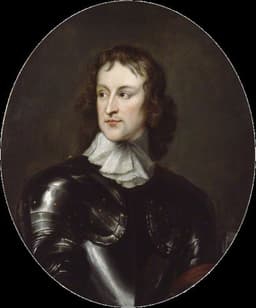
John Lambert
General · Modern
56.7Total
Basic Information
Born
1860
1619
Died
1948
1684
Era
Modern
Modern
Nationality
United States
England
Occupation
General
General
Civilization
Western
Western
Score Comparison
Military (10%)
82.0
70.0
Political (20%)
45.0
45.0
Influence (20%)
65.0
59.0
Legacy (20%)
55.0
50.0
Leadership (15%)
62.0
68.0
Strategy (15%)
69.1
55.0
TOTAL
61.2
56.7
John J. Pershing — Complete Timeline
1916 AD
Punitive Expedition into MexicoWar◆ Major
Pershing led a US Army expedition into Mexico to capture Pancho Villa after his raid on Columbus, New Mexico. The expedition failed to capture Villa but provided valuable experience for the US Army and tested new technologies.
Mexican RevolutionUS InterventionExpedition
Impact: regional
1917 AD
Appointed Commander of the American Expeditionary ForcesPolitical Action◆ Major
Pershing was appointed commander of the American Expeditionary Forces (AEF) in World War I. He insisted on keeping the AEF as an independent force rather than integrating it into Allied armies, shaping US military policy.
World War ICommandUS Army
Impact: globalconstructive
1918 AD
Meuse-Argonne OffensiveWar
Pershing commanded the AEF in the Meuse-Argonne Offensive, the largest battle in US history at the time. The offensive helped break the German lines and contributed to the end of World War I, though it cost over 26,000 American dead.
World War IWestern FrontOffensive
Impact: global
John Lambert — Complete Timeline
1648 AD
Battle of PrestonWar◆ Major
John Lambert commanded parliamentary forces at the Battle of Preston, defeating a Scottish royalist army. The victory helped secure the parliamentary cause in the Second English Civil War.
BattleEnglish Civil WarParliament
Impact: national
1653 AD
Drafted the Instrument of GovernmentPolitical Action◆ Major
John Lambert was the principal author of the Instrument of Government, the written constitution that established the Protectorate under Oliver Cromwell. The document created a Lord Protector and a Council of State, but was never fully implemented.
ConstitutionProtectorateCromwell
Impact: nationalconstructive
1662 AD
Exiled to GuernseyPolitical Action◆ Major
After the Restoration, John Lambert was tried for treason and exiled to the island of Guernsey. He spent the remainder of his life in captivity, never regaining political influence.
ExileRestorationPunishment
Impact: nationaltragic
Expert Analysis
Origins
John J. Pershing was born in 1860 in Laclede, Missouri, to a farming family. He graduated from West Point in 1886 and served in the Indian Wars, Spanish-American War, and Philippines. His early career included teaching military science at the University of Nebraska and earning a law degree.
John Lambert was born in 1619 in Kirkby Malham, Yorkshire, to a gentry family. He studied law at Gray's Inn but joined the Parliamentarian army during the English Civil War. His military rise began under Thomas Fairfax, and he became a key figure in the New Model Army.
Rise to Power
Pershing rose through the ranks via merit and political connections. His big break came in 1916 when President Wilson appointed him to lead the Punitive Expedition into Mexico after Pancho Villa's raid. Although the expedition failed to capture Villa, it made Pershing a national figure. In 1917, he was appointed commander of the American Expeditionary Forces (AEF) in World War I, a position that required building a mass army from scratch.
Lambert rose to prominence during the English Civil War. He distinguished himself at the Battle of Marston Moor (1644) and helped draft the Self-Denying Ordinance. His key turning point was the Battle of Preston (1648), where he commanded Parliamentarian forces and decisively defeated a Scottish Royalist army, securing the north for Parliament. This victory made him a leading military figure and a trusted ally of Oliver Cromwell.
Leadership & Governance
Pershing's leadership was characterized by strict discipline and insistence on an independent American army. He resisted Allied pressure to amalgamate US troops into British or French units, arguing that American soldiers should fight under American command. He was a micromanager, personally overseeing training and logistics. His governance style was authoritarian but effective in building a 2-million-man force in 18 months.
Lambert was both a military commander and a political architect. After Cromwell's death, he played a key role in drafting the Instrument of Government (1653), Britain's first written constitution, which established the Protectorate. He favored a mixed government with a strong executive and a parliament, but his political maneuvering often alienated allies. His leadership score of 68.0 reflects his effectiveness in military command but his failure in sustaining political power.
Triumph & Tragedy
Pershing's greatest triumph was the Meuse-Argonne Offensive (1918), the largest battle in US history at the time, involving 1.2 million American troops. The offensive helped break the German lines and contributed to the Armistice. However, his greatest failure was the Punitive Expedition (1916-1917), which failed to capture Pancho Villa and strained US-Mexico relations. Additionally, his insistence on an independent AEF led to logistical challenges and higher casualties than necessary.
Lambert's greatest triumph was the Battle of Preston (1648), a decisive victory that crushed Royalist resistance. His drafting of the Instrument of Government was a landmark in constitutional history. However, his tragedy came after the Restoration: he was tried for treason, exiled to Guernsey, and spent the rest of his life in captivity. His political ambitions ultimately led to his downfall, as he failed to secure a stable role after Cromwell's death.
Character & Destiny
Pershing was known for his stern, no-nonsense demeanor and his high standards. He was nicknamed "Black Jack" for his service with African American troops. His character—disciplined, determined, and politically astute—enabled him to overcome the immense challenge of building a modern army. However, his rigidity sometimes caused friction with allies. His military score of 82.0 reflects his tactical competence, but his political score of 45.0 indicates his limited influence in peacetime.
Lambert was a skilled military tactician and a visionary political thinker, but he was also ambitious and inflexible. His drafting of the Instrument of Government showed his commitment to constitutional rule, but his inability to compromise led to his isolation. After Cromwell's death, he failed to prevent the Restoration, and his exile marked the end of his influence. His strategy score of 55.0 is lower than Pershing's 69.1, reflecting his less successful long-term planning.
Legacy
Pershing's legacy is tied to the creation of the modern US Army. He established the system of training camps, logistics, and command structures that would be used in World War II. He also influenced the career of future generals like George Marshall and Dwight Eisenhower. However, his impact on American society was limited; his score of 55.0 in legacy reflects his narrow military focus.
Lambert's legacy is more political: the Instrument of Government influenced later constitutional thought, and his military victories helped secure the Parliamentarian cause. However, his name is less known than Cromwell's, and his contributions are often overshadowed. His legacy score of 50.0 indicates a moderate but fading impact.
Conclusion
John J. Pershing had a greater impact than John Lambert. Pershing's military score of 82.0 is higher than Lambert's 70.0, and his total score of 61.2 exceeds Lambert's 56.7. While Lambert's constitutional work was innovative, it did not endure beyond the Protectorate. Pershing's organizational achievements shaped the US military for decades, and his role in World War I was pivotal to the Allied victory. Therefore, Pershing's influence was more substantial and lasting.
Rankings
🥇
John J. PershingLeader
Mil: 82.0Pol: 45.0Inf: 65.0
61.2
🥈
John Lambert
Mil: 70.0Pol: 45.0Inf: 59.0
56.7
+4.5 behind
How This Comparison Works
Algorithm
Each figure is scored on 6 dimensions (0—100 scale) based on structured historical data: Military (10%), Political (20%), Influence (20%), Legacy (20%), Leadership (15%), Strategy (15%). The weighted total produces the final ranking.
Data Sources
Scores are computed from structured sub-indicators in the database. Scale factors adjust for era (Ancient ×0.85, Modern ×1.0) and civilization size (Eastern ×1.05, Other ×0.80) to account for differences in population and military scale.
Maximum 3 Figures
Comparisons are limited to 2—3 figures to ensure readability and statistical meaningfulness.
Error Margins
±5 points per dimension — Sub-scores are derived from historical records with inherent uncertainty. Two figures within 5 points on a dimension should be considered roughly equivalent in that area.
Total Score Accuracy
±3 points overall — The weighted combination of 6 dimensions produces a total score with approximately ±3 points of uncertainty. Differences of less than 3 points are not statistically significant— the figures are effectively tied.
Known Limitations
- Historical records are incomplete and uneven across civilizations
- Figures from oral-tradition societies may be underrepresented
- Occupation labels can misclassify multi-role figures
- Scores measure capability and impact, not moral character
- Quantitative scoring is a comparison tool, not absolute truth
Capability Radar
Military (10%) — Battles & Warfare
Battles
75
65
Win Rate
80
60
Expansion
60
40
Political (20%) — Governance & Reform
Reform
50
55
Diplomacy
75
50
Economy
40
45
Influence (20%) — Cultural & Global Reach
Cultural
55
35
Global
65
30
Legacy (20%) — Historical Impact
Historical
70
50
Longevity
60
40
Leadership (15%) — Power & Stability
Tenure
60
60
Stability
65
40
Strategy (15%) — Tactics & Innovation
Strategy
85
65
Tactics
70
70
Reform
75
55
Similar Comparisons
Comments & Discussion
No comments yet. Be the first to share your thoughts!