Loading...
John Kufuor vs Lord Dufferin
John Kufuor leads by 1.5 pts · 2 figures compared
…

John Kufuor
Politician · Modern
56.0Total
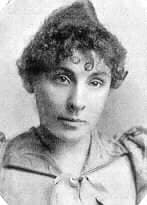
Lord Dufferin
Politician · Modern
54.5Total
Basic Information
Born
1938
1826
Died
—
1902
Era
Modern
Modern
Nationality
Ghana
United Kingdom
Occupation
Politician
Politician
Civilization
Other
Western
Score Comparison
Military (10%)
50.0
50.0
Political (20%)
60.0
53.8
Influence (20%)
57.2
54.9
Legacy (20%)
45.8
45.8
Leadership (15%)
79.8
72.0
Strategy (15%)
42.8
54.8
TOTAL
56.0
54.5
John Kufuor — Complete Timeline
2000 AD
Elected President of GhanaPolitical Action
John Kufuor won the 2000 presidential election as the candidate of the New Patriotic Party (NPP), defeating the National Democratic Congress (NDC) candidate. This marked the first peaceful transfer of power between parties in Ghana's history.
ElectionDemocracyGhana
Impact: nationalconstructive
2001 AD
Heavily Indebted Poor Countries (HIPC) InitiativeReform◆ Major
Kufuor's government opted to join the HIPC initiative, qualifying Ghana for debt relief from the IMF and World Bank. This decision was controversial but freed up resources for social spending and poverty reduction programs.
Debt ReliefEconomic PolicyGhana
Impact: national
2003 AD
Introduction of National Health Insurance SchemeReform◆ Major
Kufuor's government established the National Health Insurance Scheme (NHIS) to replace the 'cash and carry' system. The NHIS aimed to provide affordable healthcare to all Ghanaians, funded by taxes and premiums.
Healthcare ReformSocial PolicyGhana
Impact: nationalconstructive
2007 AD
Discovery of Jubilee Oil FieldOther◆ Major
Commercial quantities of oil were discovered in the Jubilee field off the coast of Ghana. This discovery, made during Kufuor's presidency, promised significant revenue but also raised concerns about resource management and corruption.
Oil DiscoveryEconomyGhana
Impact: national
2009 AD
Left Office After Two TermsPolitical Action◆ Major
Kufuor completed his second term and peacefully handed over power to the winner of the 2008 election, John Atta Mills. This further consolidated Ghana's reputation as a stable democracy in Africa.
DemocracyGhanaTransition
Impact: nationalconstructive
Lord Dufferin — Complete Timeline
1872 AD
Tenure as Governor General of CanadaPolitical Action◆ Major
Lord Dufferin served as Governor General of Canada from 1872 to 1878. He played a key role in promoting Canadian unity and cultural development, including the establishment of the Royal Society of Canada and the encouragement of the arts. His tenure was marked by his diplomatic handling of political tensions.
CanadaGovernor GeneralCultural Development
Impact: nationalconstructive
1885 AD
Establishment of the Indian National CongressPolitical Action
During Lord Dufferin's viceroyalty, the Indian National Congress was founded in Bombay with the approval of the British authorities. Dufferin initially viewed it as a safety valve for political dissent, but the Congress later became the leading organization of the Indian independence movement.
IndiaPolitical OrganizationNationalism
Impact: national
Russian Border CommissionPolitical Action◆ Major
Lord Dufferin oversaw the settlement of the Afghan border dispute with Russia through the Joint Anglo-Russian Boundary Commission. The agreement defined the northern frontier of Afghanistan, reducing tensions between Britain and Russia in Central Asia, known as the 'Great Game'.
AfghanistanDiplomacyGreat Game
Impact: regionalconstructive
1886 AD
Annexation of Upper BurmaWar
Lord Dufferin ordered the Third Anglo-Burmese War, which resulted in the annexation of Upper Burma into British India. King Thibaw Min was deposed and exiled. This completed the British conquest of Burma, adding a large territory to the British Empire.
BurmaColonial ExpansionWar
Impact: regionaldestructive
Expert Analysis
Origins
John Kufuor was born on December 8, 1938, in Kumasi, Ghana, into a middle-class family. He studied law at the University of Oxford (Exeter College) and was called to the bar at Lincoln's Inn. His early career included private practice and entry into politics under Prime Minister Kofi Abrefa Busia.
Lord Dufferin, Frederick Hamilton-Temple-Blackwood, was born on June 21, 1826, in Florence, Italy, into an aristocratic Anglo-Irish family. He was educated at Eton and Christ Church, Oxford. He entered diplomacy, serving as British ambassador to Russia and the Ottoman Empire before becoming Governor General of Canada.
Rise to Power
Kufuor rose through Ghanaian politics as a member of the Progress Party and later the New Patriotic Party (NPP). He was a deputy minister for foreign affairs in the Second Republic (1969-1972). After years in opposition, he won the 2000 presidential election with 56.9% of the vote, defeating the National Democratic Congress (NDC) candidate John Atta Mills, marking Ghana's first peaceful transfer of power between parties.
Lord Dufferin's rise came through aristocratic connections and diplomatic service. He was appointed Governor General of Canada (1872-1878), where he promoted Canadian unity. In 1884, he became Viceroy of India, a position he held until 1888. His appointment was facilitated by his reputation as a skilled administrator and diplomat.
Leadership & Governance
Kufuor's governance focused on economic liberalization and social welfare. He adopted the Heavily Indebted Poor Countries (HIPC) Initiative in 2001, securing $2.5 billion in debt relief. He introduced the National Health Insurance Scheme (NHIS) in 2003, replacing the 'cash and carry' system. His government also oversaw the discovery of the Jubilee oil field in 2007, which promised significant revenue. Kufuor scored 79.8 in leadership, reflecting his democratic style and institutional strengthening.
Lord Dufferin's governance was imperial and authoritarian. He ordered the Third Anglo-Burmese War (1885), annexing Upper Burma with 14,000 troops. He allowed the founding of the Indian National Congress (1885), initially viewing it as a safety valve for political dissent. He settled the Afghan border with Russia via the Joint Anglo-Russian Boundary Commission (1885-1887). His leadership score of 72.0 reflects effective administration within an imperial context.
Triumph & Tragedy
Kufuor's greatest success was consolidating Ghana's democracy. He peacefully handed over power after two terms in 2008, a milestone for Africa. The NHIS improved healthcare access for millions. However, his HIPC decision was criticized as a sign of economic weakness, and his government faced corruption allegations. The Jubilee oil discovery later led to governance challenges. Kufuor's total score is 56.0.
Lord Dufferin's triumph was the annexation of Burma, expanding British India. He also helped establish the Indian National Congress, which became a vehicle for Indian nationalism. His tragedy includes the brutality of the Burmese war and his failure to foresee Congress's role in ending British rule. His total score is 54.5.
Character & Destiny
Kufuor was known as a conciliator and reformer. His character shaped Ghana's peaceful transition. He scored 42.8 in strategy, indicating a cautious approach. His destiny was to be a transitional figure who stabilized Ghana after decades of instability.
Lord Dufferin was aristocratic, diplomatic, yet imperialistic. His character led him to pursue expansion and controlled reform. His strategic score was 54.8, reflecting careful diplomacy but also military aggression.
Legacy
Kufuor's legacy is as a democratizer and economic reformer. Ghana's stable democracy and growth are partly attributed to his tenure. The NHIS remains a key social program. He is remembered as a founding father of Ghana's Fourth Republic.
Lord Dufferin's legacy is mixed. He is remembered for annexing Burma and for the Indian National Congress's founding, which ironically fostered Indian independence. His administration strengthened British India but also sowed seeds of nationalism.
Conclusion
John Kufuor had a greater impact on human well-being and democratic governance. His peaceful transition and health reforms directly improved millions of lives. Lord Dufferin's annexation and administrative reforms were significant but served imperial interests. Kufuor's total score of 56.0 edges Dufferin's 54.5, reflecting a more positive and enduring contribution to freedom and development.
Rankings
🥇
John KufuorLeader
Mil: 50.0Pol: 60.0Inf: 57.2
56.0
🥈
Lord Dufferin
Mil: 50.0Pol: 53.8Inf: 54.9
54.5
+1.5 behind
How This Comparison Works
Algorithm
Each figure is scored on 6 dimensions (0—100 scale) based on structured historical data: Military (10%), Political (20%), Influence (20%), Legacy (20%), Leadership (15%), Strategy (15%). The weighted total produces the final ranking.
Data Sources
Scores are computed from structured sub-indicators in the database. Scale factors adjust for era (Ancient ×0.85, Modern ×1.0) and civilization size (Eastern ×1.05, Other ×0.80) to account for differences in population and military scale.
Maximum 3 Figures
Comparisons are limited to 2—3 figures to ensure readability and statistical meaningfulness.
Error Margins
±5 points per dimension — Sub-scores are derived from historical records with inherent uncertainty. Two figures within 5 points on a dimension should be considered roughly equivalent in that area.
Total Score Accuracy
±3 points overall — The weighted combination of 6 dimensions produces a total score with approximately ±3 points of uncertainty. Differences of less than 3 points are not statistically significant— the figures are effectively tied.
Known Limitations
- Historical records are incomplete and uneven across civilizations
- Figures from oral-tradition societies may be underrepresented
- Occupation labels can misclassify multi-role figures
- Scores measure capability and impact, not moral character
- Quantitative scoring is a comparison tool, not absolute truth
Capability Radar
Military (10%) — Battles & Warfare
Battles
22
20
Win Rate
27
25
Expansion
29
40
Political (20%) — Governance & Reform
Reform
60
55
Diplomacy
65
70
Economy
70
50
Influence (20%) — Cultural & Global Reach
Cultural
40
30
Global
45
40
Legacy (20%) — Historical Impact
Historical
45
45
Longevity
30
30
Leadership (15%) — Power & Stability
Tenure
65
60
Stability
65
60
Strategy (15%) — Tactics & Innovation
Strategy
33
30
Tactics
30
15
Reform
37
10
Similar Comparisons
Comments & Discussion
No comments yet. Be the first to share your thoughts!